The San Francisco issue
Chinatown, San Francisco: the neighbourhood guide
Ten blocks of the oldest Chinatown in North America, walked properly — from the gate at dawn to a dive bar's baijiu Mai Tai after dark.
By Jonas BakkerThe city's hills, fog and neighbourhoods, one route at a time
San Francisco's Chinatown isn't a theme-park version of itself. It's the oldest Chinatown in North America, ten-odd blocks where bakeries still sell out by 11am, a temple still asks you to climb three flights of narrow stairs to reach it, and a walking tour still meets at the same parking-garage elevators it has for decades. Come for an afternoon and you'll eat well and see plenty. Come for a full day, starting before the tour buses, and you'll actually understand how the place works. For everything beyond these ten blocks, the San Francisco guide covers the rest of the city.
Start at the gate, then go where the neighbourhood actually gathers
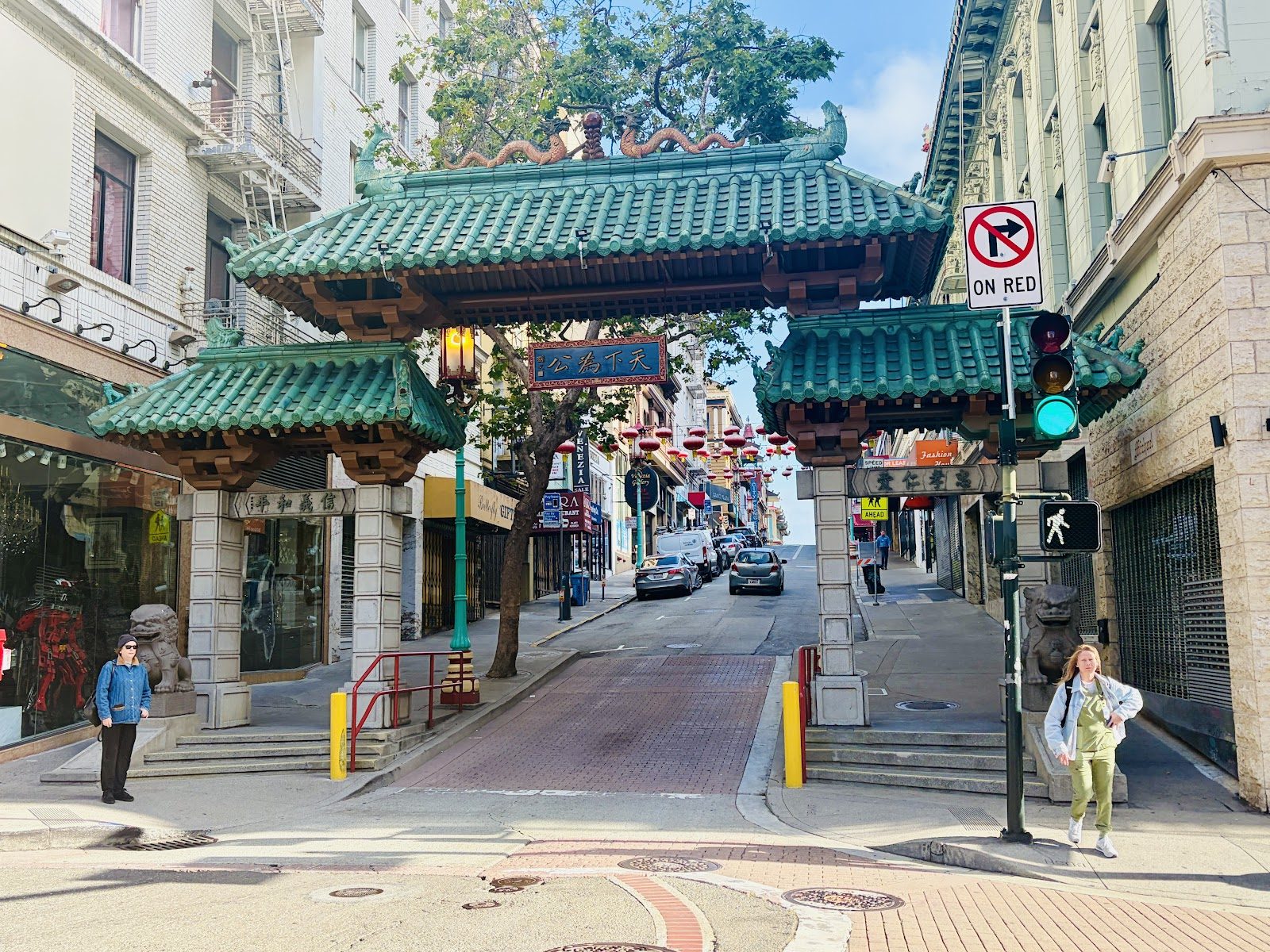
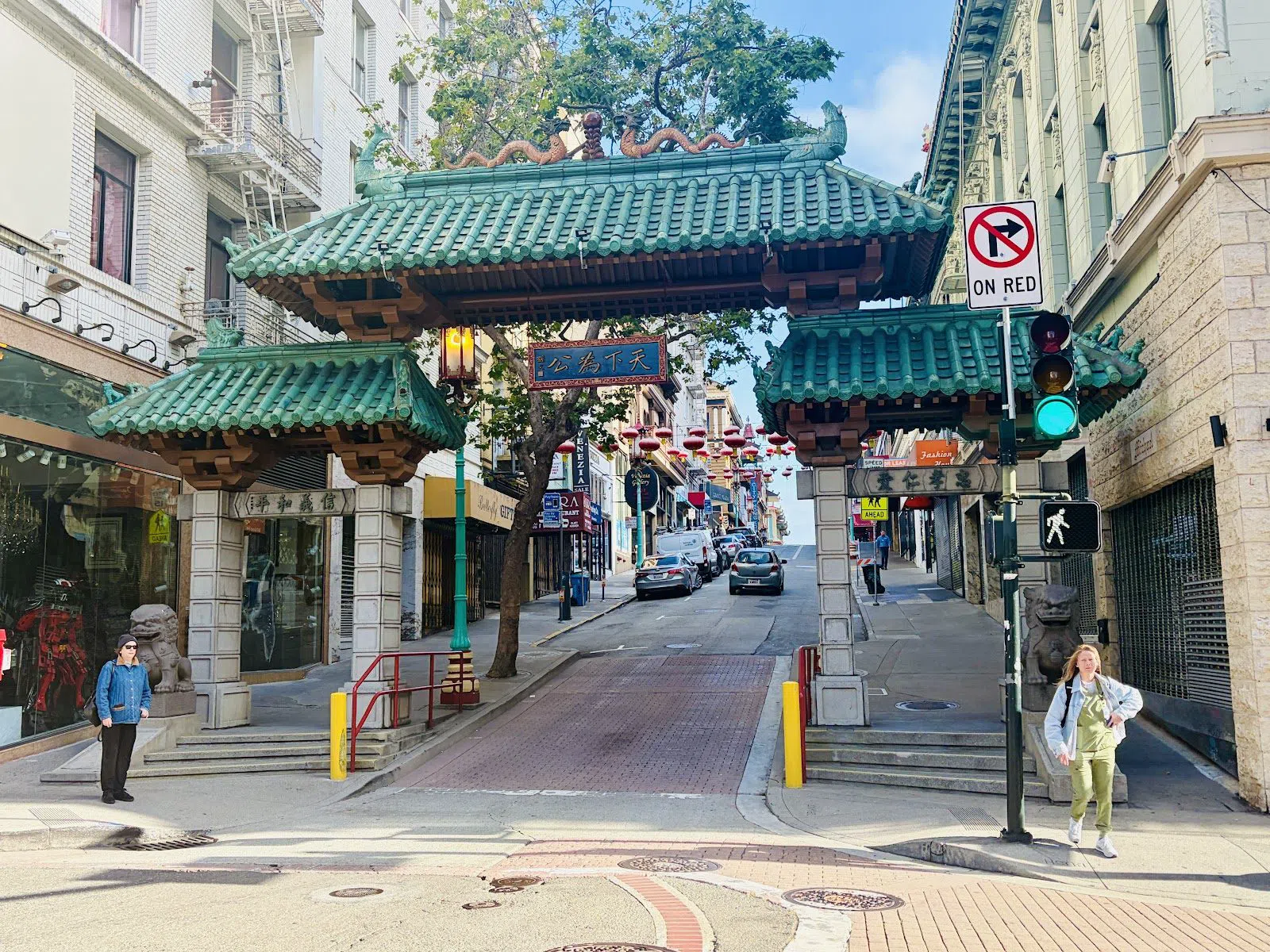
Every walk through Chinatown starts the same way, and there's no reason to fight it: at the Dragon Gate (Chinatown Gate), on Grant Avenue at Bush Street. It was built in 1969 as a gift from Taiwan and it's the only authentic ceremonial gate of its kind in the US — green-tiled roof, guardian lions, the works. It's a public landmark, so there's no group size limit and no bad time to photograph it, though early morning light and thinner crowds make it the better hour.
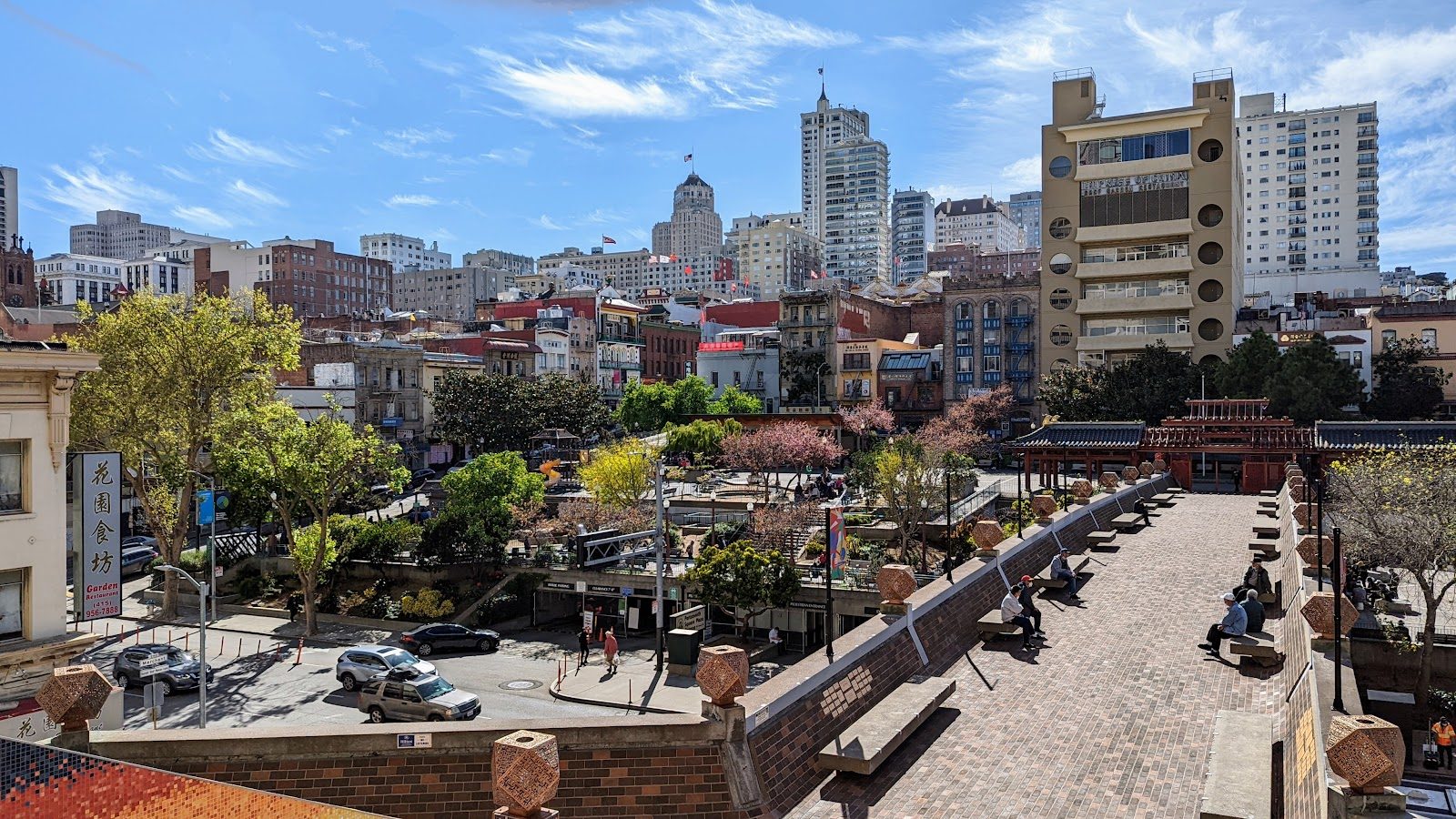
From there, most people walk straight up Grant, which is the postcard version of Chinatown — souvenir shops, lantern strings, the works. Skip past it, at least at first, and head instead to Portsmouth Square, a couple of blocks over on Kearny. This is San Francisco's oldest public square and the real social heart of the neighbourhood, not a stop built for visitors. Get there before 9am and you'll find locals doing tai chi, playing cards, and reading newspapers clipped to boards — a scene that has nothing to do with tourism and everything to do with why people actually live here. It's free, open to any group size, and worth the early alarm more than almost anything else on this list.
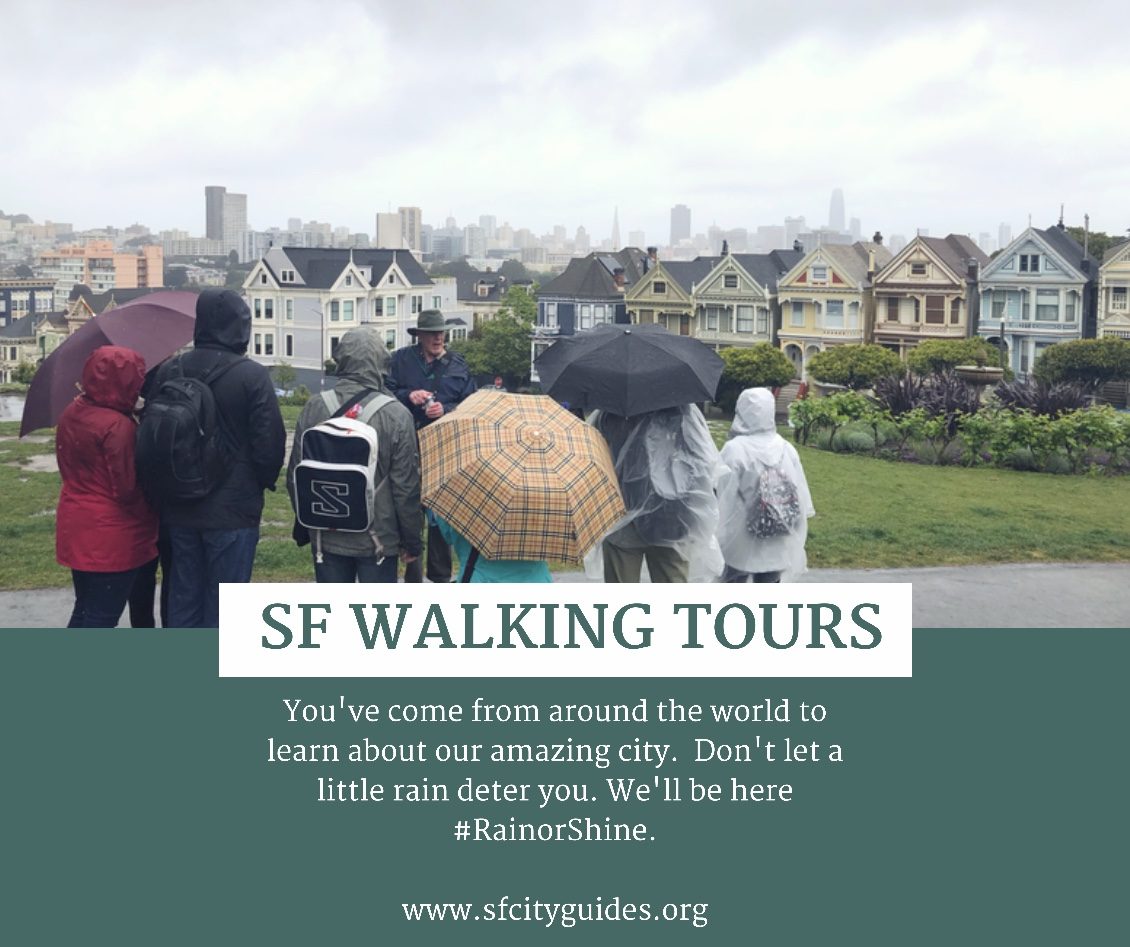
If you want context rather than just atmosphere, show up at the elevators of the Portsmouth Square parking garage for the SF City Guides — Chinatown Walking Tour. No booking, no fee beyond a tip if you feel like it, and it's run by trained local volunteers through the SF Public Library rather than a commercial operator. It's the most credible free orientation to the neighbourhood's alleys and history, and it works for a solo traveller or a group of twelve equally well — just show up.
Plan your San Francisco trip
Live prices from our booking partners.
Free cancellation on many rooms. We may earn a commission when you book.
Temples and a cathedral worth ten quiet minutes
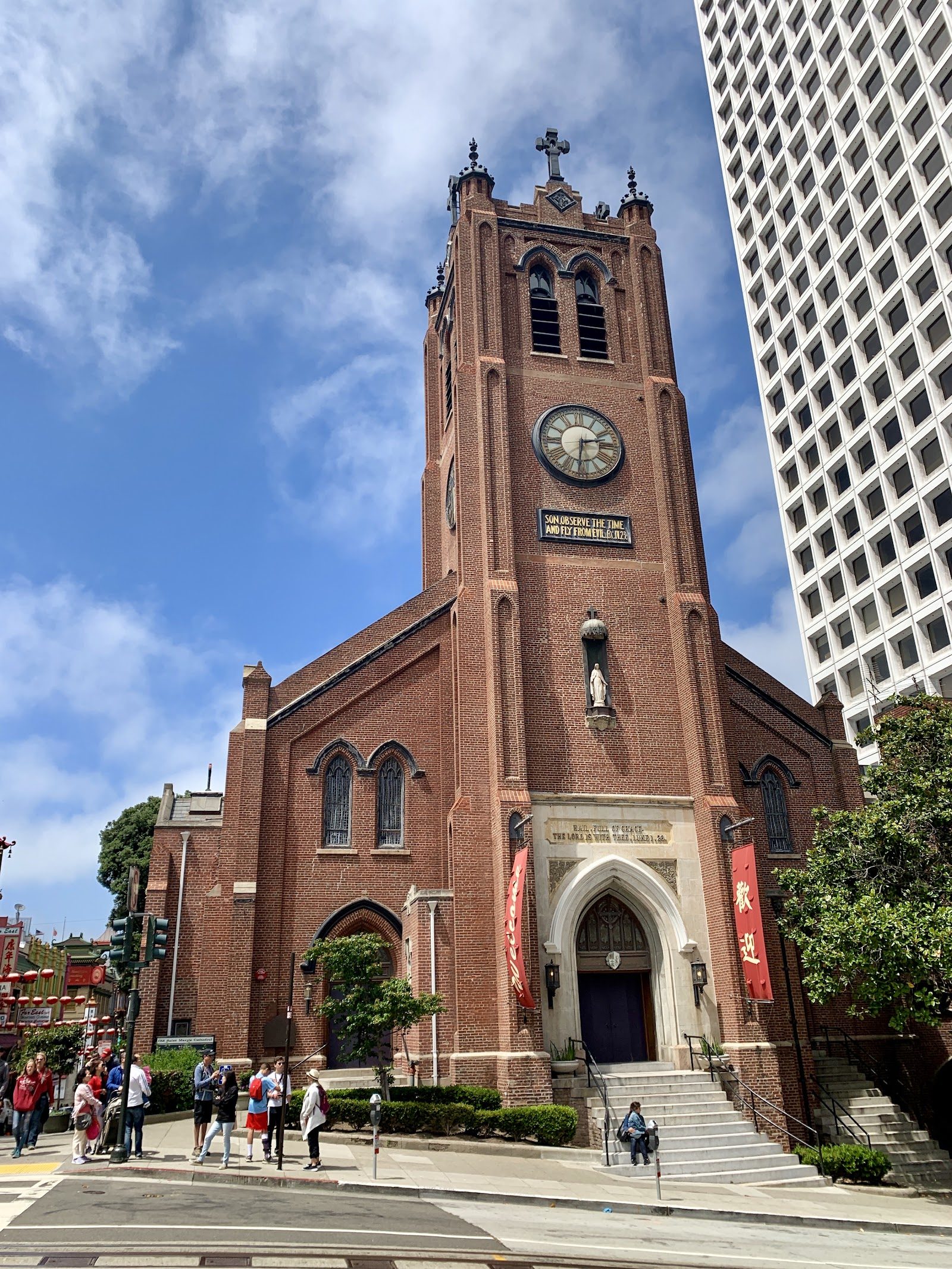
On Chinatown's southern edge, right where the neighbourhood meets the Financial District, sits Old St. Mary's Cathedral (California and Grant). It was the first Catholic cathedral in California and one of the rare buildings that survived the 1906 earthquake — a genuinely unusual thing to find embedded inside a Chinese American neighbourhood, and worth the ten minutes it takes to sit inside. It's open to visitors between services and groups are welcome to sit quietly, but there are no tours during Mass, so check the schedule if you're coming with more than a couple of people.
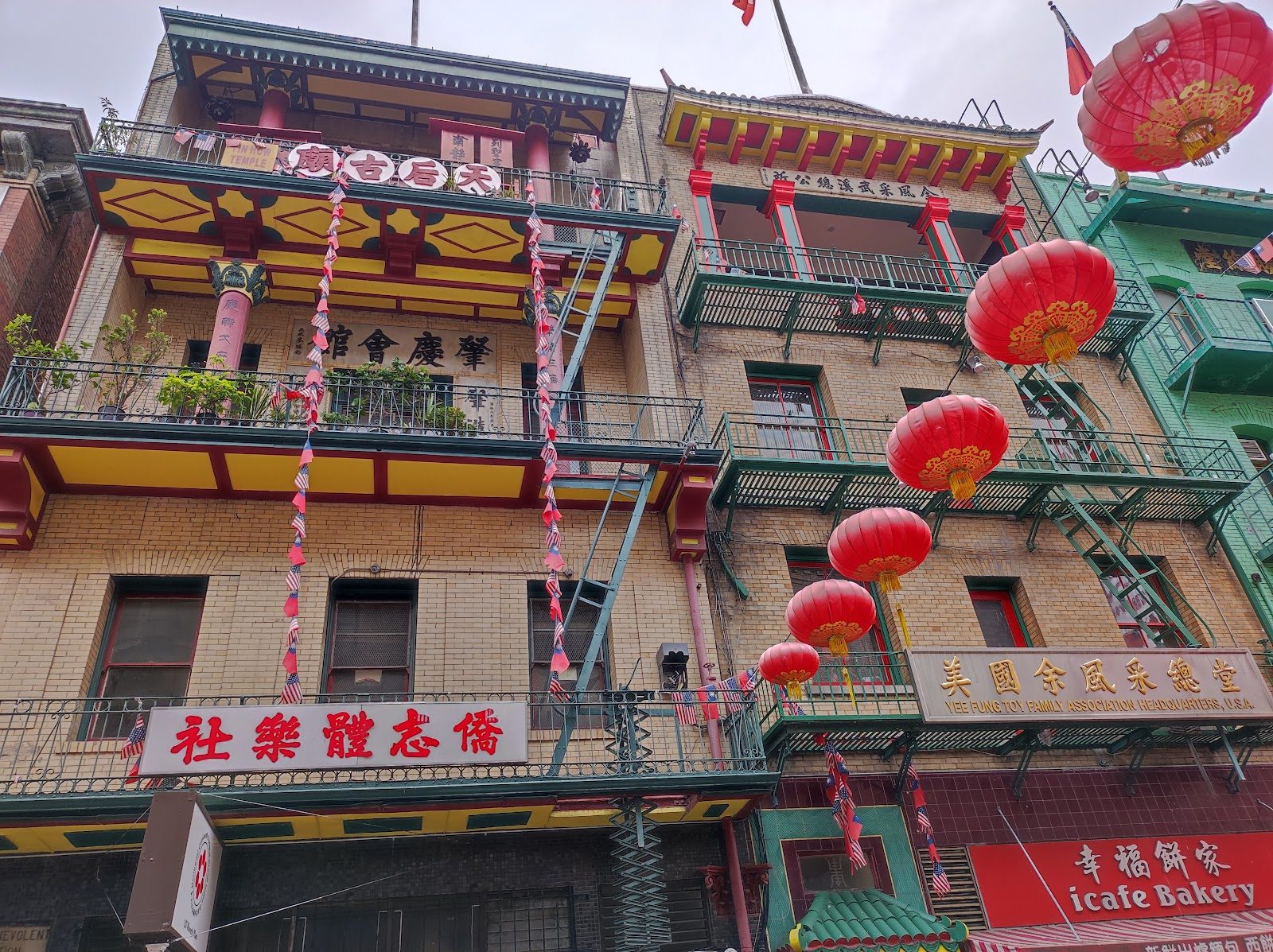
A few streets north, tucked above a row of shops on Waverly Place, is Tin How Temple — the oldest Chinese temple in the US, dating to 1852. You reach it by a narrow stairwell, which is the whole point: this isn't staged for visitors, it's a working temple that happens to be open to the public. Go in small groups only, take your shoes and photo etiquette seriously, and don't photograph the altar without asking first. A donation is expected. One practical note: opening hours drift, so it's worth a quick check before you detour up the stairs — this is not a place to show up to and find locked.
The museum that explains why any of this is here
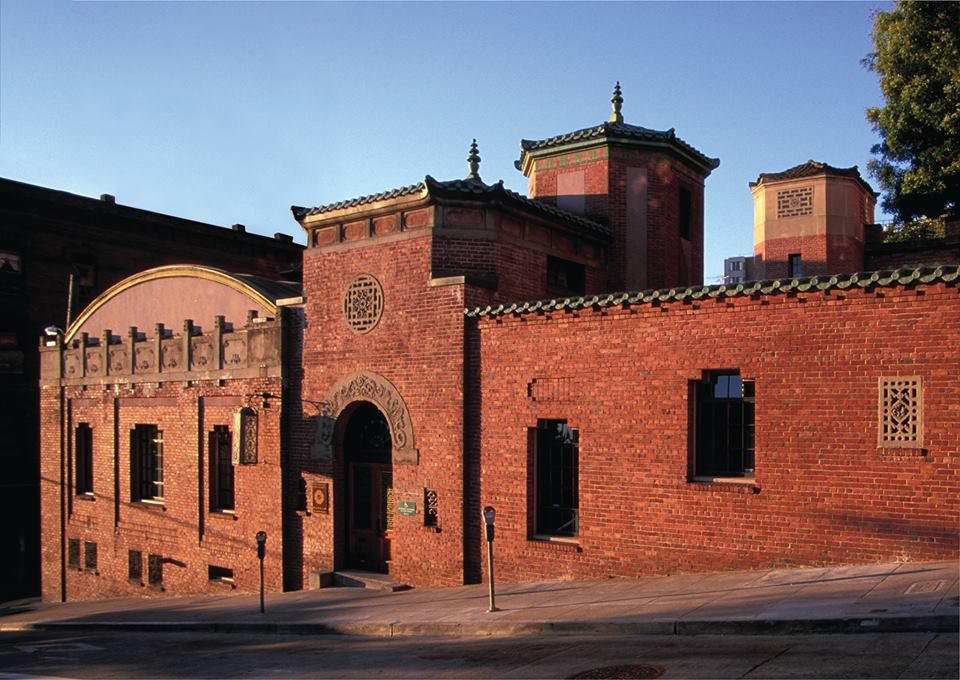
For the deepest, best-curated telling of Chinatown's history, go to the Chinese Historical Society of America Museum, a short walk off the main drag. It's small — the galleries cap comfortably around 15 to 20 people at once — so it suits a couple or a modest group rather than a coach party, and it's closed Monday and Tuesday, so plan around that. Entry runs around $15 for an adult. It pairs naturally with the SF City Guides walking tour: the tour gives you the streets, the museum gives you the why, and doing them on the same day is the single best way to actually understand the neighbourhood rather than just photograph it.
Alley bakeries and a fortune cookie factory that isn't a gimmick
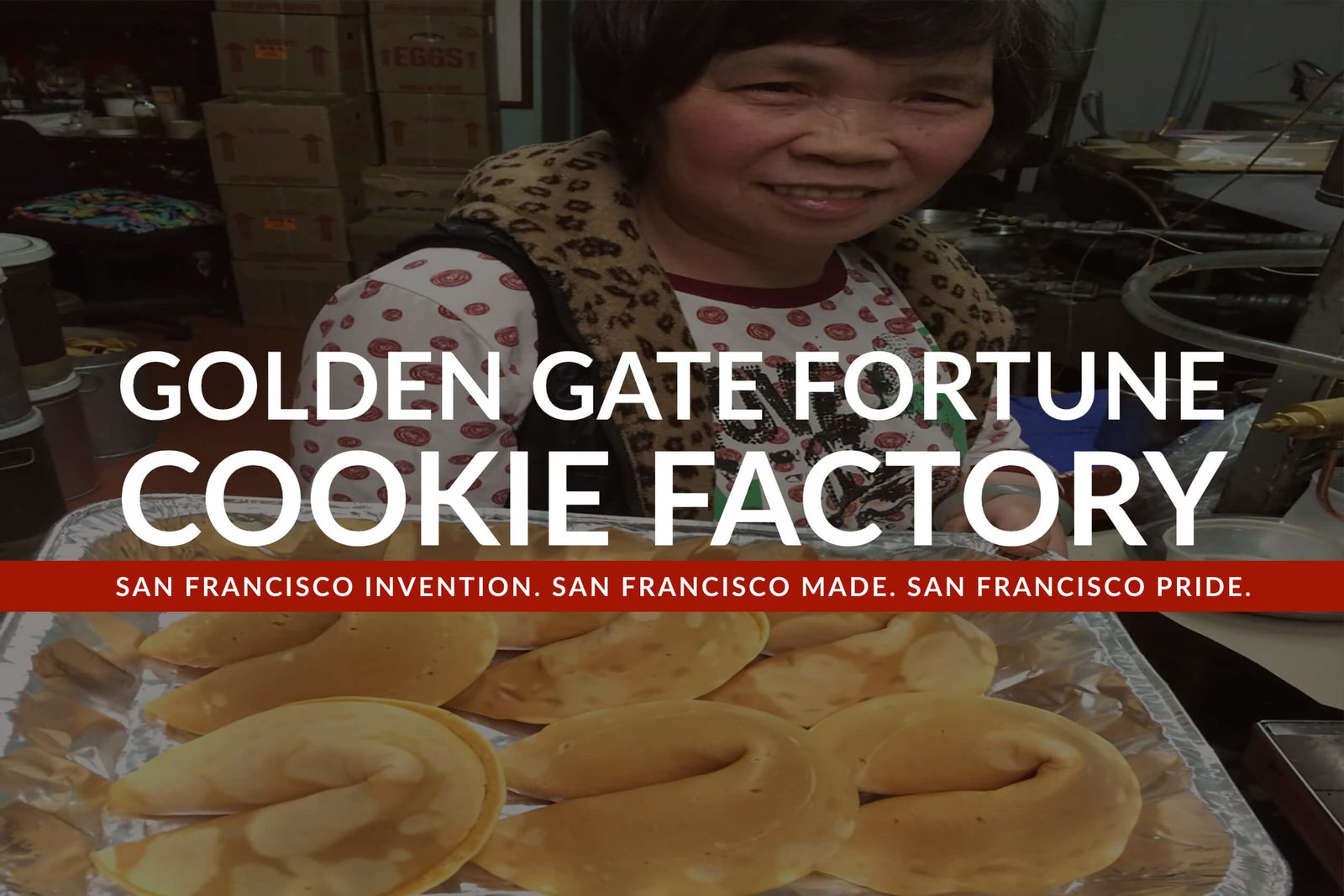
Down a narrow alley called Ross, you'll find the Golden Gate Fortune Cookie Factory, family-run since 1962 and the exact alley Anthony Bourdain shot for No Reservations. The space is genuinely tight — if you're in a group larger than six, you'll be queuing outside — and the women working the presses expect a cash tip if you're taking photos of them at work, which is fair; buy a bag of cookies (from around $6) rather than just gawking with a phone out. It's a working factory, not a photo op dressed up as one.
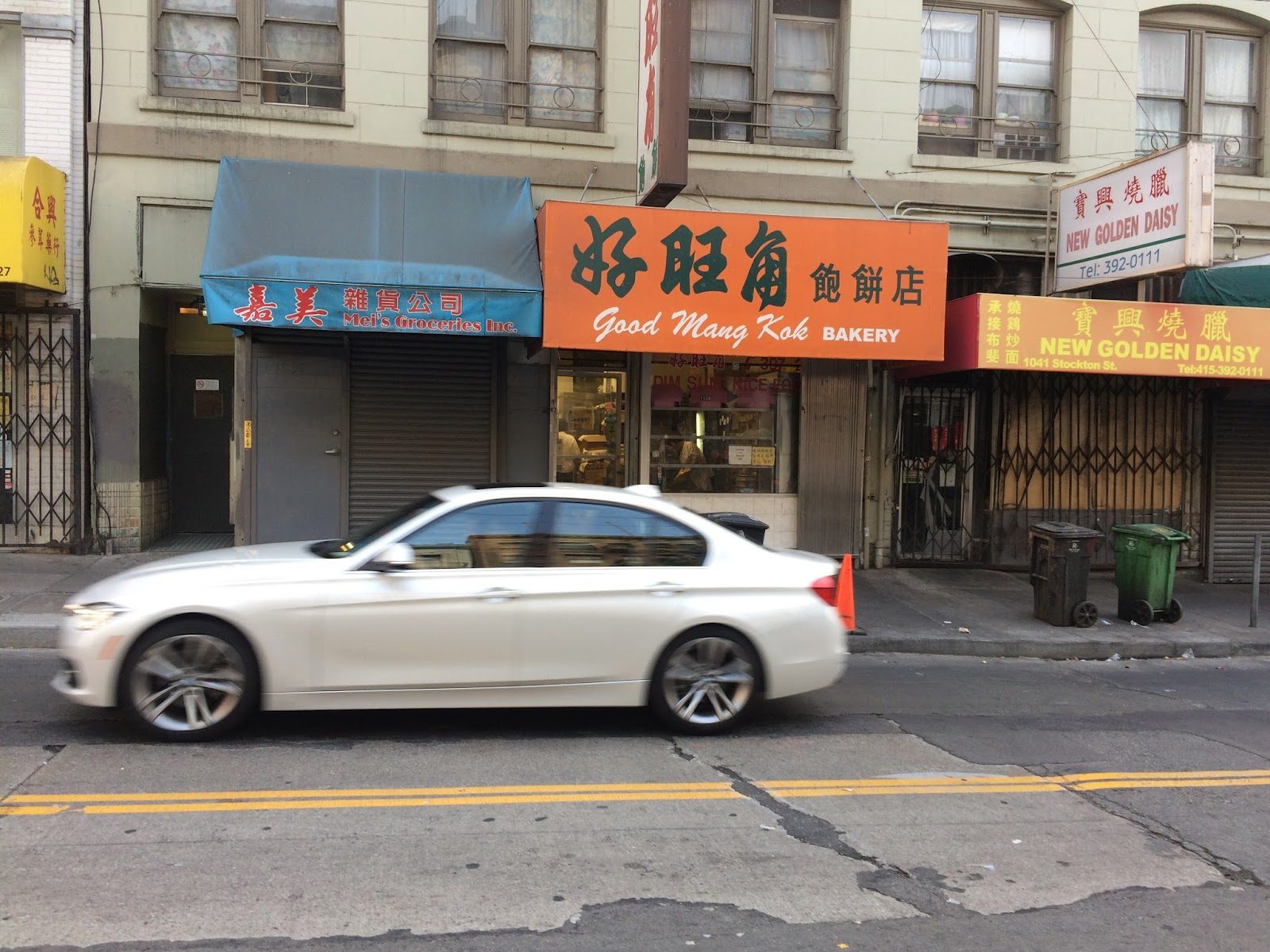
For breakfast or an early lunch, Good Mong Kok Bakery on Stockton is the move — a cash-only takeout window with no seating, items running $1 to $3 each, that's been a local institution for decades. The catch: it's genuinely gone by early afternoon. Arrive before 11am or the good stuff — the sticky rice, the shrimp dumplings — will already be sold out. It works fine as a grazing stop for a group of any size since there's nowhere to sit anyway; everyone just eats standing on the sidewalk.
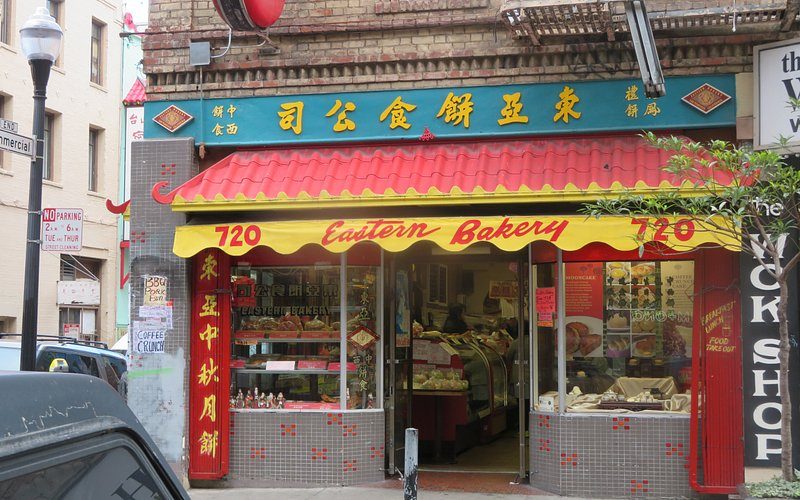
For something sweeter, Eastern Bakery, Chinatown's oldest, opened in 1924 and is still doing steady counter service with minimal queueing outside mooncake season. The coffee crunch cake is the signature grab, and it's an easy stop for any group size on the way through.
Dim sum and seafood dinners, from card table to tasting menu
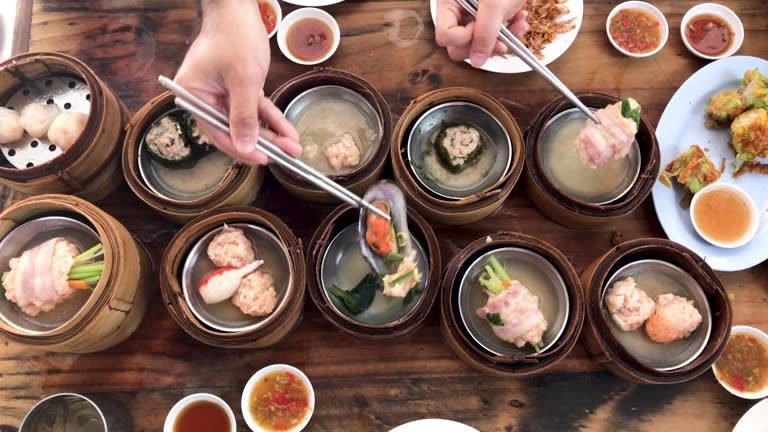
For a proper sit-down dim sum experience rather than a takeout window, Hang Ah Tea Room, tucked down its own alley off Sacramento Street, has been operating since 1920 — the oldest dim sum restaurant in the US, and still a full menu rather than carts. It suits small-to-medium groups and generally doesn't need a reservation, which makes it a good flexible stop if your plans are loose.
For the classic big-group Chinatown dinner, book R&G Lounge on Kearny — round tables that seat 8 to 10, private rooms for larger parties, and reservations recommended on weekends. The salt-and-pepper crab is the reason people keep coming back; it's genuinely loved by locals and visitors alike, not just a tourist-menu staple. Expect $$$ pricing.
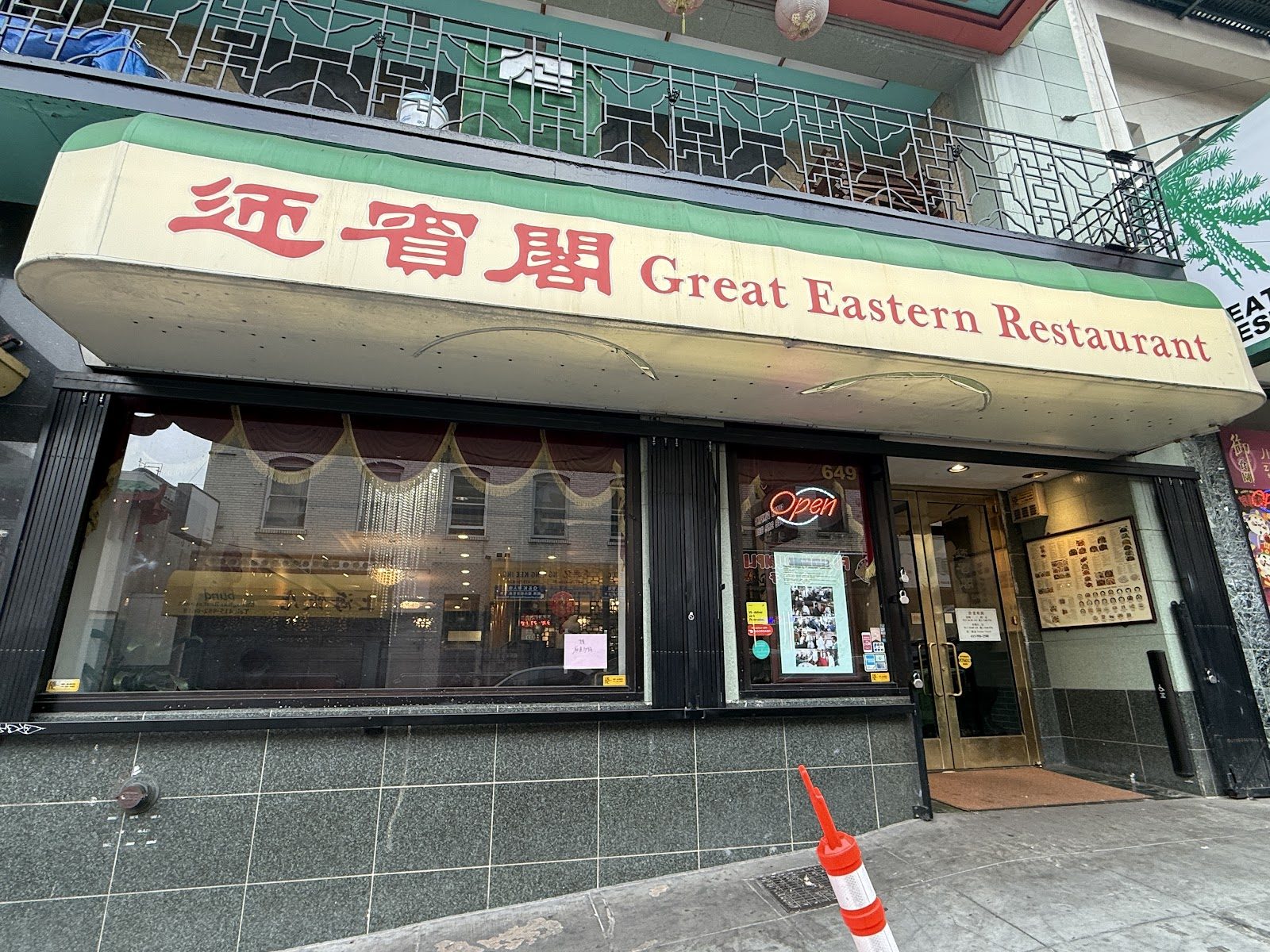
Great Eastern Restaurant is the other serious option for groups — large round tables, no strict door policy, and daily dim sum through to serious live-seafood dinners at night. It's an Obama campaign-stop favourite, which tells you the food holds up under scrutiny rather than just nostalgia. Also $$$.
At the top of the range sits Mister Jiu's — one Michelin star, chef Brandon Jew's California-inflected Cantonese cooking, and the neighbourhood's benchmark upscale meal. This is a couples-or-small-group restaurant, not a walk-in one: book ahead via Tock or OpenTable, and know that parties over four can't just show up. Tasting menus run $150 or more per head, so treat it as the one splurge dinner of the trip rather than a casual stop.
After dark: two dive bars, two doors apart
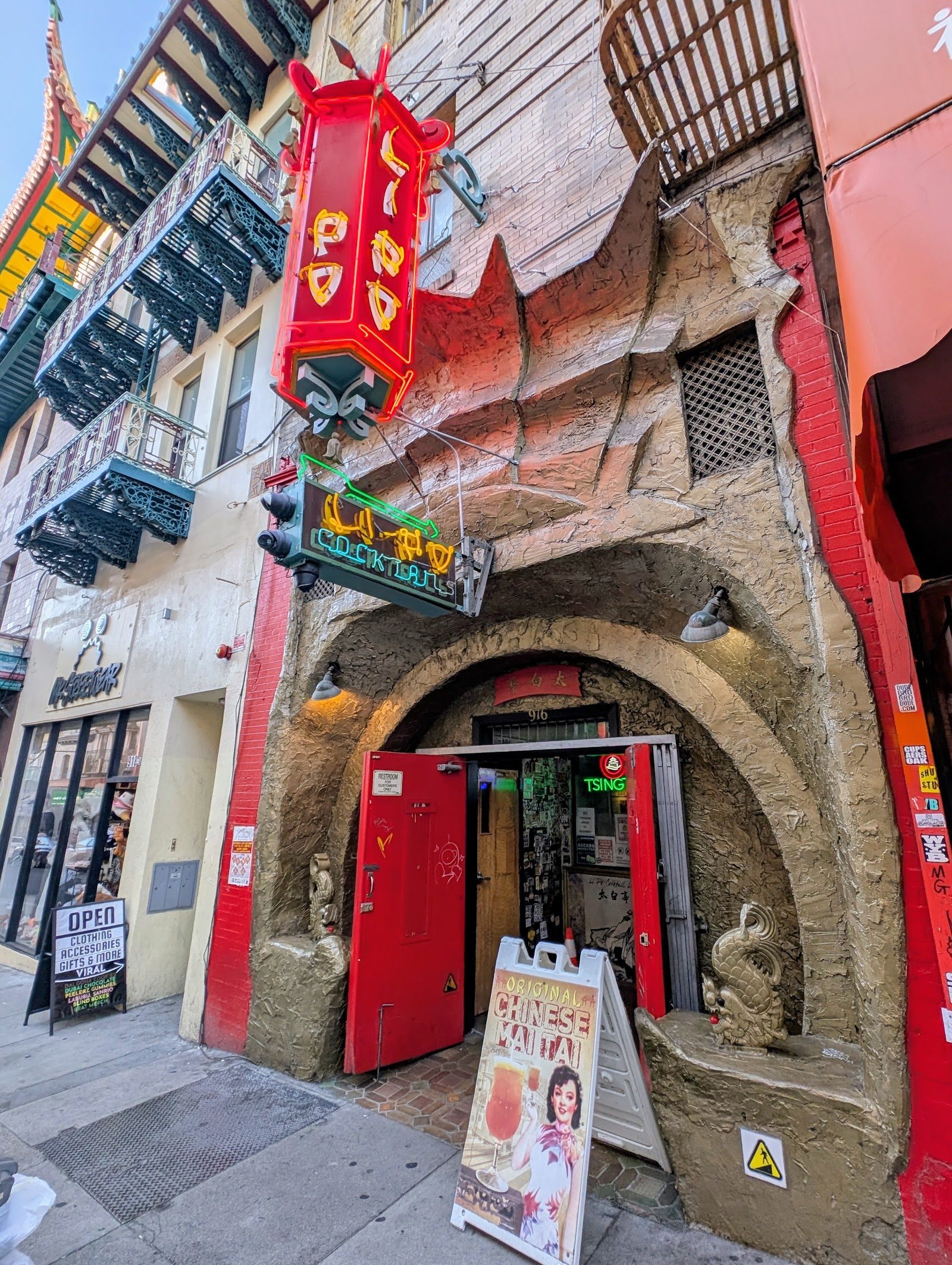
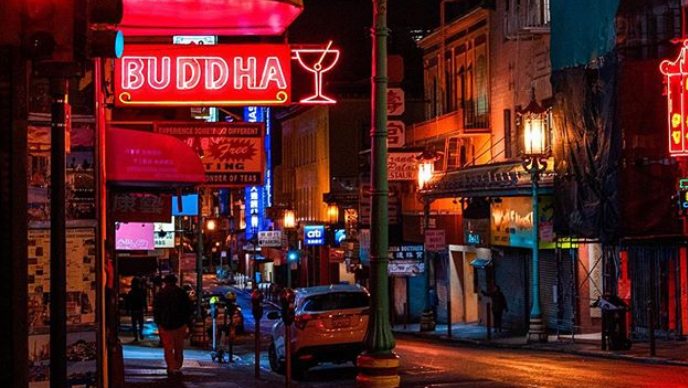
When the restaurants wind down, Chinatown's nightlife lives in two dive bars practically next door to each other on Grant. Li Po Cocktail Lounge is the better known of the two — a 1930s speakeasy-turned-dive famous for its baijiu-spiked Chinese Mai Tai, with cocktails running $12 to $15. It takes small groups fine, but standing room fills fast on weekends and there's no reservation system, so arrive early if you want an actual seat.
Two doors down, Buddha Lounge is campier, less touristed, and just as family-run and casual — same dive-bar circuit, distinctly different personality, with drinks around $10 to $14. It's closed Mondays. Doing both in one night, in either order, is a genuinely good way to close out a Chinatown day.
Where to sleep inside walking distance
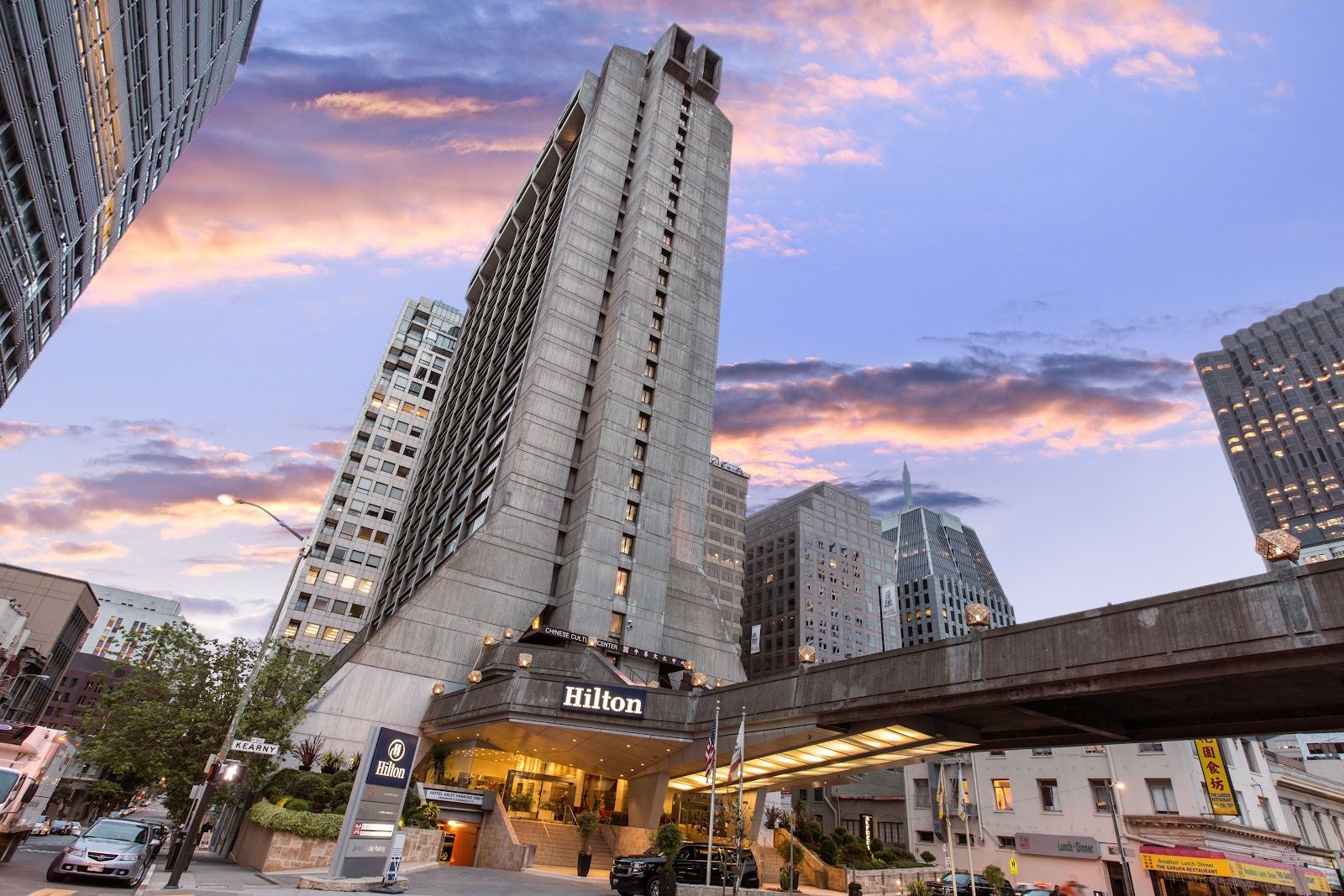
Most hotels near Chinatown mean a cab ride in from somewhere else. The Hilton San Francisco Financial District is the exception — the only major hotel that puts you inside actual walking distance of the Dragon Gate rather than requiring transport to reach it. Group blocks and events run through the standard Hilton events desk, and rates start around $250 a night. If you want to be able to walk back from Li Po or R&G Lounge rather than queue for a rideshare, this is the practical choice. For other options across the city, the San Francisco hotel search covers the full range.
Practical: transport, timing, cash, budget
Getting there. Chinatown sits between Union Square and North Beach, walkable from both. The closest transit is the Muni Metro/BART Powell Street or Montgomery Street stations, a 10-to-15-minute walk, or the California Street cable car line, which runs right along the neighbourhood's southern edge. Parking is scarce and not worth fighting for — walk in.
Timing. Go early if you want to see the neighbourhood rather than just the shopfronts: Portsmouth Square before 9am for tai chi, Good Mong Kok before 11am before the trays empty out. The Chinese Historical Society of America Museum is closed Monday and Tuesday, so don't build a visit around either day. Evenings belong to the restaurants and the two dive bars on Grant.
Cash. Several of the best stops — Good Mong Kok Bakery, the fortune cookie factory tips, the Tin How Temple donation — are cash-only or cash-expected. Carry small bills; there are ATMs along Grant and Stockton if you arrive without.
Budget. A bakery breakfast and fortune cookies will run under $20 for two people. A full dim sum lunch at Hang Ah or Great Eastern lands around $20 to $35 a head. A seafood dinner for a group at R&G Lounge or Great Eastern runs $40 to $60 a head with drinks. Mister Jiu's, the one splurge, starts at $150 a head for the tasting menu before drinks. Most of the landmarks — the gate, the square, Old St. Mary's, the walking tour — cost nothing beyond an optional tip or donation, so a full day of walking and looking costs almost nothing; it's the sit-down meals where the budget moves.
Gallery
Chinatown in pictures
Chinatown — your questions
How much time do you need for Chinatown in San Francisco?
Budget half a day at minimum — the gate, Portsmouth Square and a bakery stop can be done in two to three hours. A full day, including the free SF City Guides walking tour, the museum and a sit-down dim sum lunch, gives you a proper understanding of the neighbourhood rather than a quick pass-through.
Is San Francisco's Chinatown safe to walk around at night?
The main strip along Grant Avenue, where Li Po Cocktail Lounge and Buddha Lounge sit, stays busy and well-lit into the evening. As anywhere in the city, stick to the lit main streets rather than empty side alleys late at night, and you'll be fine.
Do I need a reservation for restaurants in Chinatown?
It depends where. Mister Jiu's requires booking ahead via Tock or OpenTable and won't take walk-ins for parties over four. R&G Lounge recommends reservations on weekends for groups. Hang Ah Tea Room and Great Eastern Restaurant generally don't require one.
What's the best time of day to visit Portsmouth Square?
Before 9am, when locals are doing tai chi and playing cards — that's the neighbourhood's real social heart at work, not a scene staged for visitors. By midday it's just a plaza people pass through.
Is Chinatown in San Francisco walkable from Union Square or the Financial District?
Yes — Chinatown sits directly between the two, and the Dragon Gate is a short walk from Union Square. The Hilton San Francisco Financial District is the one major hotel that puts you within walking distance of the gate itself.