Stand at the Embarcadero railing at dusk, a few minutes south of the Ferry Building, and the span in front of you starts to flicker. Since March 2026 the Bay Bridge has worn its light sculpture again after three dark years, and a stretch of waterfront that used to empty out by six is busy once more at nine. That is the honest shape of this attraction: a grey, workmanlike photo stop by day, a real evening after dark, and a bridge that, unlike the orange one across town, you cannot simply walk out onto from the city side.
Start with the fact most visitors get wrong
The San Francisco–Oakland Bay Bridge (its west span lands at Rincon Hill, on the downtown waterfront) is not an attraction in the ticketed sense. There is no gate, no booking office, nothing to reserve. It is public infrastructure, which is why any size of group can look at it from shore and why nobody will ever ask you for a ticket.
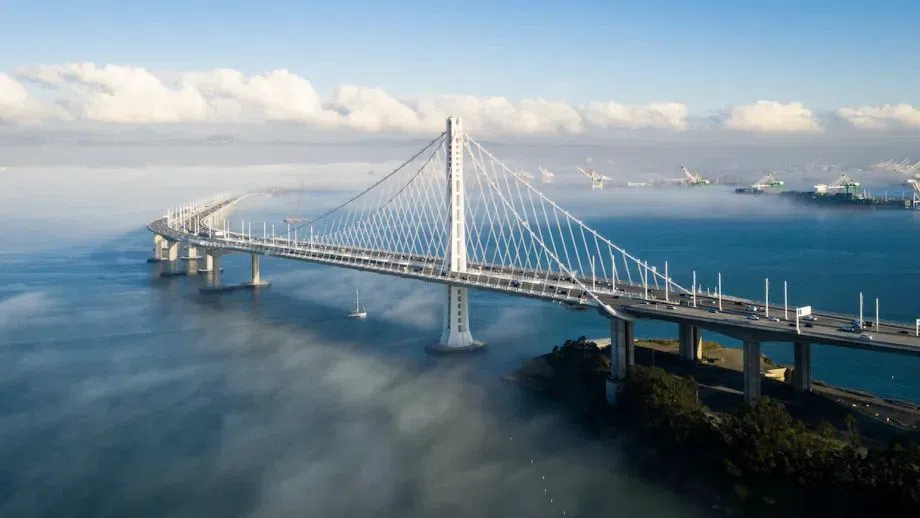
More international visitors get caught by this than by anything else: you cannot walk the San Francisco half. People arrive having read about the Golden Gate Bridge walkway, assume the same is true here, and go looking for a pedestrian entrance near Rincon Hill that does not exist. A walking and cycling path runs along the eastern half only. A proposed west-span path to San Francisco is unfunded and not expected before the 2030s, so treat it as a rumour rather than a plan.
Driving it is not sightseeing either. The toll is 8.50 USD westbound only and it is fully electronic. There are no cash lanes, so a hire car needs a transponder or an invoice arrangement before you get there. Carpools of three or more pay 4.25 USD in peak hours. You cannot stop on the span, and there is no parking at the bridge itself, which is why coach groups get dropped on the Embarcadero and walk to the water.
What you actually see from the city shore
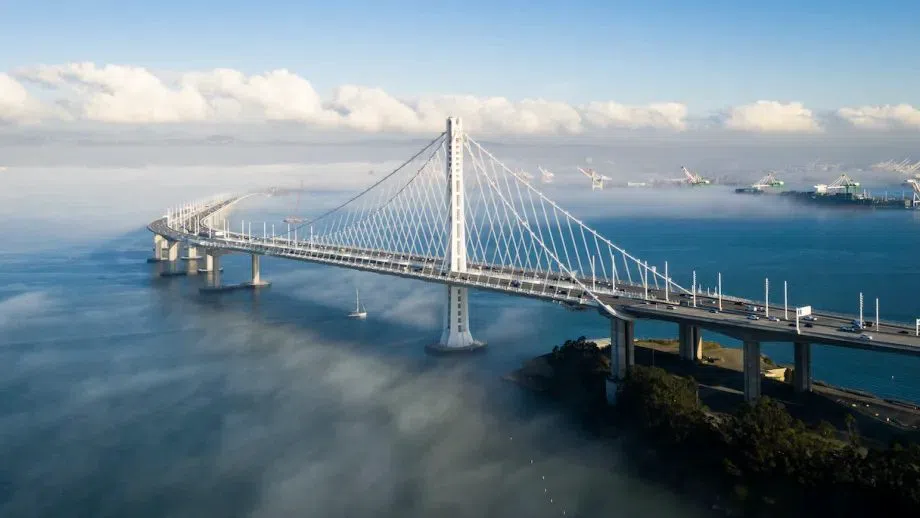
The head-on view is the one worth your time, and it is free. Rincon Park (Cupid's Span), on the Embarcadero waterfront just south of the main ferry traffic, gives you the west span unobstructed and straight ahead, with the two towers stacked behind each other and the suspension cables running up out of the water. It is an open public park with no gate and no closing time, it is where almost every photograph of this bridge is taken, and it is the standard meeting point for walking tours of this stretch. If you only do one thing from this guide, stand here.
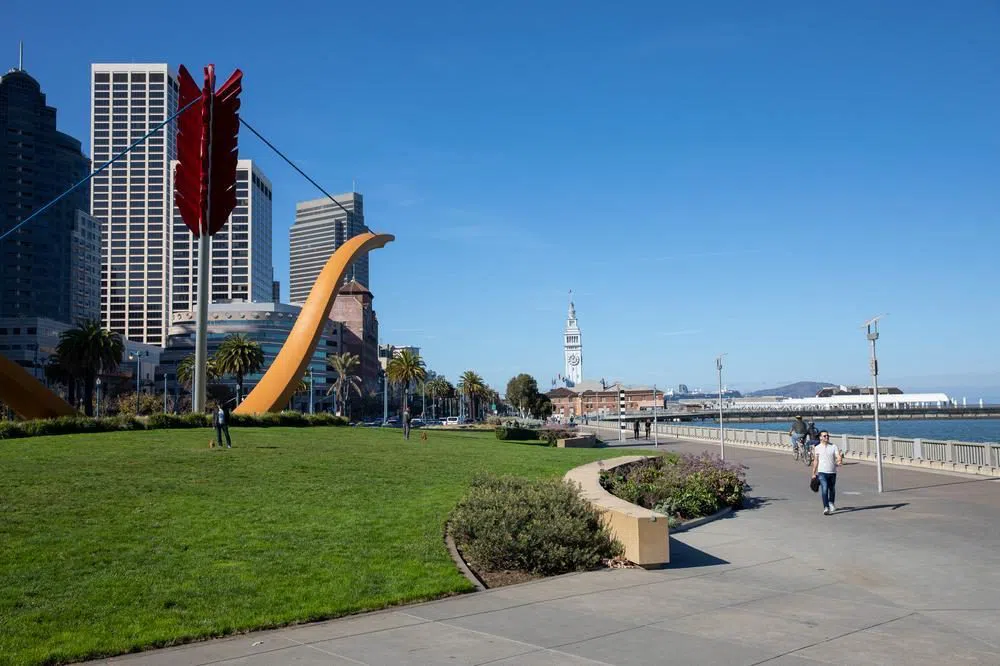
What you are looking at is deliberately undramatic compared with its famous neighbour: steel grey instead of orange, two decks instead of one, built to move a region rather than to be admired. Give it ten minutes and the appeal is the scale and the working-city quality of it: ferries crossing underneath, the towers disappearing into fog, the city's financial towers at your back.
The lights are the reason to come back after dark
The Bay Lights, viewed from the Embarcadero railings between Folsom and Harrison, is what turns this from a photo stop into an evening. The installation was relit on 20 March 2026 after three years dark and an 11 million USD privately funded rebuild, and it now runs dusk to dawn, nightly. It is free and outdoors, so group size is irrelevant and nobody needs a reservation; those railings absorb a crowd comfortably.
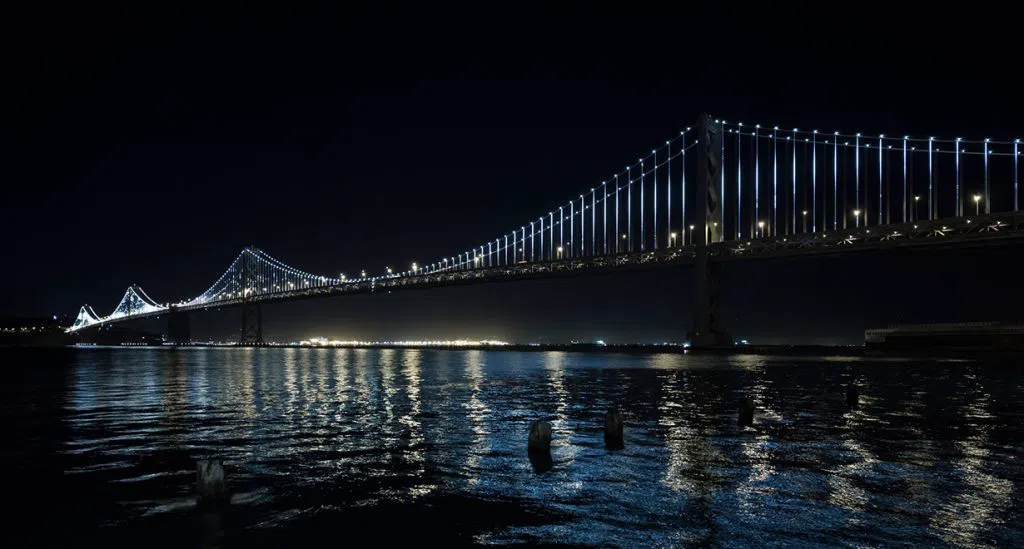
Plan for the hour after sunset rather than full darkness. You get the lights, the last of the colour over the water and the skyline coming on behind you in the same frame. Bring a layer heavier than you think you need; the wind off the bay at that railing is the reason most visitors cut the evening short.
Walking out onto the span
If you want to physically be on the bridge, the Bay Bridge Trail (Alexander Zuckermann Bicycle-Pedestrian Path) is the only option. It runs 2.2 miles from the East Bay shore out to Yerba Buena Island, it is open 6am to 9pm, and it is a properly built piece of public space: 15.5 feet wide with separate bike and pedestrian lanes, seven belvedere platforms to stop and look from, and a vista point at the far end with restrooms, benches, bike racks and a hydration station.
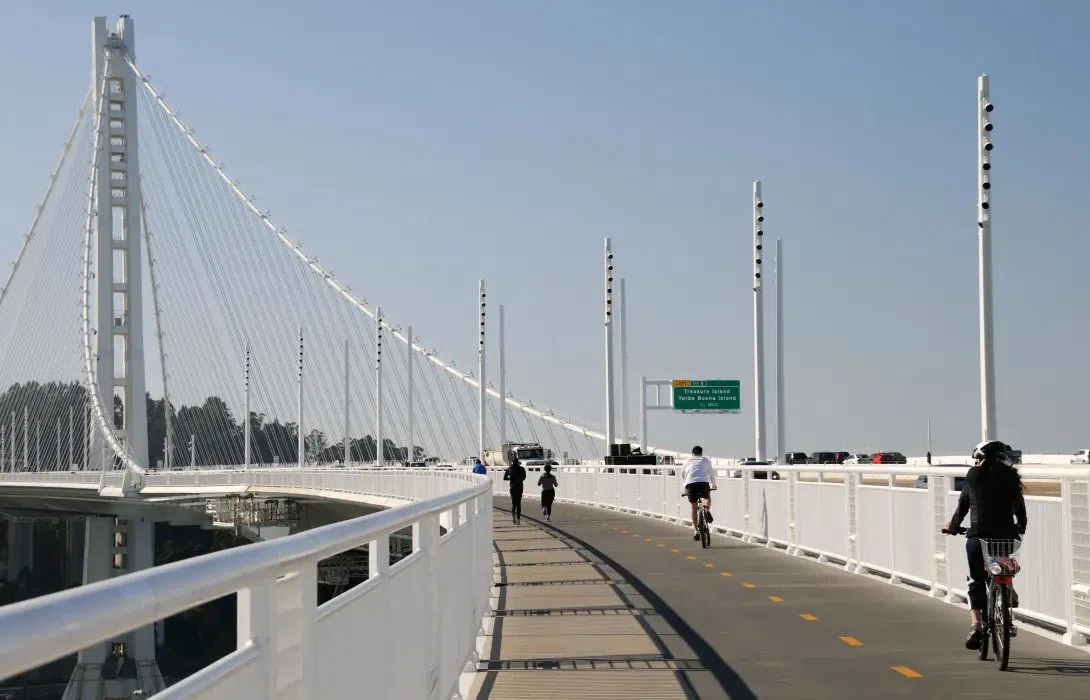
Be clear with yourself about the geography before you commit. The path begins on the eastern shore and ends on the island. It does not continue to San Francisco, so this is an out-and-back trip of roughly two to three hours walking at an unhurried pace, or under an hour each way on a bike. Self-guided groups are fine, but keep to single file; cyclists use it at speed and the pedestrian lane is not a place to walk four abreast. Those 9pm gates are real, so start a late-afternoon walk with the return leg in mind.
The islands in the middle of the bay
The other half of a proper day here is Yerba Buena Island and Treasure Island, joined to each other and reachable by ferry or the Muni 25 bus. Out there the view stops being one bridge and becomes the whole bay.
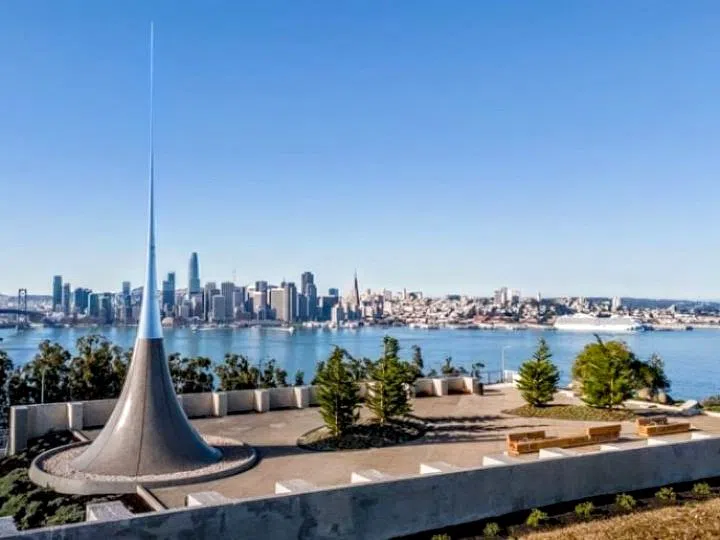
Panorama Park, at the apex of Yerba Buena Island, is the payoff. Built on a 1918 water-tank footprint and now run by SF Rec and Parks, it is the one spot where you see the Bay Bridge, the Golden Gate Bridge and the skyline in a single slow turn. It is free, unstaffed and open 5am to midnight. The catch is the climb: it is steep from the Muni 25 stop, which rules it out for limited-mobility visitors arriving by bus, and a coach party of mixed fitness will fragment on the way up.
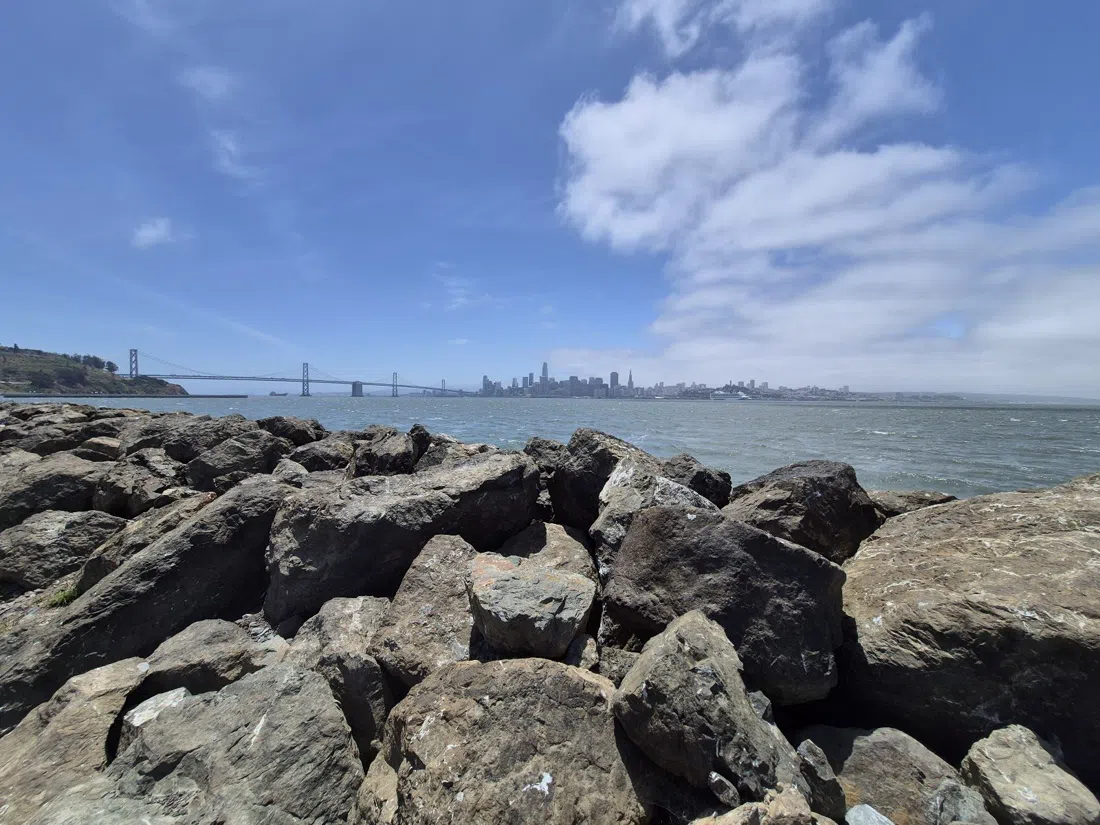
Flatter and easier is Cityside Park on Treasure Island, the island's first real public park, with phase one opened in September 2025. It was built for groups: a great lawn designed to work as event space, oversized picnic tables and public grills, with the bridge and skyline straight ahead. It is the best free picnic spot out here for a full day, and the one place in this guide where a large organised gathering genuinely needs to clear it with Rec and Parks first.
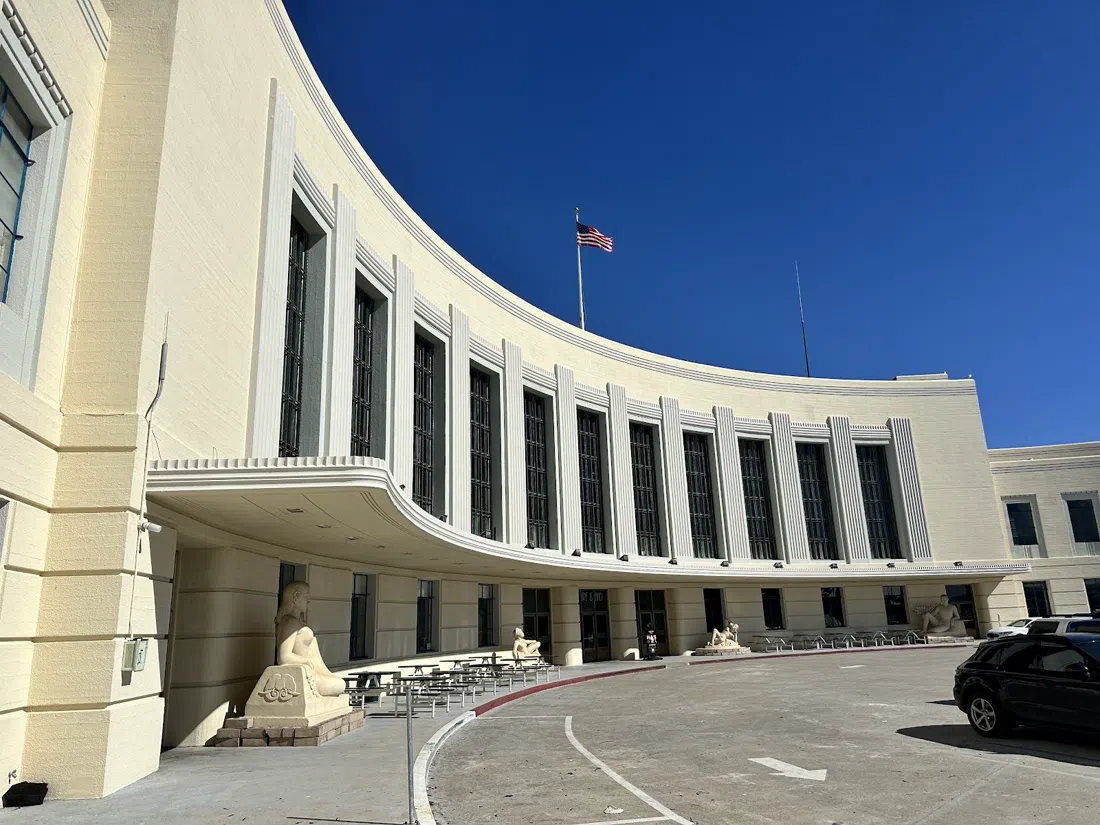
For an indoor hour, the Treasure Island Museum is a free walk-in gallery with no booking needed, open 9am to 5pm on weekdays and noon to 7pm at weekends, closed on holidays. Small groups are easy and the long weekday window fits a coach schedule better than most museums. One standing warning for the whole island: redevelopment is ongoing and road layouts, parking and transit patterns keep shifting, so check your route on the day rather than trusting a six-month-old blog.
Lunch out there, dinner back on the waterfront
Treasure Island has exactly one obvious lunch stop and you must check the days. Mersea Restaurant and Bar is open Wednesday to Sunday, roughly 11am to 6:30pm, and shut Monday and Tuesday, which has stranded plenty of visitors who ferried over for a meal. Mains run about 20 to 35 USD plus San Francisco's 4% employer surcharge on the bill. It takes large-group reservations and private bookings, and from April to October there is a games patio with bocce, cornhole and giant Jenga, which is a better fit for a family group than it sounds.
Treasure Island Wines is the low-key local counterweight to all the viewpoints: a working urban winery and tasting room, open to the public at weekends from 1pm to 5pm or by appointment, with flights at roughly 15 to 25 USD. The space is hired out for private and corporate events. Those narrow hours mean it only fits a weekend itinerary; do not build a Tuesday around it.

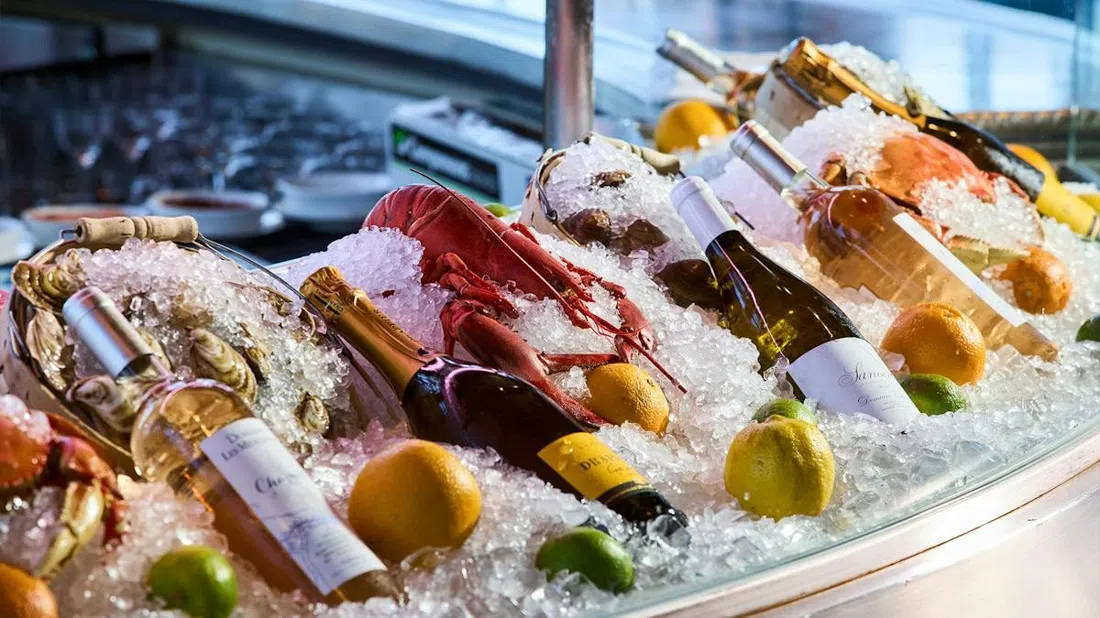
Back on the city shore, the closest proper restaurant to the span is Waterbar, at the south end of Rincon Park. It is open daily for lunch and dinner with continuous bar service, so a group can arrive off-peak without a hard sitting time, and it is the most reliable way to watch the relit bridge from a table rather than a railing. Reckon on 60 to 110 USD a head with wine, and it takes private dining.
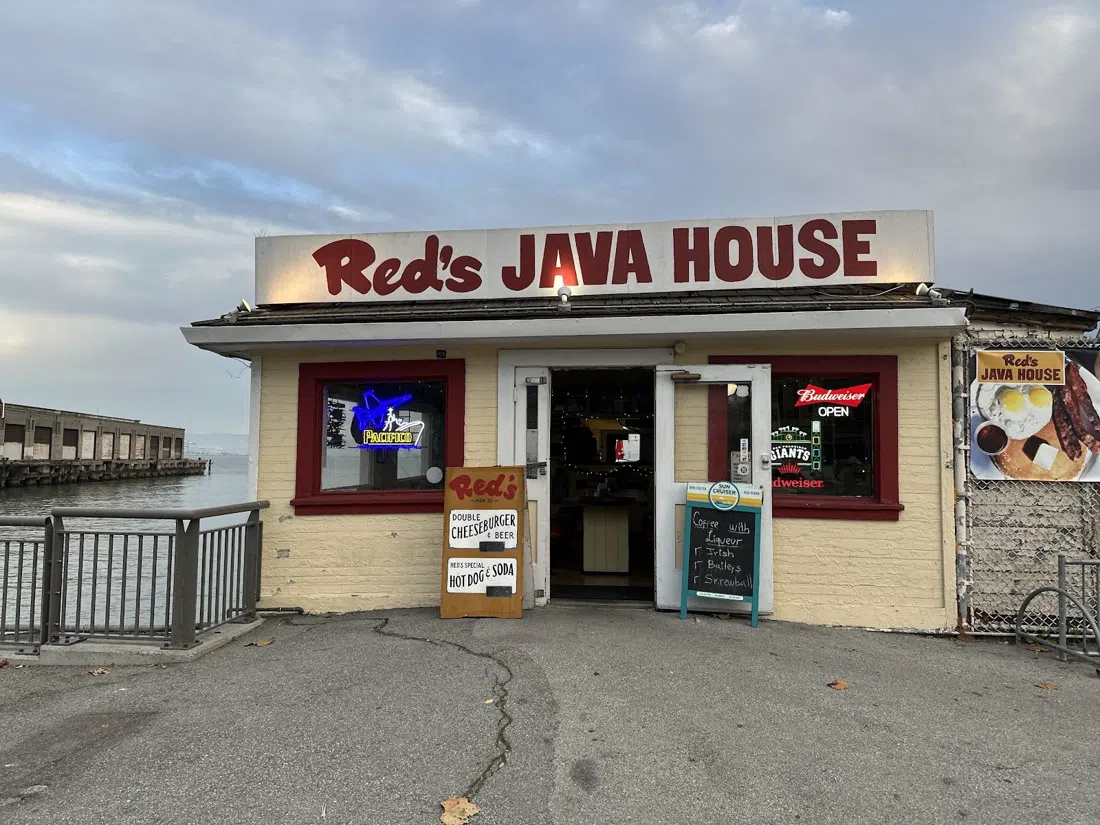
Cheaper and, for my money, more memorable: Red's Java House, a counter-service shack on Pier 30 serving since 1955, with a big outdoor patio looking straight up at the bridge. A burger or fish and chips with a beer runs about 12 to 20 USD. There are no reservations and no table service, so a large party should expect to split across tables, and it is a far better real-San-Francisco stop than anything you will be sold at Fisherman's Wharf.
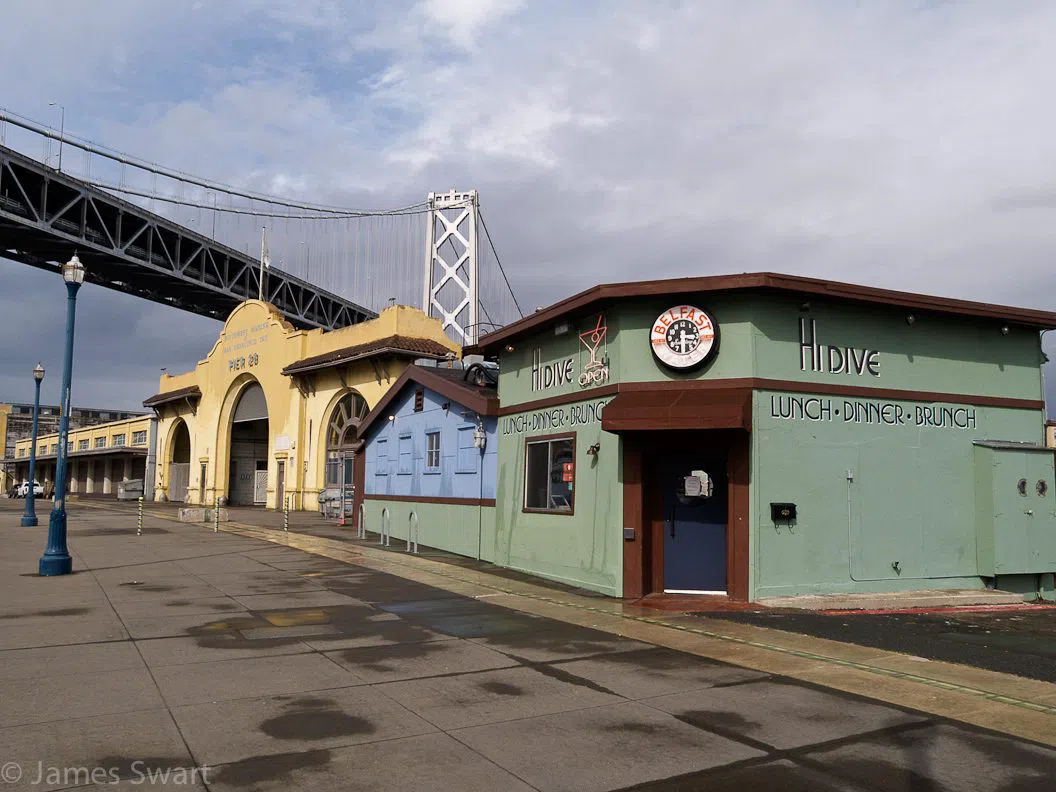
For a drink literally under the bridge, Hi Dive on the waterfront a short walk from Oracle Park is open from late morning to 10pm, with drinks and a bite around 10 to 20 USD. It is small and local. Pairs and small groups fit comfortably; a coach party would swamp the room, so send those people to the outdoor deck or skip it entirely.
What to do when the fog wins
Summer afternoons here go grey and windy with no warning, and a bridge you came to look at can simply vanish. Have a wet-weather plan.
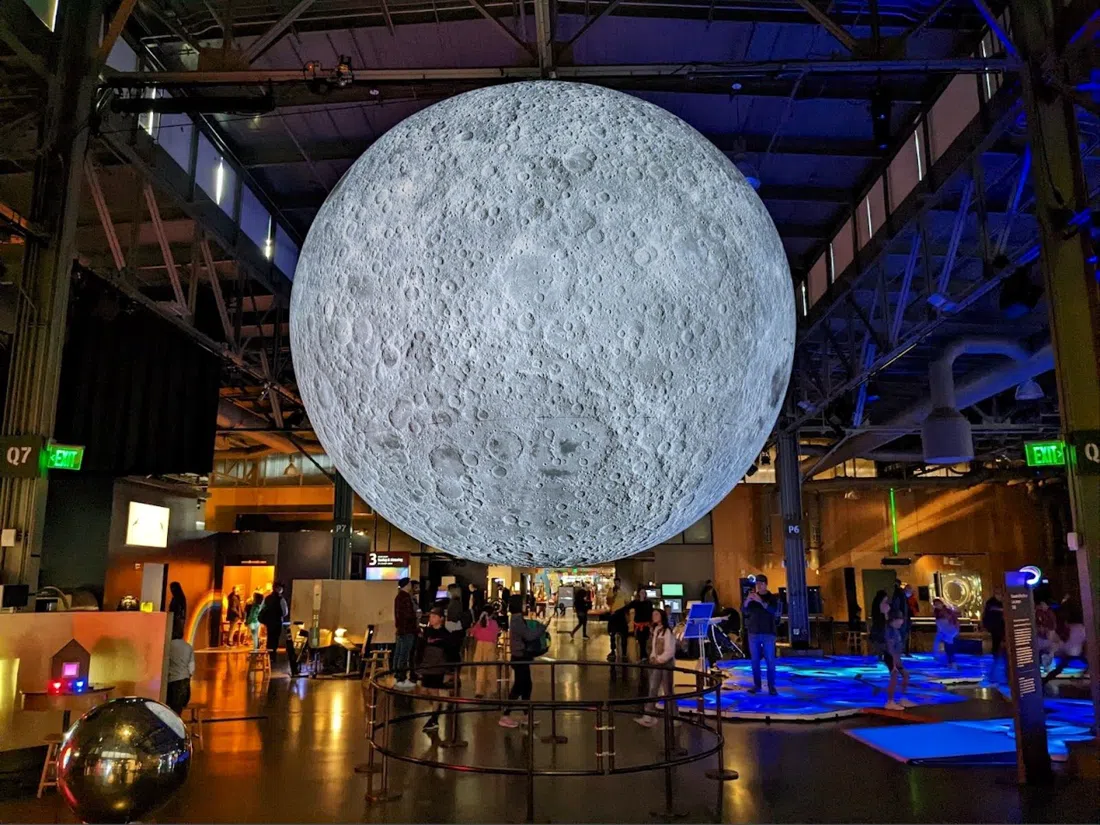
The Exploratorium on Pier 15 is the nearest major indoor attraction and the obvious fix. Entry is 39.95 USD for adults, 29.95 USD for youth aged 4 to 17, students and over-65s, and free for under-4s; the adults-only After Dark on Thursday evenings, 6pm to 10pm, is 20 USD for 18-plus and suits grown-up groups far better than a weekend afternoon. It uses advance online timed tickets, it is closed Monday and Tuesday, and it does hit capacity in summer and on holiday weekends, so book a slot before you set off.
Ten minutes inland, Salesforce Park is a free elevated green break on a rooftop, open 6am to 9pm in summer and 6am to 8pm from November to April, with daily programming. The glass gondola up from Mission Street is included and carries small batches at a time, so a big group will stage up in waves; it also only runs one way, and you come back down by lift or escalator.

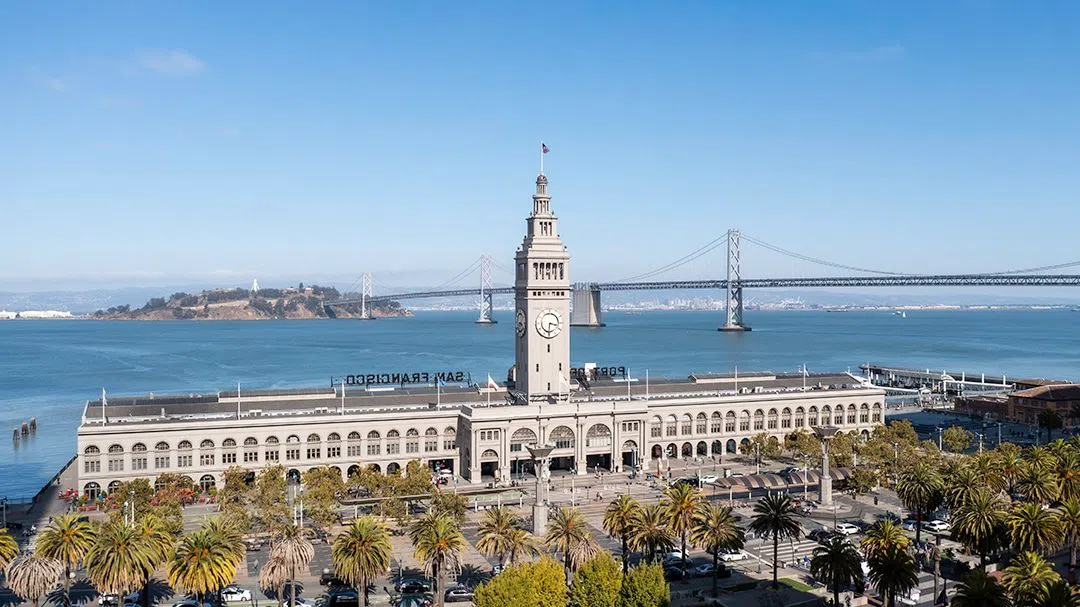
The whole day tends to run through the Ferry Building Marketplace on the Embarcadero. Free to enter, open daily 7am to 8pm, stall food roughly 10 to 25 USD, with a year-round farmers' market on Saturday 8am to 2pm and Tuesday and Thursday 10am to 2pm. It is also where the eight-minute ferry to Treasure Island leaves, from Gate B behind the building, which makes it the natural muster point for any group splitting up and regrouping.
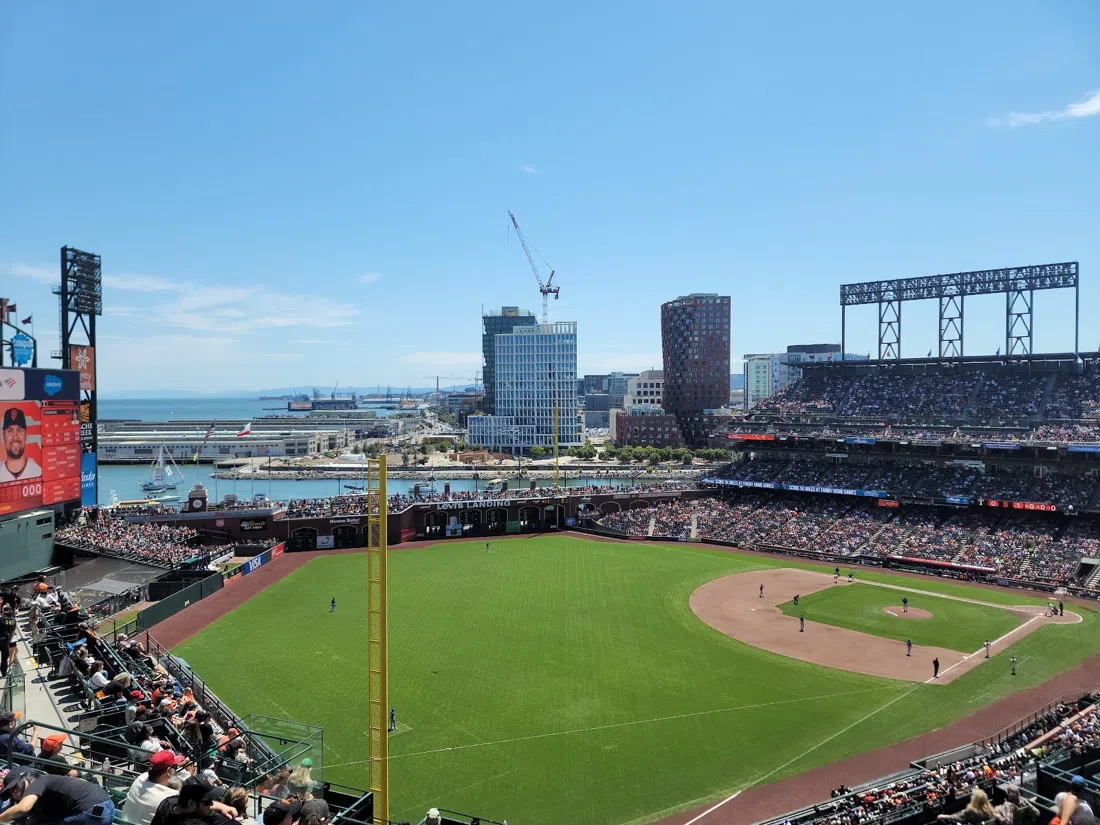
If you want one paid add-on within walking distance, Oracle Park Ballpark Tours on 3rd Street is the strongest. The guided 90-minute tours run year-round from the Juan Marichal statue by the O'Doul Gate and take in the field, a dugout, the batting cage and the press box. Tickets are 46 USD for adults, 40 USD for over-55s and active US military, 35 USD for kids 3 to 12 and free under 3, with prices varying at peak times. Two warnings: tours do sell out, so book ahead, and they do not run on day-game dates, so check the fixture list before you build an afternoon around it. There is more context on pairing all this with the rest of the city in our San Francisco guide.
How long it takes and what you book
City side only, you need about two hours: the railing at Rincon Park, a walk north to the Ferry Building, and a meal. Add the islands by ferry or bus and you have a full day, comfortably six to eight hours including lunch. Add the walking path on the eastern half and it is a separate half-day in its own right.
Nothing about the bridge itself involves a queue or a ticket. The things that need booking are the ones around it: the timed slots at the science museum, the ballpark tours, a large-group table out on the island. Guided full-day options that take in this stretch do exist and are attached to this page as a card; they run seven days a week and start from 239 USD per person. The bookable options here carry 9,717 traveller reviews between them, and the top-rated one holds 4.9 out of 5 from 4,153 reviews. What you should weigh is fit: most full-day tours treat the bridge as a stop on the way to somewhere else, and if the bridge is what you came for, your own two feet plus a ferry ticket will serve you better and cost almost nothing.
Best time to go
Evening beats daytime, and that is not a close call now the lights are back. Arrive at the Embarcadero railing about 30 minutes before sunset, walk the stretch between Folsom and Harrison as the light goes, and let the installation come up; it runs dusk to dawn, so there is no fixed show time to miss.
For the daytime half, mornings are clearer than afternoons for most of the year; the summer fog typically builds through the afternoon and the wind picks up with it. September and October are the city's genuinely warm, clear months and the best bet for the single-turn view from the island's high park. Winter days are often crisp and sharp between fronts, with the trade-off of shorter daylight and a cold railing.
By day of the week, Saturday is strongest: the farmers' market is on, the tasting room is open, the island restaurant is serving, and the ferry runs through the day. Monday and Tuesday are the weakest, with the island restaurant shut, the science museum closed and the weekend-only tasting room out of reach. If a Tuesday is all you have, go in the evening and make it about the lights and dinner.
Is it worth it
Yes, with a condition attached: it is worth an evening, not a detour in the middle of a packed sightseeing day. As a daytime landmark against the Golden Gate Bridge, this bridge loses. It is not as pretty, you cannot walk the city half, and the standard view is from a railing you will share with commuters. Judged as a free evening with a light installation, a cheap waterfront dinner and the best panorama in the bay thrown in, it is one of the better-value things San Francisco offers.
It suits couples and small groups best: the diner patio, the dive bar, the tasting room and the railing at sunset all work at that scale. Families do well with the island parks, the picnic lawn and the science museum. Large coach groups can absolutely be served here, but on a narrower menu: Embarcadero drop-off, the head-on viewpoint, the ballpark tour, the picnic park, and nothing that depends on squeezing 40 people into a small room. Serious walkers and cyclists should treat the eastern path as the main event and the city-side view as the warm-up.
Practicalities
The Embarcadero viewpoints are a flat 10 to 15 minute walk from the Ferry Building, with Muni Metro and the historic F-line streetcar running the length of the waterfront. For the islands, take the eight-minute ferry from Gate B or the Muni 25 bus; for the island's high park, expect a steep climb from the bus stop. Driving across is the one thing you do not need to do, and there is no parking at the span.
Cards work everywhere listed here. The bridge toll is electronic with no cash lanes, so sort out a transponder or invoice before you drive anything over it. Expect a 4% San Francisco employer surcharge on some restaurant bills. It is normal and it is printed, not a scam.
Budget half a day city side, a full day with the islands. Check three sets of hours before you leave: the island restaurant (closed Monday and Tuesday), the tasting room (weekends 1pm to 5pm), and the walking path gates (6am to 9pm).
A free day is entirely realistic, because every viewpoint, both island parks, the museum, the rooftop park and the lights cost nothing. Add about 15 to 25 USD a head for a market or diner lunch, 40 USD for the science museum, 46 USD for a ballpark tour, or 60 to 110 USD a head for a bridge-view dinner with wine. For staying near the viewpoints, the Embarcadero and South Beach waterfront put you within walking distance of everything above. Start with a San Francisco hotel search and filter for the waterfront rather than the hills.