San Francisco was built on hills no reasonable street grid could tame, and rather than flatten them, the city climbed instead. Scattered across more than forty neighborhoods are upwards of 400 public stairways — a second, parallel city laid directly over the first, reachable only on foot. Most visitors never find it, because it doesn't run past a single hotel lobby or souvenir shop. It runs behind houses, through community gardens, and up mosaic-tiled risers that neighbors laid one piece at a time, decades before anyone thought to photograph them. This is a route through the best of it, hill by hill.
A note before you start climbing: everything here is free and fully public, but almost none of it is empty space. These stairways cut between people's front doors, gardens, and bedroom windows. The city built them for residents to get up and down the hill — tourism is a tolerated side effect, not the point — so the pace, noise, and group size you bring matters more here than it does anywhere else in the city.
Telegraph Hill to Russian Hill: Where the Stairway City Began
The stretch between Telegraph Hill and Russian Hill has the densest concentration of stairway walking in San Francisco, and it's the natural place to start a morning. Base yourself in North Beach — the cable car's Powell-Mason line drops you a few blocks from the whole cluster — and work uphill from there.
Most visitors funnel straight onto the Filbert Street Steps, the famous run up Telegraph Hill toward Coit Tower, and by mid-morning it shows: an eight-foot-wide staircase carrying all of that foot traffic at once. The better move, especially if you're walking with more than two people, is the Greenwich Street Steps (Telegraph Hill), one block over. It's the uncrowded sibling route up the same hillside — same tree cover, same quiet, none of the queue. There are no restrictions here; it's simply less discovered, which is reason enough to name it explicitly rather than let everyone pile onto the same narrow tread.
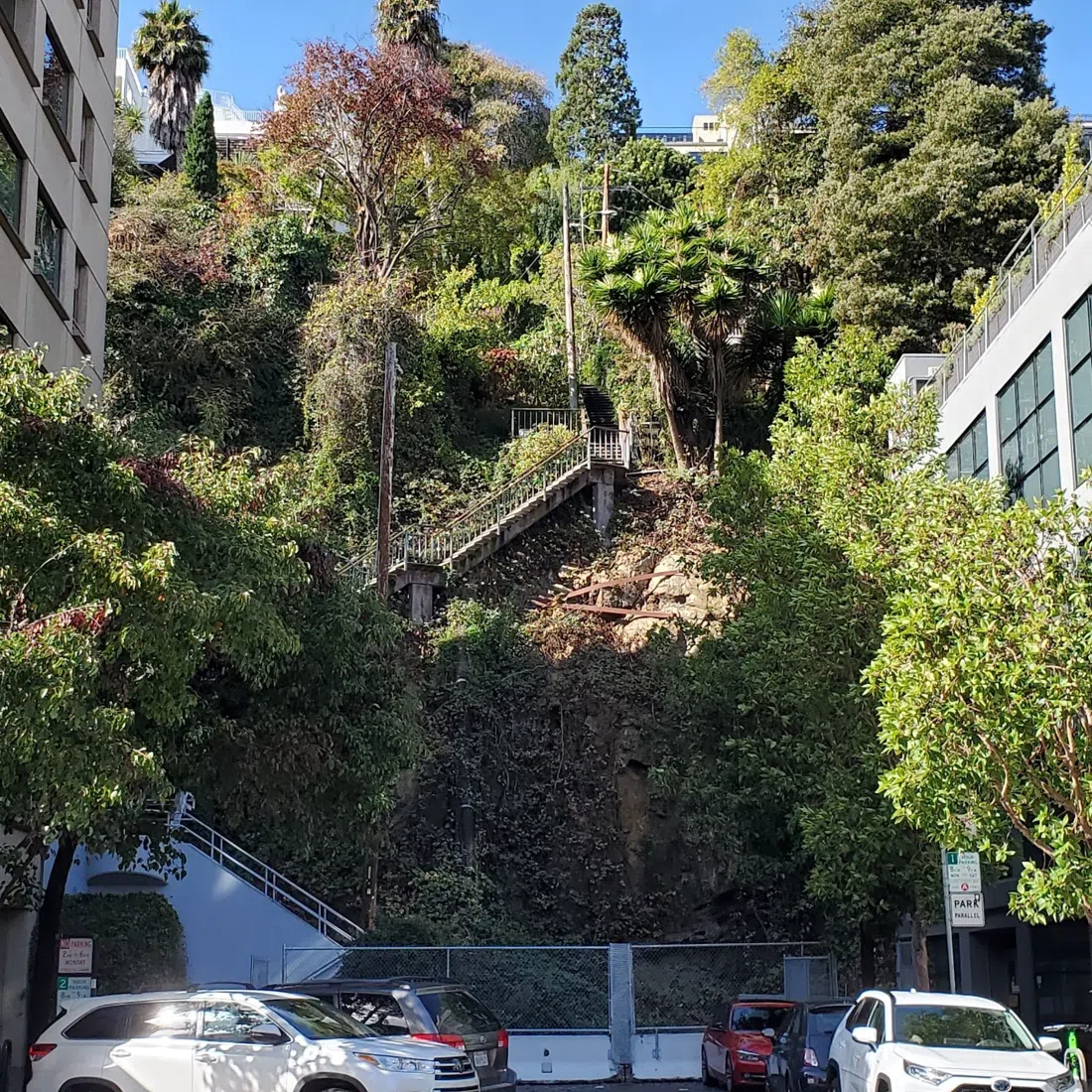
From the base of the hill, cross toward Russian Hill for the Vallejo Street Steps (Russian Hill), which do something none of the other stairways on this route manage: they pass through an actual named park partway up, with benches at the landing. If you're walking as a group, this is where you regroup — the staircase itself is wide enough for that, unlike almost everything else on this list.
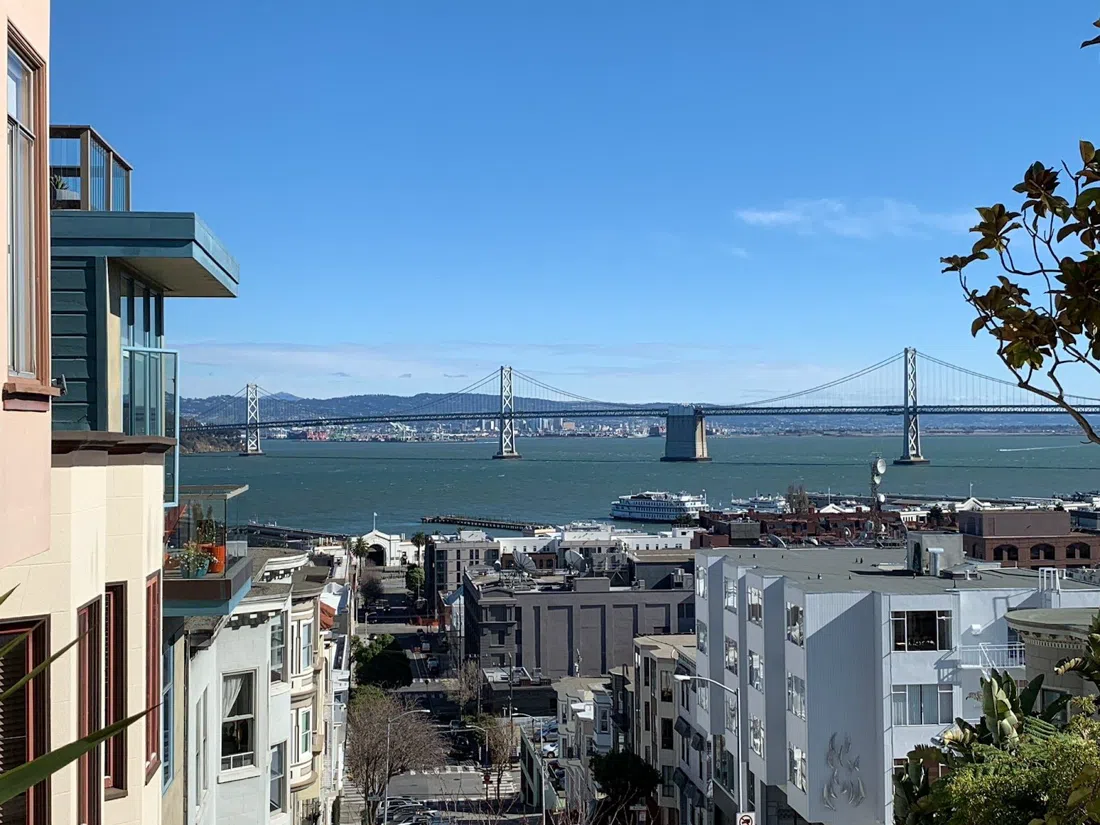
The detour worth building real time around, though, is Macondray Lane (Russian Hill), the narrow pedestrian lane that inspired Armistead Maupin's Barbary Lane in Tales of the City. It's a genuine literary landmark hiding in plain sight, cobblestoned and half-buried in ferns, with no sign announcing what it is. But treat it as residential, not as a photo backdrop — it's a fully public right-of-way running directly past people's front doors, and the lane rewards a slow, quiet pace far more than a loud one. Keep groups small in both scale and noise here; this isn't a stop for a tour bus's worth of people talking over each other.
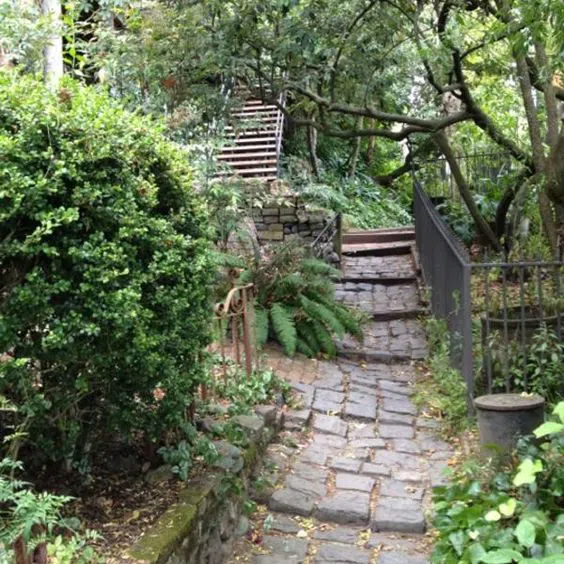
The Inner Sunset's Twin Mosaics
A fifteen-minute ride out on the N-Judah line drops you in the Inner Sunset, home to the two mosaic stairways that most people picture when they picture San Francisco's tiled steps at all — and most people only find one of them.
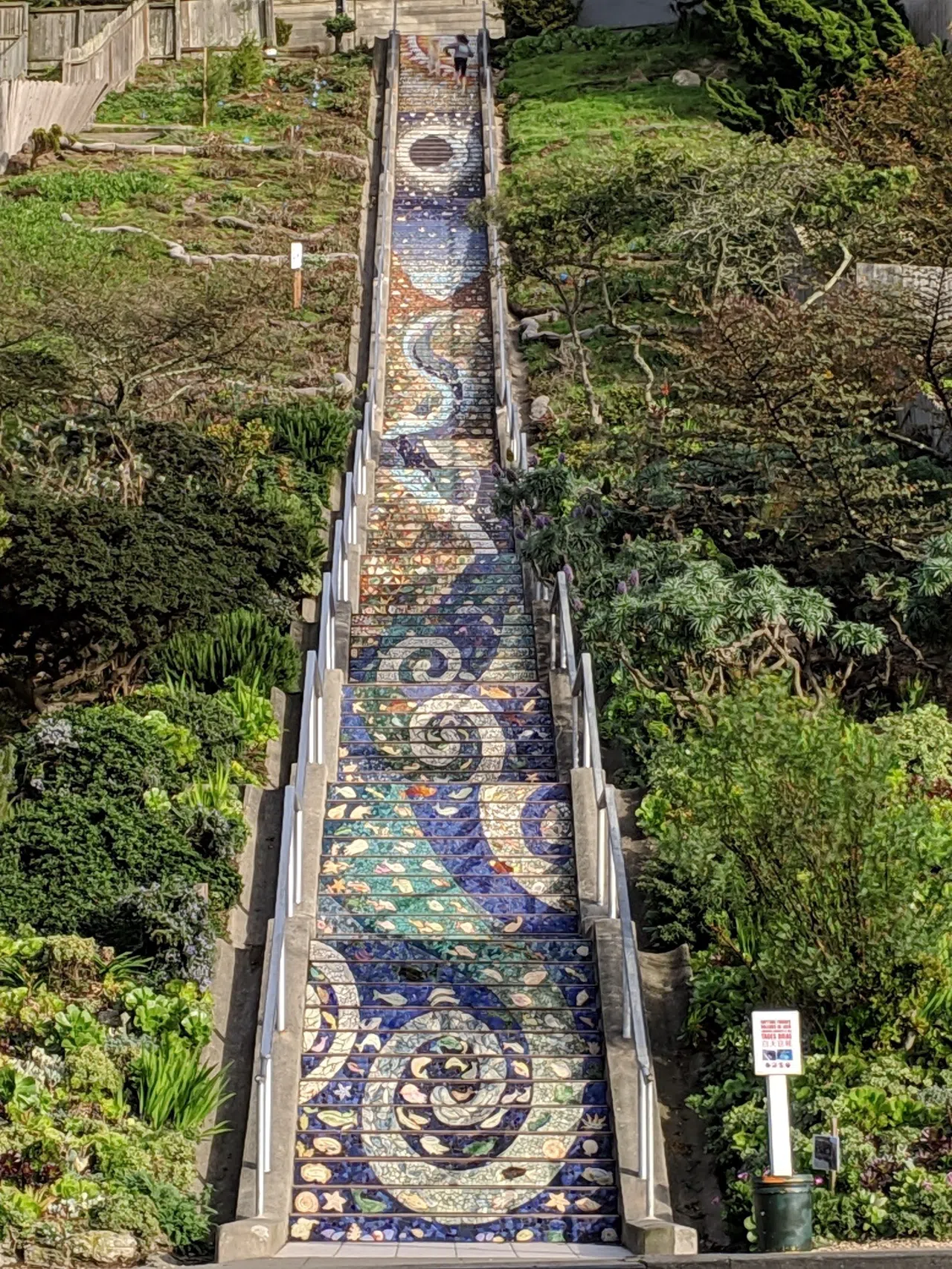
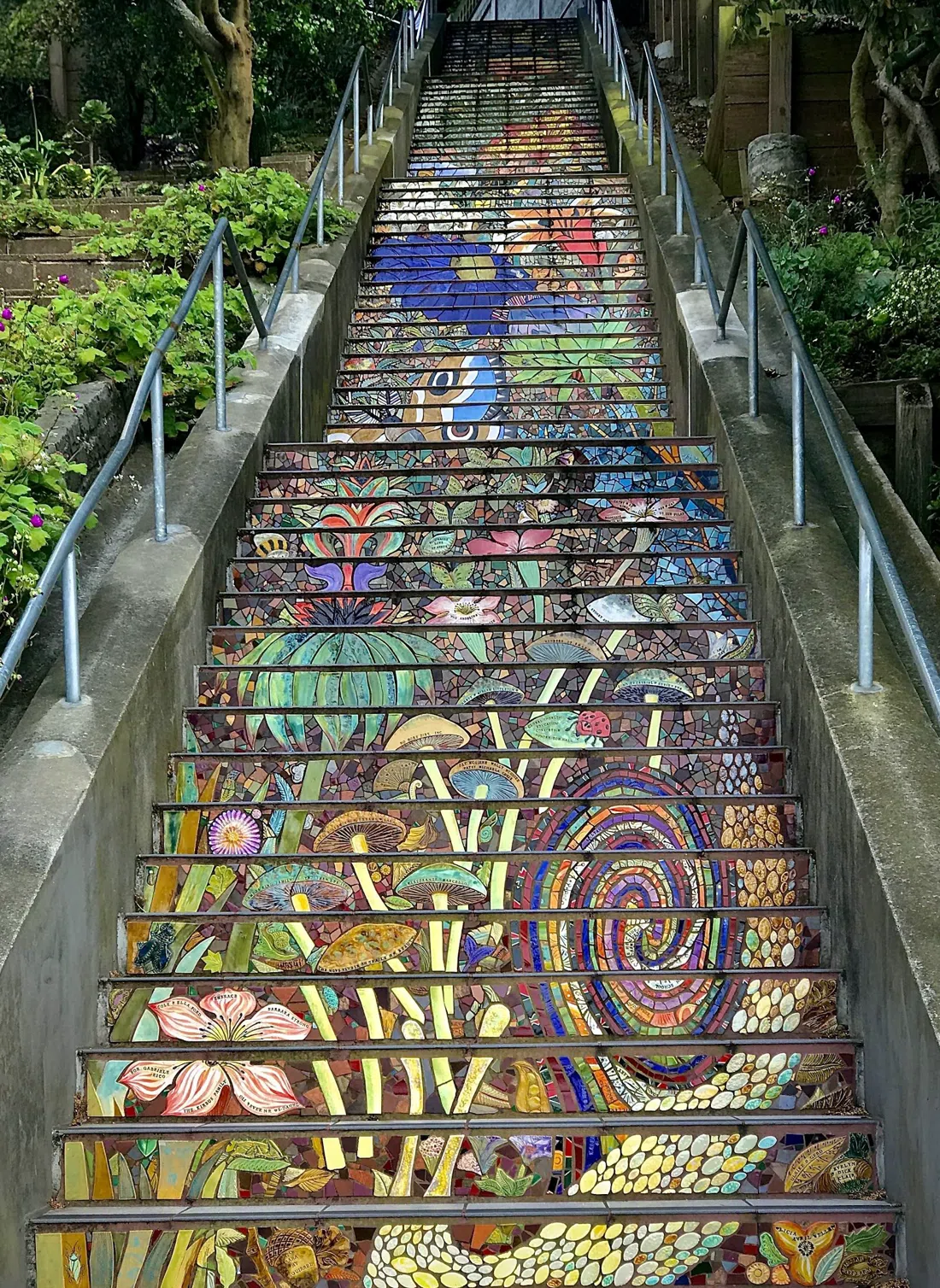
The 16th Avenue Tiled Steps (Inner Sunset), also known as the Moraga Steps, is the original: a community mosaic project completed in 2004 that effectively started the city's tiled-steps movement, a swirl of sea-to-sky imagery climbing from Moraga Street to Grand View Park. It's fully public with no booking required, but the tread narrows to single-file in places, so groups should climb in a loose line rather than spread across the staircase — and because it runs between private homes, the unspoken rule is to keep it quiet. It's also the most photographed stairway in the city by a wide margin, which means the smart visit is early morning, before the queue for a clean shot on the steps themselves forms.
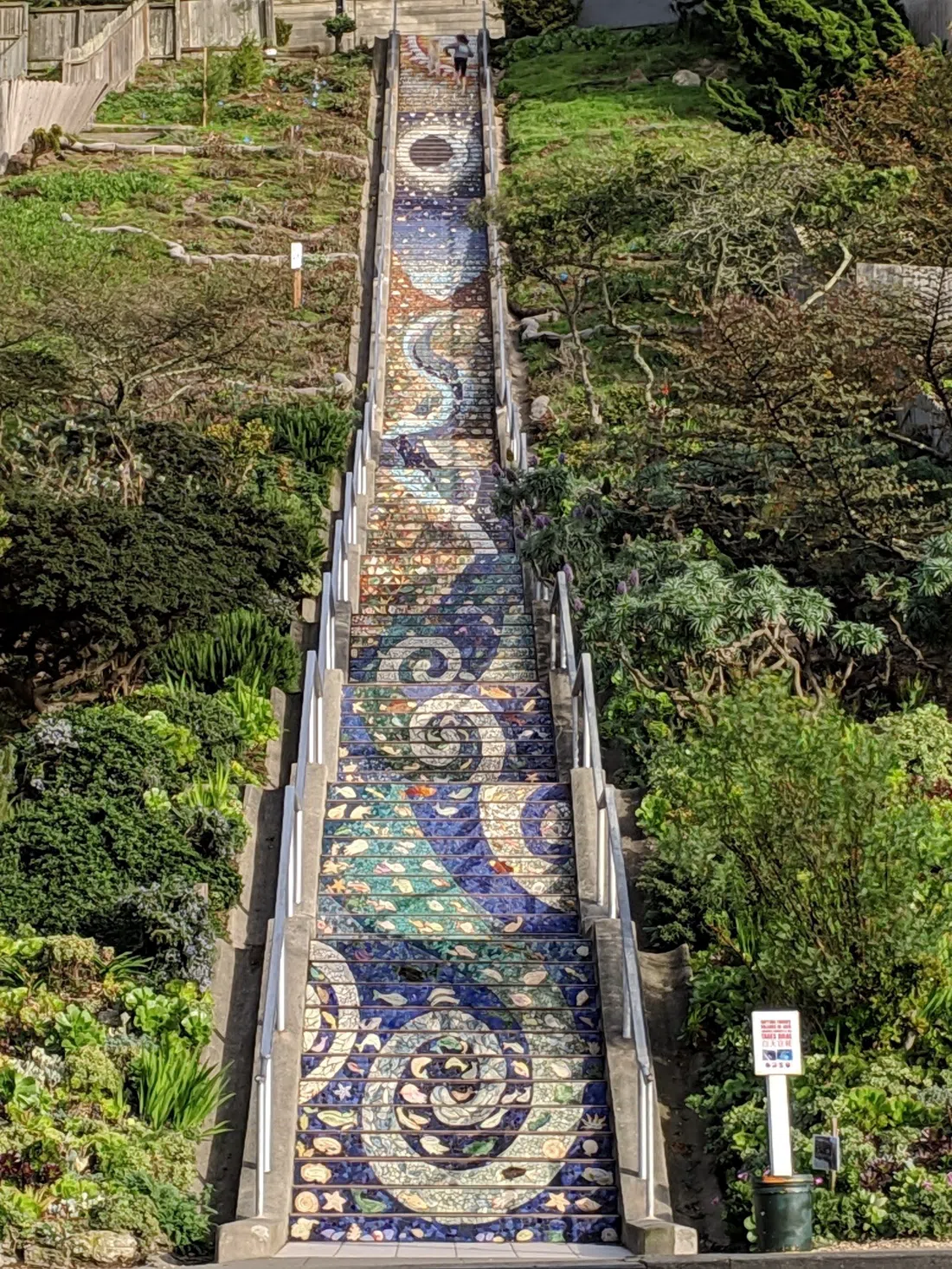
Few blocks north sits the Hidden Garden Steps (Inner Sunset), built by the same artist duo behind the 16th Avenue steps and genuinely less crowded — which makes it the better stop if you want to actually linger rather than shuffle through for a photo. Pairing the two into one Inner Sunset detour is the natural way to walk this pocket of the city: the famous one for the icon shot, the quieter twin for the ten minutes of actually sitting with the artwork.
Pacific Heights: Where Locals Run Repeats
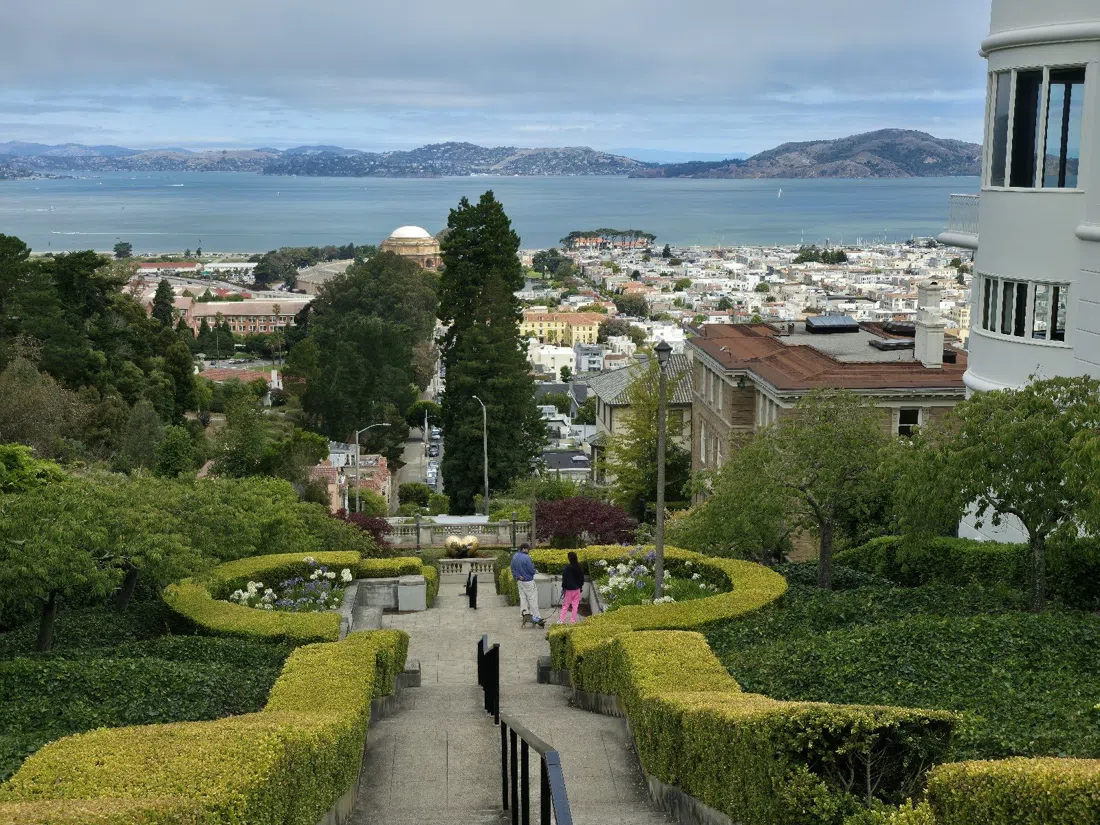
The Lyon Street Steps (Pacific Heights, on the border with Presidio Heights) is the odd one out on this list in the best way — it's the one stairway here that reads as a workout as much as a walk. It's wide, formal, and built for two-abreast climbing, which makes it the best option on this whole route for a larger group or anyone walking with a fitness-minded friend. It has the look of an Instagram set piece, but the substance behind it is real: this is where locals actually run repeats before work, not a staircase dressed up for tourists. Climb it in the late afternoon and you'll share it with joggers doing their fourth or fifth lap, which tells you more about the neighborhood than the view from the top does — and the view from the top, out over the Marina toward the water, is one of the better payoffs on this route for the relatively short climb required.
Bernal Heights: A Playground and a Garden
Bernal Heights holds the two most character-driven stairways on this list, and they sit close enough together to walk as a pair.
The Esmeralda Slide Stairs (Bernal Heights) is the most playful entry here — a working staircase-and-playground hybrid where the slides built alongside the steps are a genuinely usable feature, not a prop for photos. It's a rare stairway that rewards mixed-age groups rather than testing them: kids can take the slide down while the rest of the group takes the steps, and everyone meets at a panoramic view over the city that's among the best on this entire route for the modest effort of getting there.
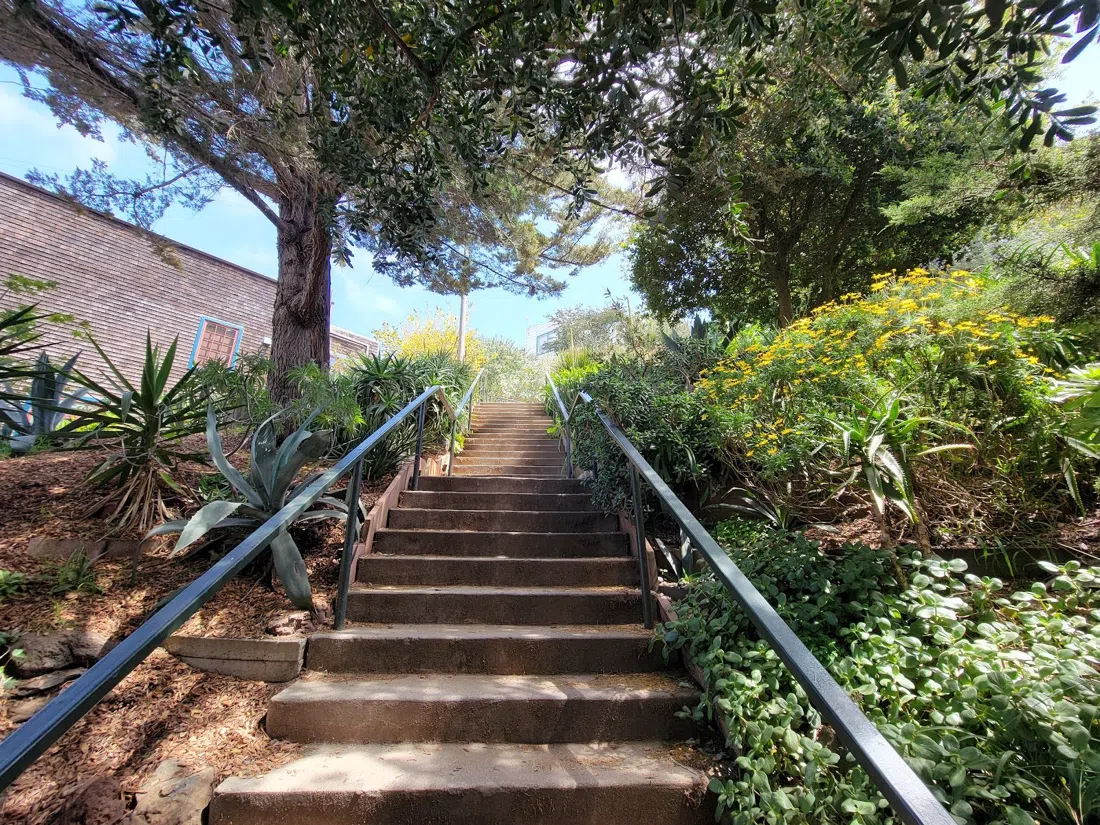
A short walk away, the Tompkins Stairway Garden (Bernal Heights) is the opposite register entirely — a small-scale, grassroots reclaimed-lot garden tended by neighbors rather than commissioned by the city. It's fully public, but it asks for the same restraint as Macondray Lane: move through in smaller groups, keep the noise down, and treat it as someone's ongoing project rather than a finished attraction. Set against the more famous, artist-commissioned mosaics elsewhere on this list, it's the clearest evidence that San Francisco's stairway culture isn't one movement — it's dozens of separate, small, sincere ones.
Corona Heights: The Quiet Loop
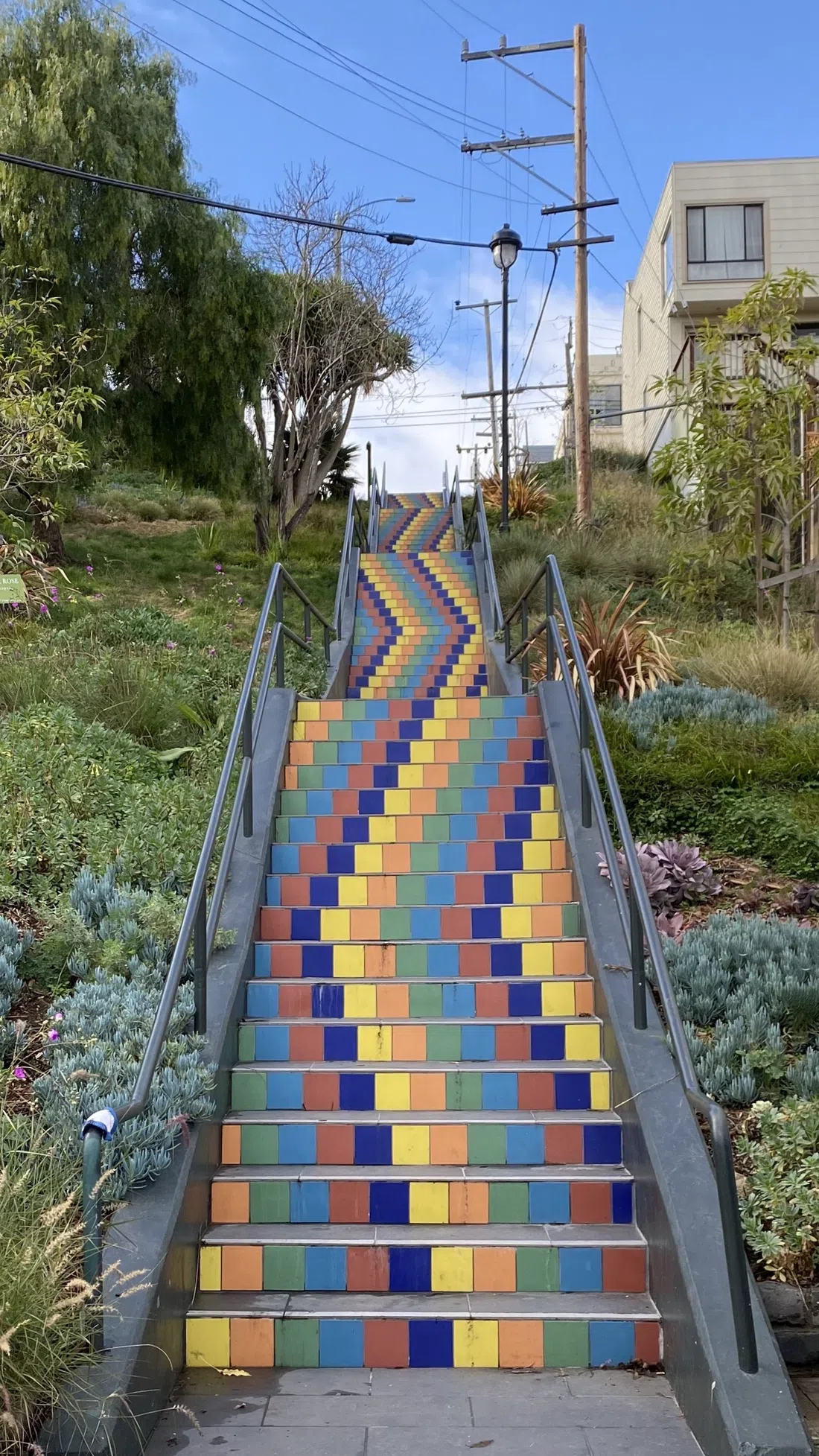
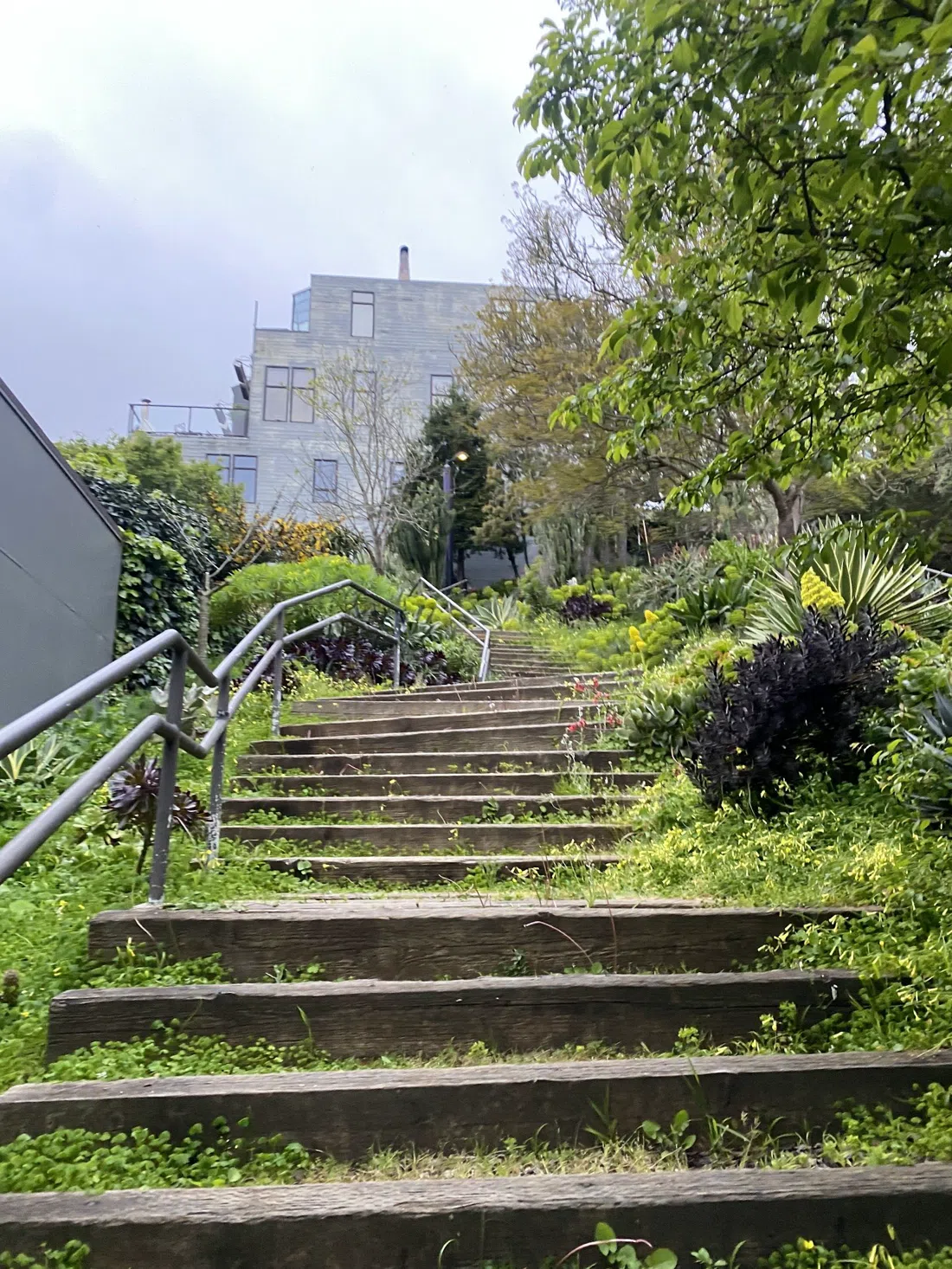
Save the last leg for when you want fewer people around entirely. The Vulcan Stairway (Corona Heights) is one of the city's oldest surviving stairway-access streets — the cottages that line it are, to this day, only reachable on foot via these steps, which is about as clear a demonstration of San Francisco's parallel pedestrian city as exists anywhere on this list. It's steep and narrow in stretches, so single-file climbing is the practical choice for any group bigger than two.
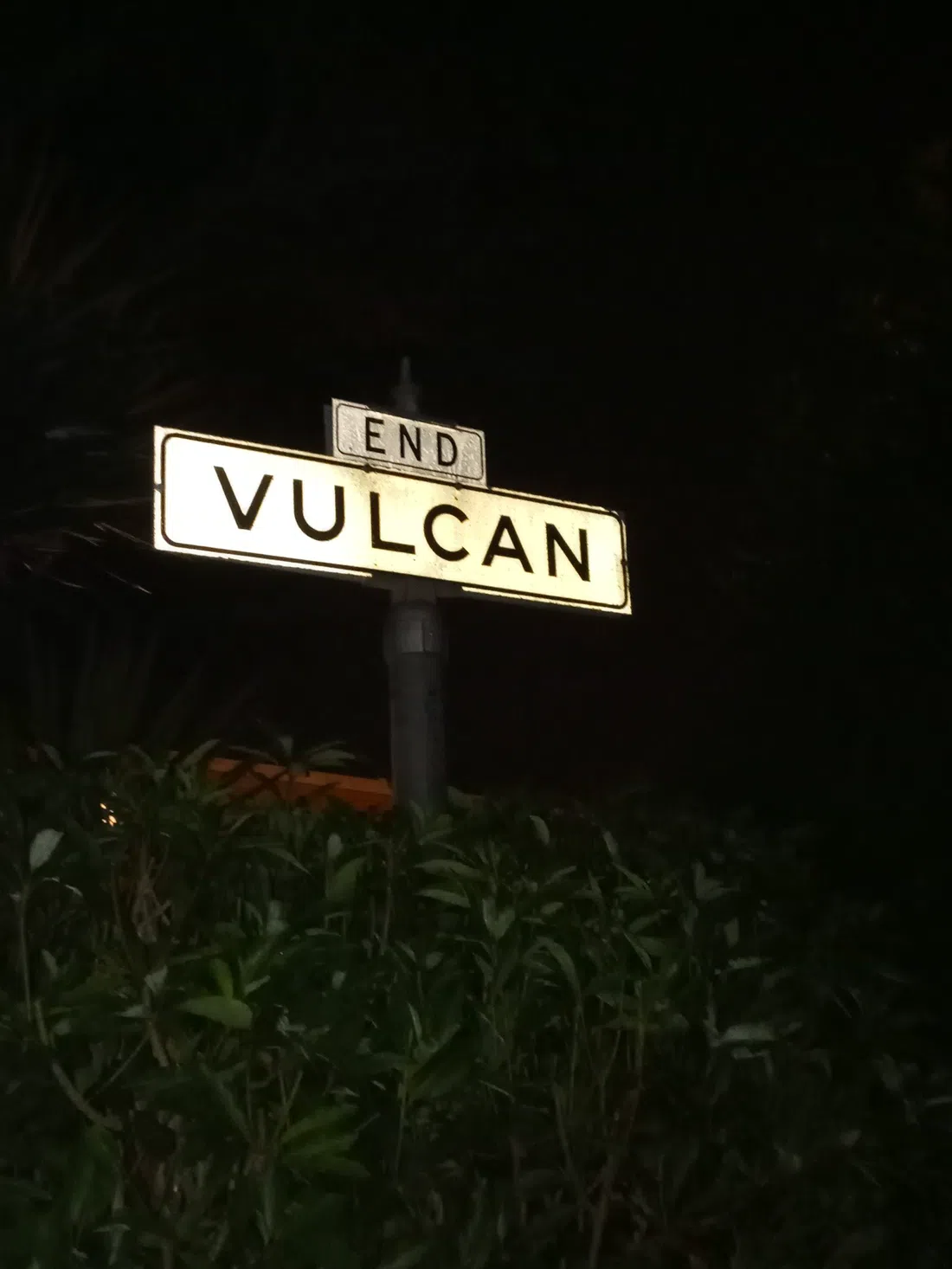
Right after it, the Saturn Street Steps (Corona Heights) makes a natural second stop on the same short loop — low-traffic, low-drama, and close enough that it barely adds distance to the walk. There's no dramatic payoff here, no famous mosaic or panoramic overlook; it's simply the quietest, most residential note to end the day's climbing on, which after four other stairway stops is exactly the point.
Planning Your Stairway Walk: Transport, Timing, Cash, and Budget
Cost: every stairway on this route is free, with no bookings, tickets, or reservations anywhere along it. The only spending involved is transit, coffee, and whatever you eat along the way — this is, without qualification, the cheapest full day of sightseeing the city offers.
Transport: the route as laid out moves roughly north to south — Telegraph Hill and Russian Hill first (cable car or a walk from North Beach), then the Inner Sunset (the N-Judah Muni Metro line), then Pacific Heights, then Bernal Heights and Corona Heights toward the end of the day. Doing all five clusters in one day is a genuinely long walk with real elevation change — most visitors are better served picking two or three clusters and saving the rest for a second visit. If you're staying centrally, a well-placed San Francisco hotel search makes it easier to string two of these neighborhoods together without a long transit leg in between.
Timing: mornings win almost everywhere on this list, and not just for light. The 16th Avenue Tiled Steps genuinely queue up for photos by mid-to-late morning, and the residential lanes — Macondray, Tompkins, Vulcan — are simply more pleasant to walk when the neighborhood itself hasn't fully woken up yet. Aim to be on the first two or three stairways of your day before 10am.
Cash: you won't need any at the stairways themselves, but carry a small amount for cafés in North Beach or the Inner Sunset, since not every corner spot in these residential pockets takes cards for small purchases.
Footwear and pace: flat, closed shoes with real grip — several of these stairways are uneven stone or brick, and San Francisco fog makes tile and stone genuinely slick well into late morning. Go at the pace of the slowest person in your group, not the fastest; the whole appeal of this route is a city built for walking slowly, and rushing it defeats the point. For everything else — where to eat between climbs, where to base yourself, what else the city holds beyond its stairways — the full San Francisco guide covers the rest of the trip this one fits inside.