
San Francisco mistede mere af sig selv på tre dage i april 1906 end i noget jordskælv eller nogen brand før eller siden, og alligevel er man i dag, hvis man går vestpå fra centrum, stadig omgivet af tusindvis af de træhuse, der stod der, før det skete. Karmvinduet, gingerbread-trimmen, det stejle gavltag — dette er ikke nostalgi-rekvisitter bygget til et foto, det er de faktiske træ- og gipshuse, som tømrere opførte i hobetal i 1870'erne, 80'erne og 90'erne, billigt og hurtigt, ud af en redwood-skov, der syntes umulig at udtømme. Dette er en gåtur gennem de kvarterer, hvor de overlevede, og et ærligt kig på hvorfor.
Postkortrækken — og hvorfor den kun er begyndelsen
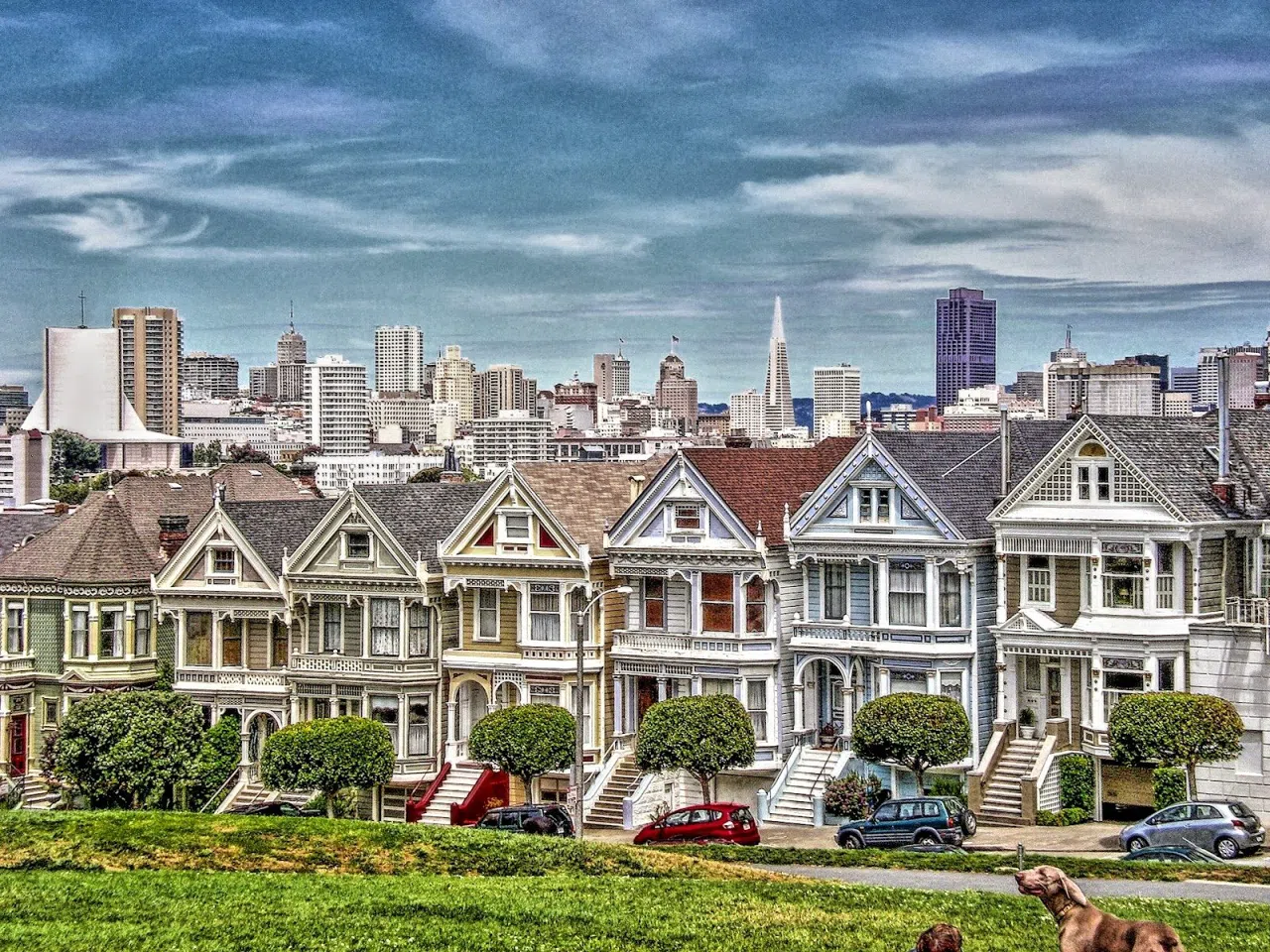
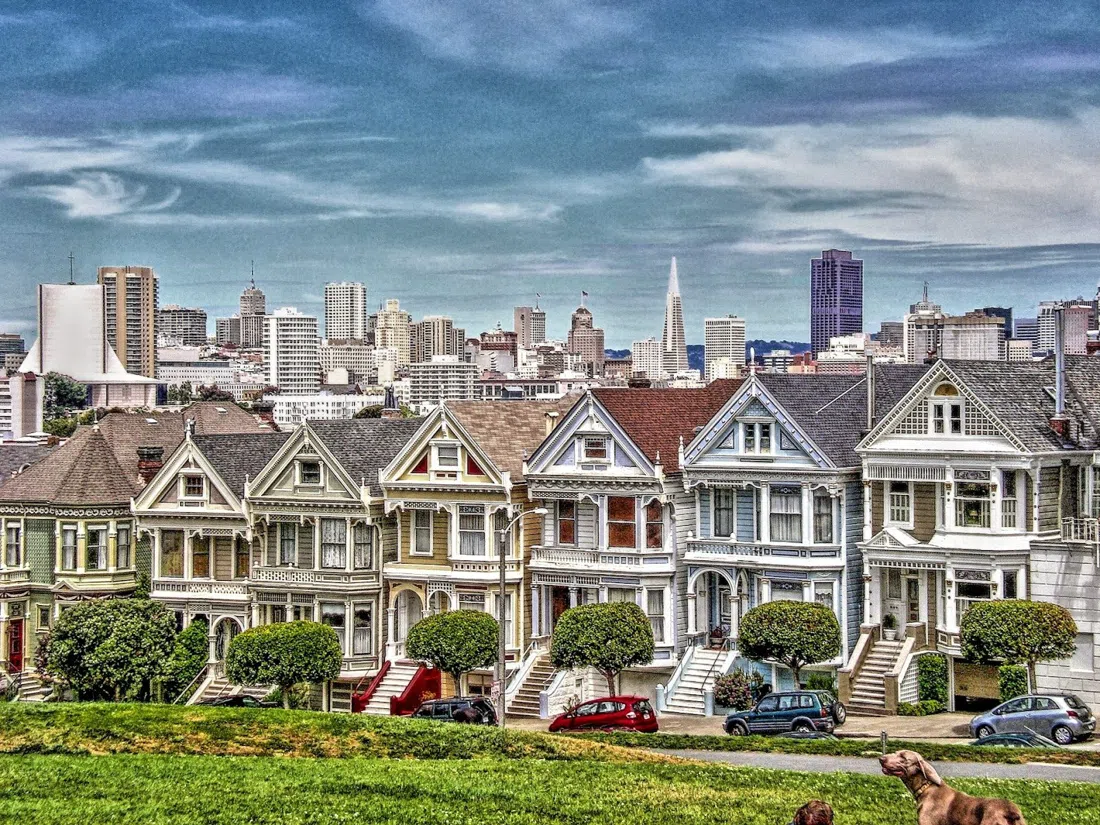
Alamo Square (NoPa / Western Addition) er der, hvor hvert eneste guidebogsfoto af San Francisco's victorianere kommer fra, og der er ingen grund til at lade som andet: rækken af syv slikfarvede huse på Steiner Street med downtown-skyline som bagtæppe er byens mest fotograferede gadebillede. Det er en ægte offentlig park — åben fra 5 om morgenen til midnat, gratis, ingen booking nødvendig — og den kan sagtens rumme turistgrupper, skoleudflugter og bryllupsfølger uden at nogen behøver billet. Tag afsted tidligt, hvis du vil have postkortbilledet uden halvtreds mennesker i det; Hayes Street-siden af pladsen fyldes hurtigt i den time før solnedgang, hvor lyset rammer husene bedst. Men betragt Alamo Square som åbningslinjen i historien, ikke hele bogen. Disse syv huse — alle i Queen Anne-stil, alle stadig private hjem — er én række blandt tusindvis af overlevende victorianere spredt ud over byens vestlige kvarterer. Den egentlige gåtur begynder, når du forlader pladsen.
At komme forbi facaden
Husene omkring Alamo Square er smukke og fuldstændig lukkede for offentligheden — ligesom næsten alle victorianere i byen er de private boliger. Hvis du virkelig vil se, hvordan sådan et sted ser ud indeni, med panelerede gange og det hele, er der præcis to måder at gøre det på, og begge kræver lidt planlægning.
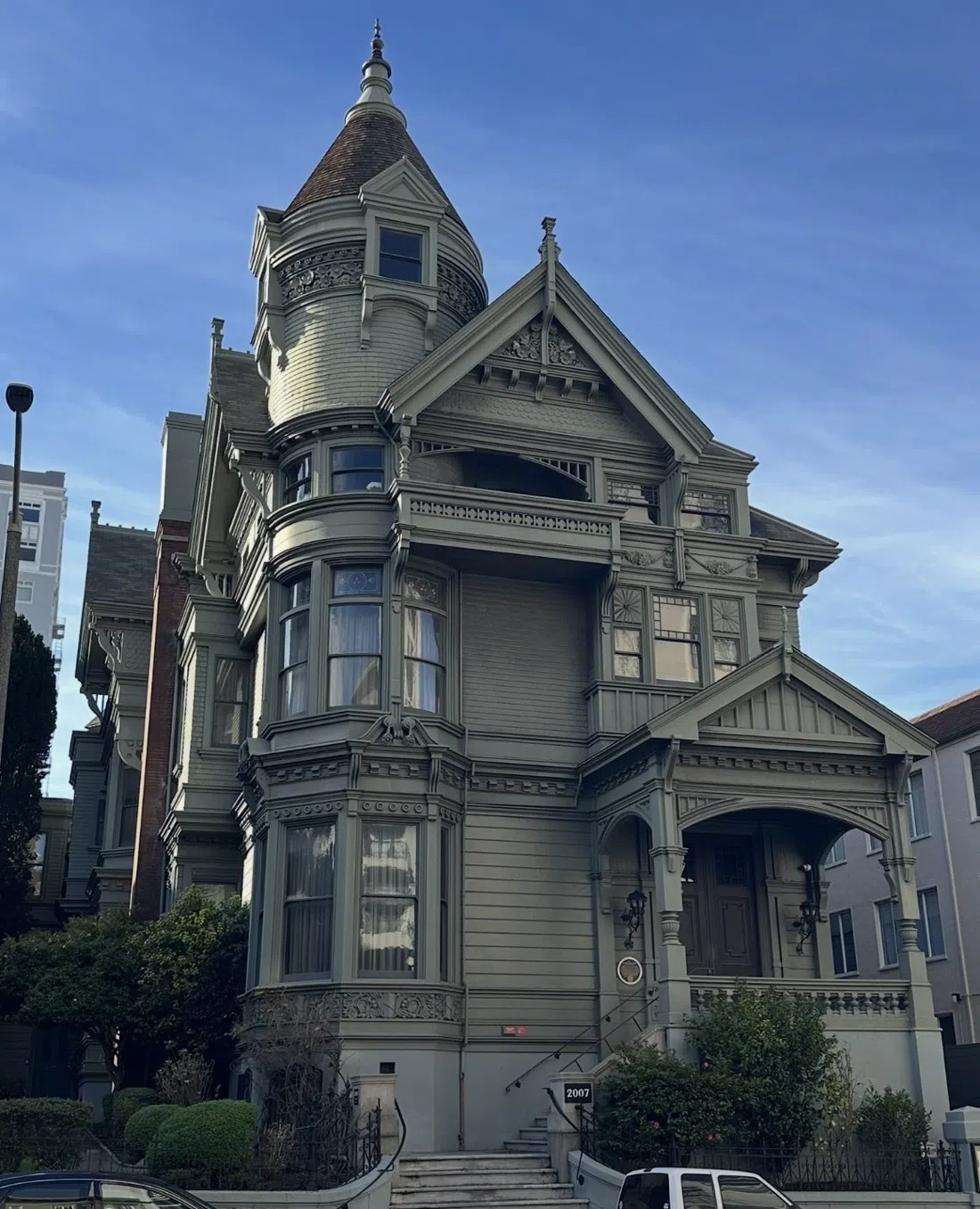
Haas-Lilienthal House (Pacific Heights) er det eneste fuldt møblerede victorianske interiør i San Francisco, der er åbent på fast offentlig tid. Det drives af San Francisco Heritage, og der er guidede ture onsdage kl. 12:30 og 14:00 samt lørdage kl. 12:00, 13:00 og 14:00 — der er begrænset plads, så book i forvejen frem for at møde op og håbe på en plads. Entre koster $10, gratis for medlemmer af SF Heritage, og rejsende grupper kan arrangere privat omvisning med 24 timers varsel. Dette er værd at prioritere over næsten alt andet på denne liste, hvis du kun har tid til ét stop: det er forskellen på at se på en victorianer og stå inde i en.
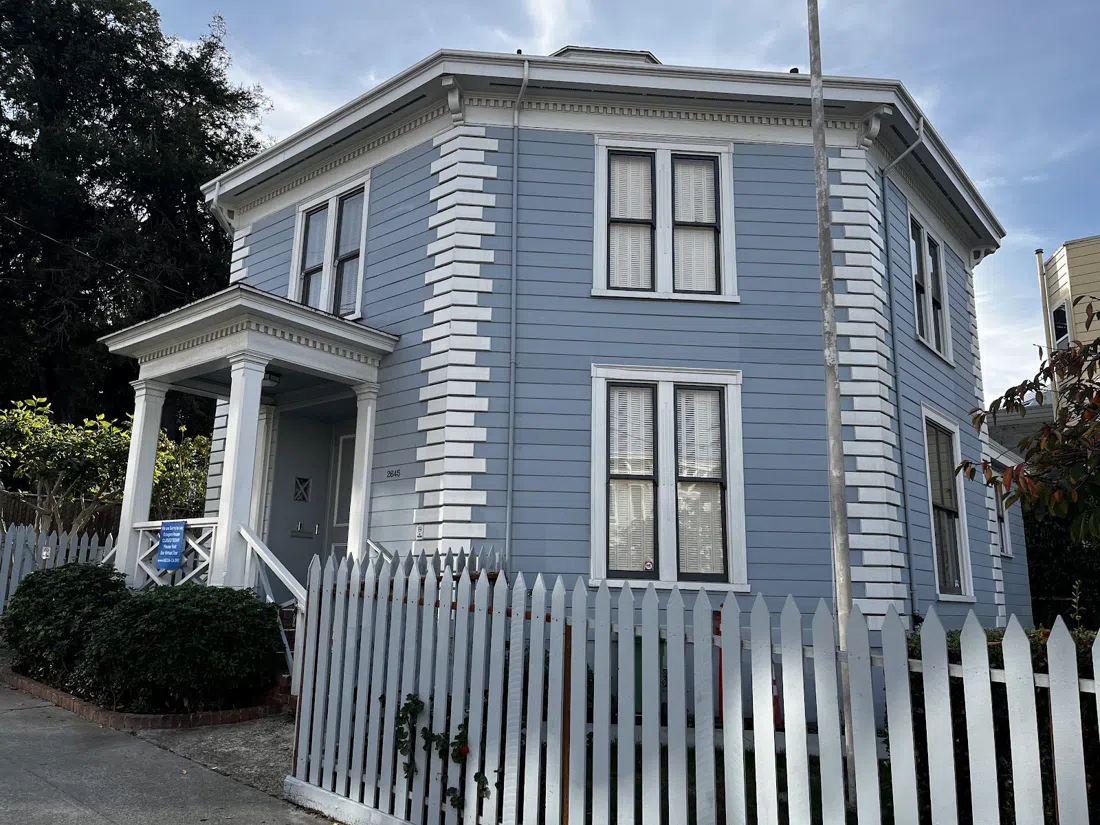
Octagon House (Cow Hollow) er den mærkelige i flokken i enhver forstand — bogstaveligt talt ottekantet og ældre end den store bølge af victoriansk byggeri, der gav byen sit ry. Det er et lille, gratis museum, men der er en hage: Det åbner kun anden og fjerde søndag i måneden, kl. 12 til 15, fra februar til november, og er helt lukket i januar. Ingen forhåndsbooking er nødvendig, og små grupper er velkomne, men du er nødt til at planlægge din rejse efter dens kalender, ikke omvendt. Hvis datoerne passer, er det en virkelig mærkelig halv time — en husform, som epoken for det meste opgav, stående som en påmindelse om, at det victorianske San Francisco ikke var så ensartet som postkortrækkerne antyder.
De roligere gader
Ikke alle victorianere, der er værd at se, er et storslået Pacific Heights-palæ. To steder viser det på en meget mindre og mere menneskelig skala.
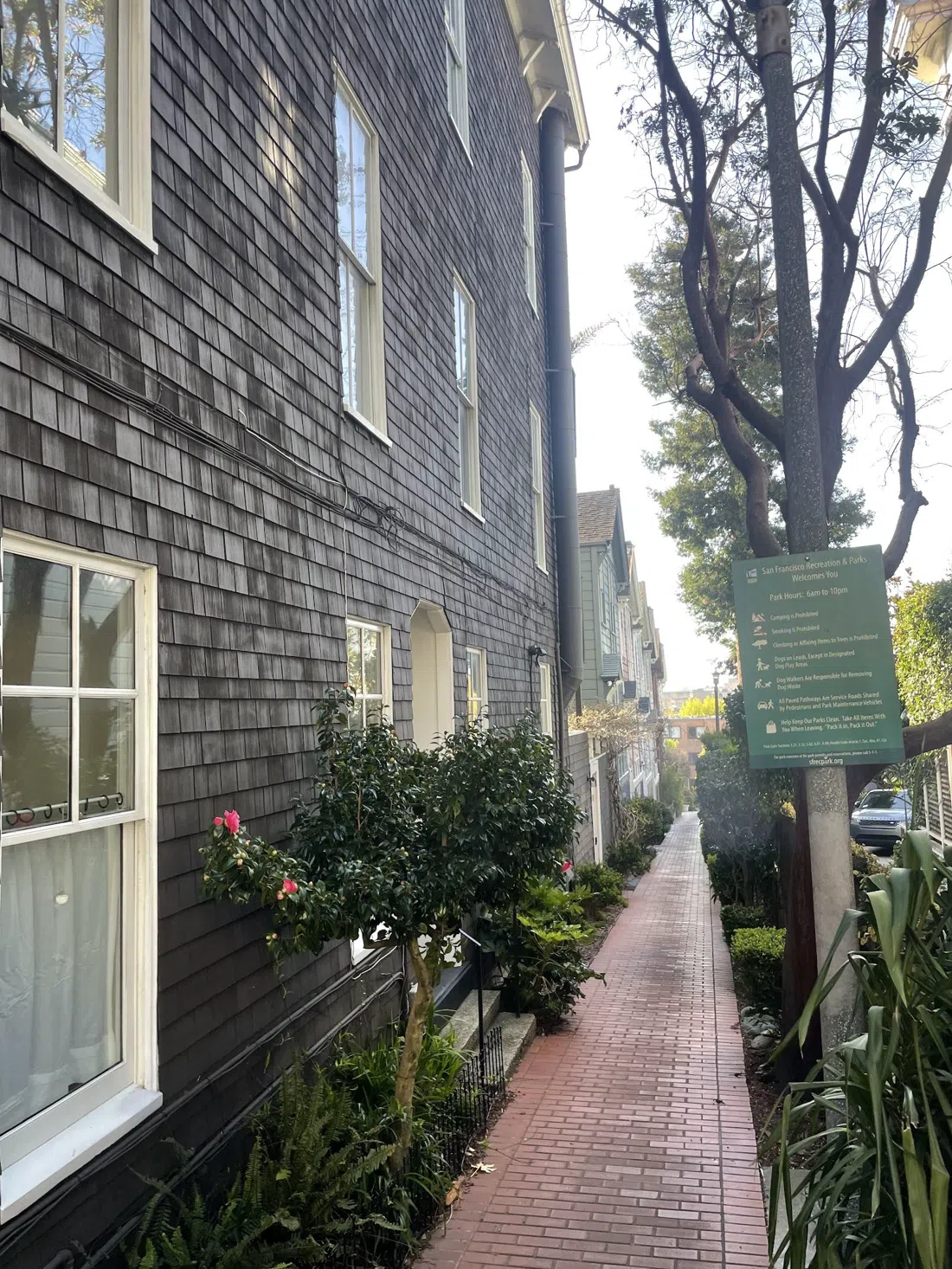
Bush Street-Cottage Row Historic District (Japantown / Pacific Heights) er en kort gågade med små victorianske hytter, gratis og åben på alle tidspunkter, let at vandre igennem på ti minutter for en lille gruppe. Hytterne her ligger i et helt andet register end herskabshusene længere oppe ad bakken — beskedne, med træspånbeklædning, bygget til arbejderfamilier frem for købmænd. Stedet bærer også et tungere lag af historie: denne lille plet lå i udkanten af San Francisco's førkrigs-Japantown, og det er værd at bruge fem minutters stilhed her, ikke bare et foto.
Union Street / Cow Hollow Historic Shopping District (Cow Hollow) er modargumentet til at behandle det hele som et museum. Det er en offentlig gade, åben hele tiden, kantet med victorianske butiksfacader, der løbende er blevet genanvendt som butikker, restauranter og caféer snarere end bevaret bag glas. Tag en lille gruppe med hertil til frokost eller en kaffepause mellem huskiggeriet — det er bevis på, at disse bygninger stadig fungerer som almindeligt kommercielt rum, halvandet århundrede efter de blev opført.
Hvad "overlevede jordskælvet" egentlig betyder
Det er værd at stoppe op ved påstanden, der giver denne gåtur sin form. Jordskælvet i april 1906 gjorde selv reel skade, men det var branden, der fulgte — brændende i tre dage, næret af sprængte gasledninger og et vandsystem, som jordskælvet havde slået ud — der ødelagde det meste af byens centrum. De victorianske kvarterer mod vest, herunder Alamo Square og Pacific Heights, lå stort set uden for brandlinjen og overlevede næsten intakte; deres trækonstruktion, for al dens billighed, havde også en tendens til at bøje sig frem for at splintre under rystelserne. Det er den stille grund til, at tusindvis af disse huse stadig står, mens så meget af byen, de blev bygget sammen med, ikke gør.
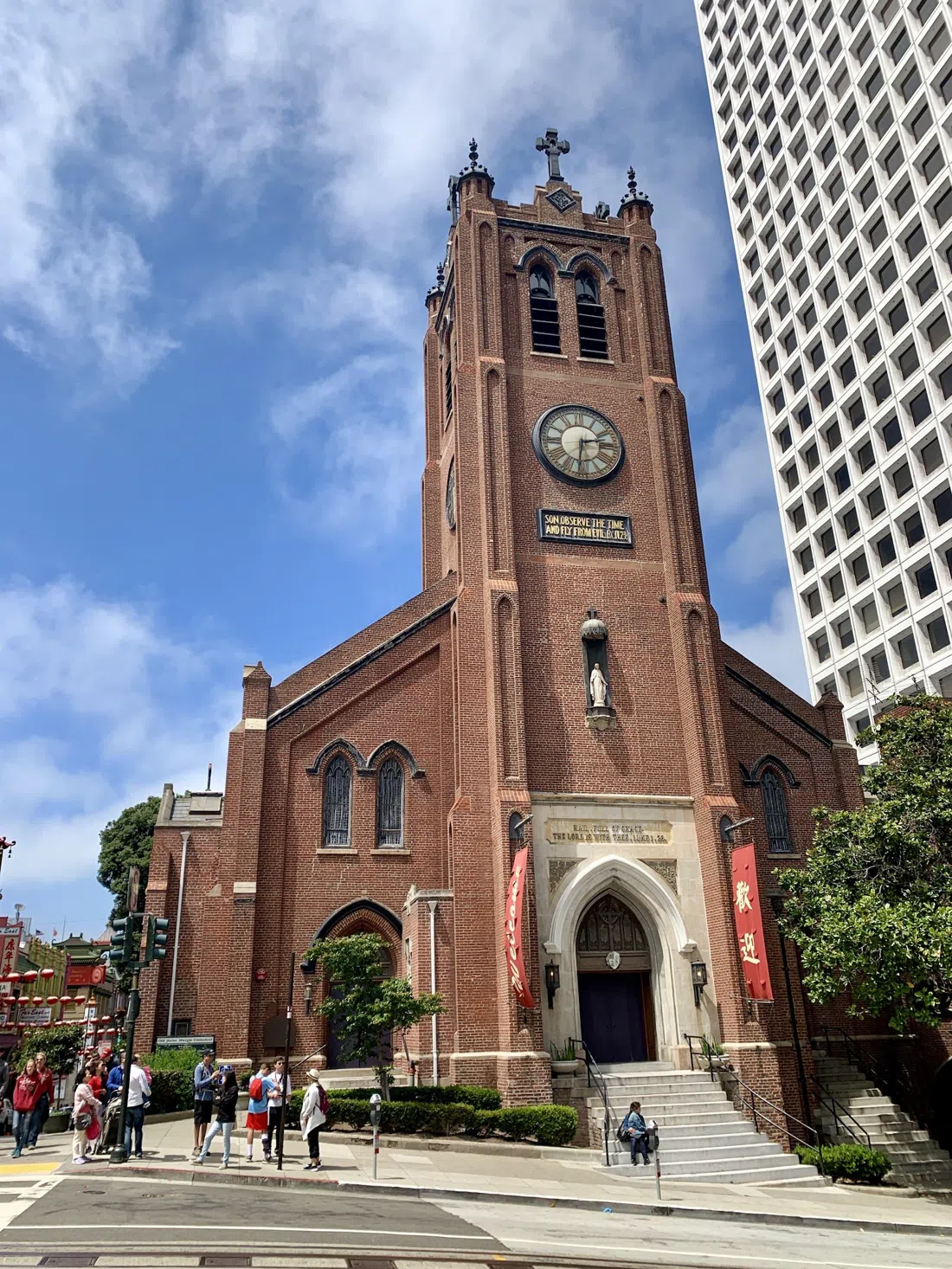
Old St. Mary's Cathedral (Chinatown) skærper det punkt ved at være undtagelsen. Bygget i 1854 er den årtier ældre end den victorianske byggeboom og slap ikke for 1906 — den blev udbrændt af branden efter jordskælvet og måtte genopbygges. I dag er det en aktiv menighed, åben dagligt uden for messetider, og små grupper er velkomne til at kigge ind, så længe man er stille, hvis der er gudstjeneste i gang. Der er ingen entre. At stå her efter Alamo Square giver historien om at blive "skånet" sin kant: overlevelse i denne by i 1906 var i høj grad et spørgsmål om, hvilken side af brandlinjen man tilfældigvis befandt sig på.
Gå med en, der kender bygningerne
Du kan klare det hele på egen hånd med et kort, men der er to muligheder, hvis du hellere vil have nogen til at fortælle om arkitekturen, mens du går.
Victorian Home Walk (mødes på Queen Anne Hotel, Pacific Heights) er en to timers gåtur uden bakker, der går indenfor i et Queen Anne-interiør undervejs — virkelig nyttig, hvis tiderne for Haas-Lilienthal House-turene ikke passer ind i din plan. I øjeblikket kører kun private bookinger, da gruppeture er suspenderet, og den genåbner 13. august 2026 efter en sommerpause, så tjek tilgængeligheden, før du planlægger en hel dag omkring det. Reserver via SMS eller e-mail i forvejen. Prisen er $200 for to personer plus $50 for hver ekstra person — stejl for en solorejsende, mere rimelig at dele mellem et par eller en lille gruppe, der vil have en dedikeret guide.
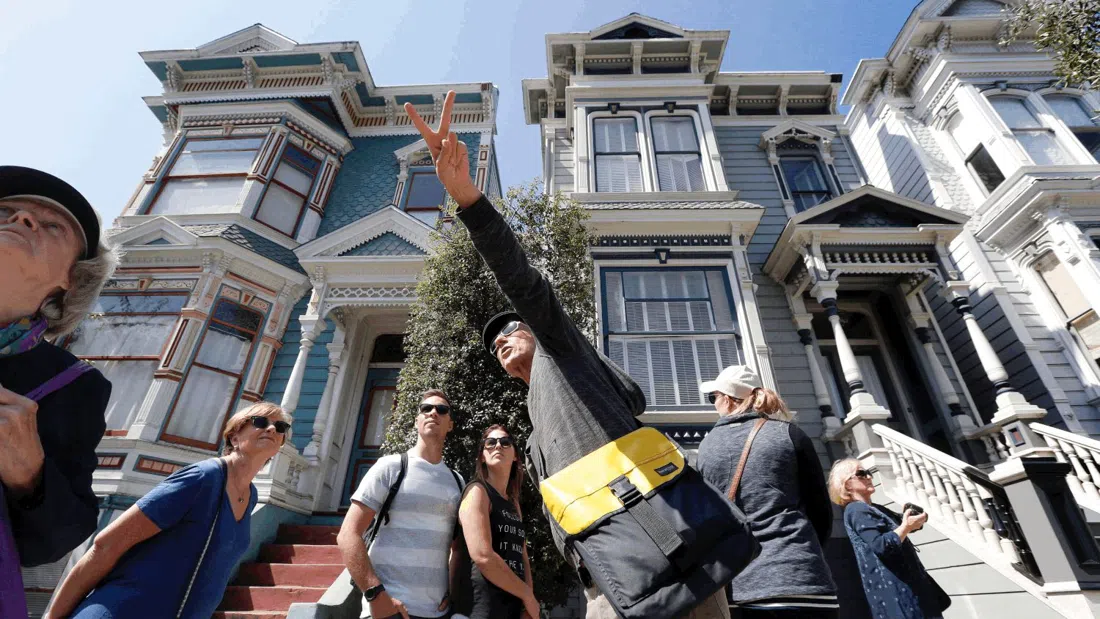
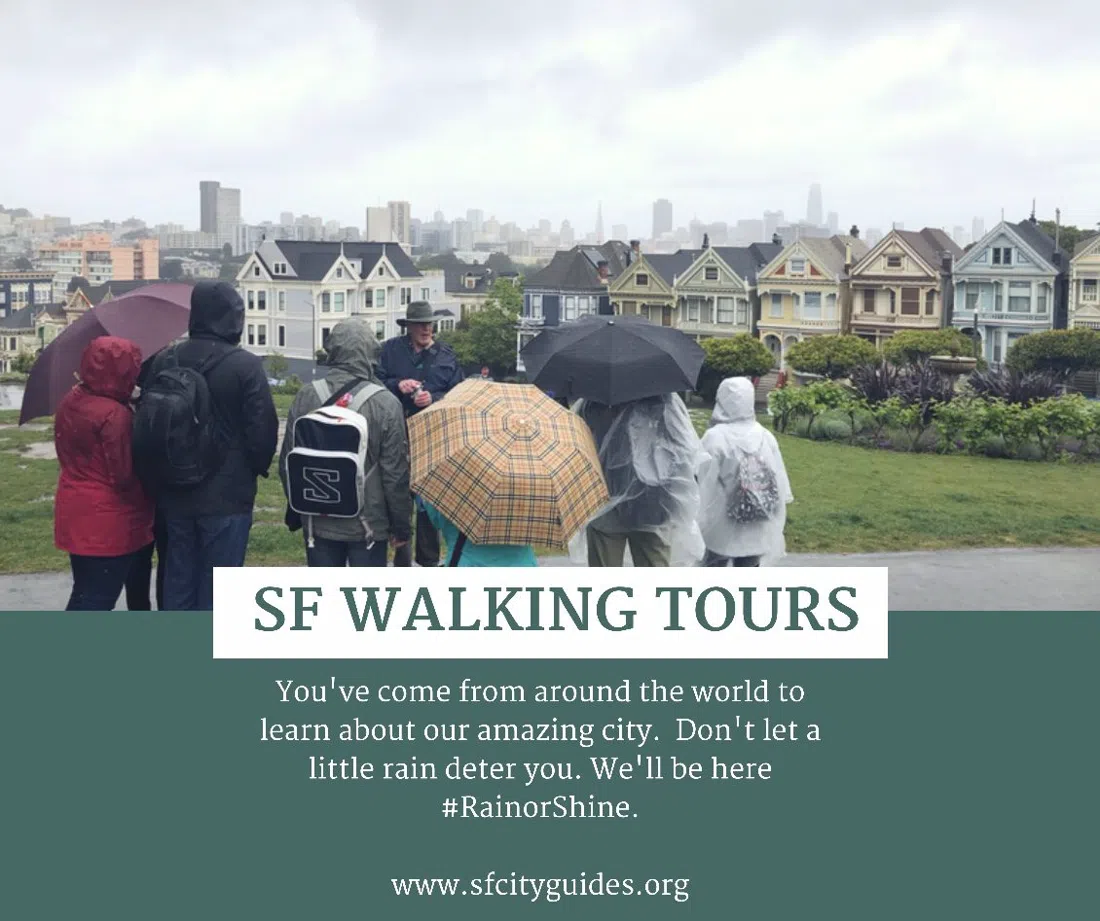
San Francisco City Guides (flere mødesteder) er det gratis alternativ, drevet af en mangeårig lokal nonprofit og bemandet udelukkende med frivillige. Deres offentliggjorte program inkluderer en tematur gennem Pacific Heights-herskabskvarteret, og det er drop-in — ingen booking, ingen gebyr, bare mød op på det angivne mødested. Det vil ikke få dig indenfor i et hus, men det er den bedste mulighed, hvis du vil have kontekst og kommentarer uden at forpligte dig til en betalt tur.
De vildeste overlevende
To huse i udkanten af hovedruten er et omog værd udelukkende på grund af, hvor mærkelige de er — begge er private, begge kun udefra, og begge fortjener en rolig gåtur forbi frem for et hastigt foto.
William Westerfeld House (Alamo Square / NoPa) ligner intet andet på denne liste: en mørk, tårnprydet, næsten gotisk silhouet en blok fra postkortrækken. Det er nu private lejligheder uden adgang indenfor, men det er fint at se og fotografere fra fortovet i en lille gruppe. Historien er den egentlige attraktion — zaristiske russiske beboere efter revolutionen, et kollektiv fra 1960'erne, og en periode knyttet til filminstruktøren Kenneth Anger. Intet af det ses længere på ydersiden, men at vide det ændrer din måde at se stedet på.
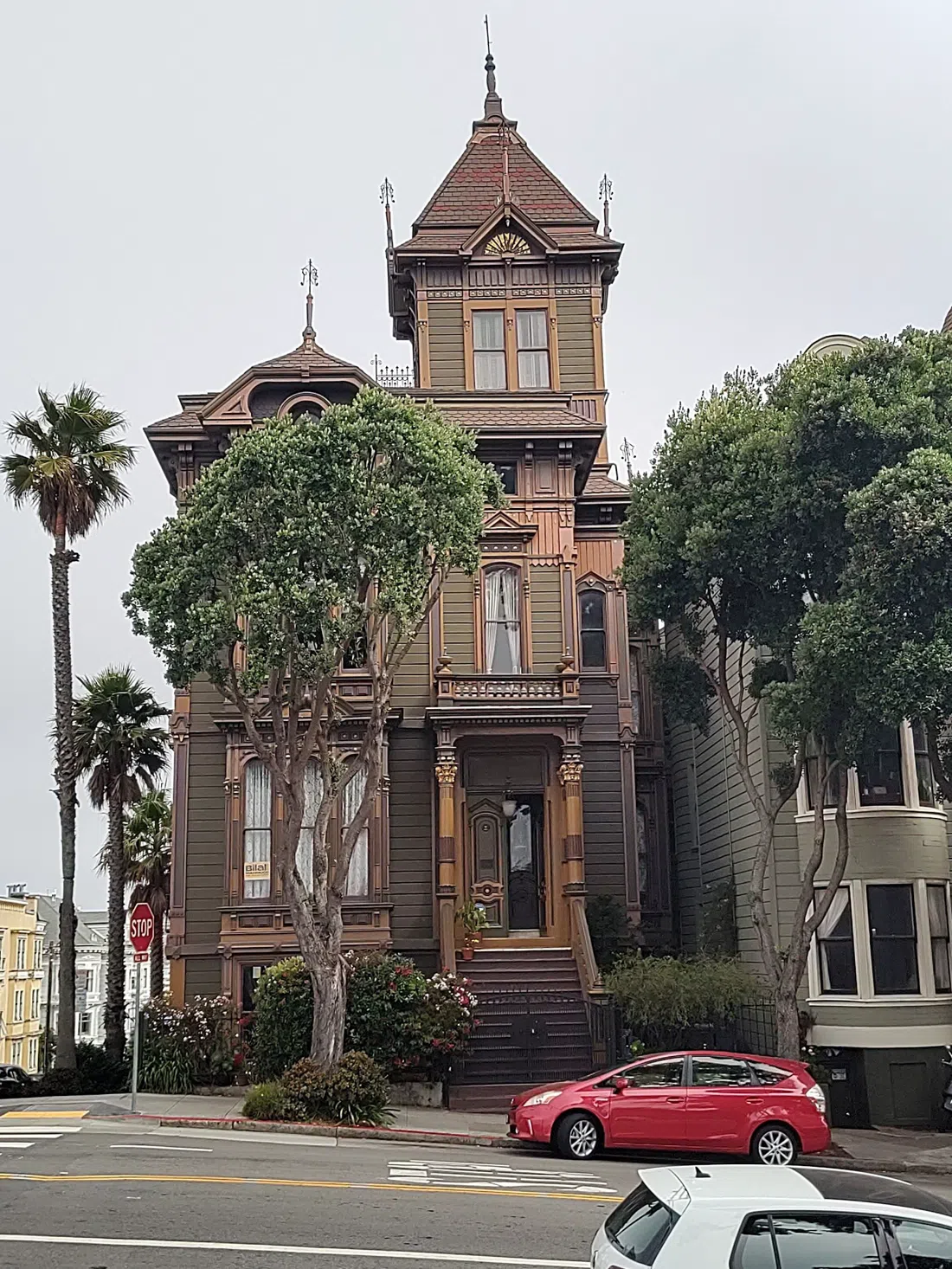
Alfred E. Clarke Mansion (Clarke's Folly) (Eureka Valley) viser det modsatte synspunkt om, hvem der faktisk byggede disse huse. Det er et vidtstrakt hus med 45 værelser fra 1892, vildt overdrevet for sin tid, og en nyttig påmindelse om, at pengene bag Victoriansk San Francisco ikke var begrænset til Pacific Heights — de spredte sig også til byens uventede kroge. Det er også lejligheder nu, kun udefra, fint for en lille gruppe at gå forbi, gratis.
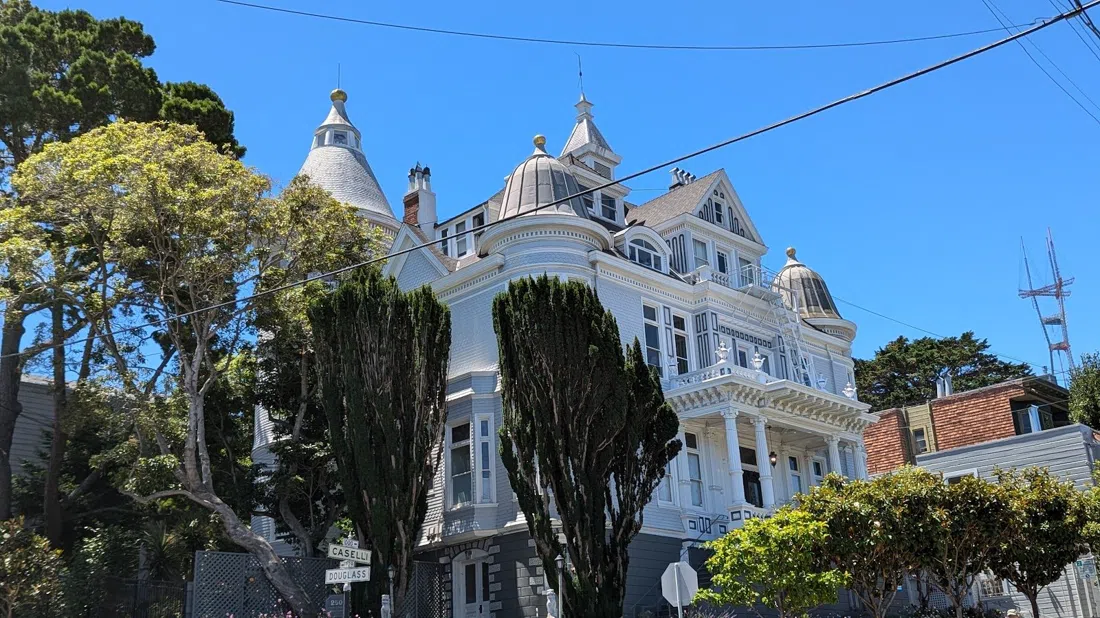
Planlægning af turen: Transport, kontanter og timing
De fleste af disse stop ligger inden for et par tætte kvarterer — Alamo Square, Pacific Heights, Cow Hollow og et kort spring ud til Japantown og Chinatown — så dette fungerer bedst som en løst planlagt vandredag snarere end en enkelt fastlagt rute. Muni-busser forbinder de fleste stop direkte, og der er rigtige bakker mellem Union Street og Pacific Heights, så afsæt ekstra tid, hvis du går i stedet for at tage bussen. Næsten alt her er gratis eller under $10 — Alamo Square, Octagon House, Bush Street-Cottage Row, Union Street, Old St. Mary's og San Francisco City Guides koster intet ud over, hvad du bruger på mad undervejs. Den eneste forkælelse er Victorian Home Walk til $200 for to. Medbring lidt kontanter til donationer på Octagon House og Old St. Mary's, selvom kort er fint alle andre steder. Planlæg dit Alamo Square-besøg til morgenlyset, hvis du vil have et stille billede, og tjek Haas-Lilienthal House og Octagon House's åbningstider, før du tager af sted — begge kører på faste dage, og ingen af dem er walk-up, når som helst du vil. Hvis du bor i nærheden, så start med denne San Francisco hotelsøgning, og for resten af byen ud over dens victorianere, dækker den fulde San Francisco-guide, hvad du kan lave omkring turen.