The San Francisco issue
The Park Between Two Seas: Golden Gate Park Beyond the Postcard
A local's honest, neighbourhood-by-neighbourhood walk across San Francisco's greatest green space — from the museum concourse to the windmills at the ocean, with real prices, door realities and the timing that makes or breaks a day.

By Jonas BakkerThe city's hills, fog and neighbourhoods, one route at a time
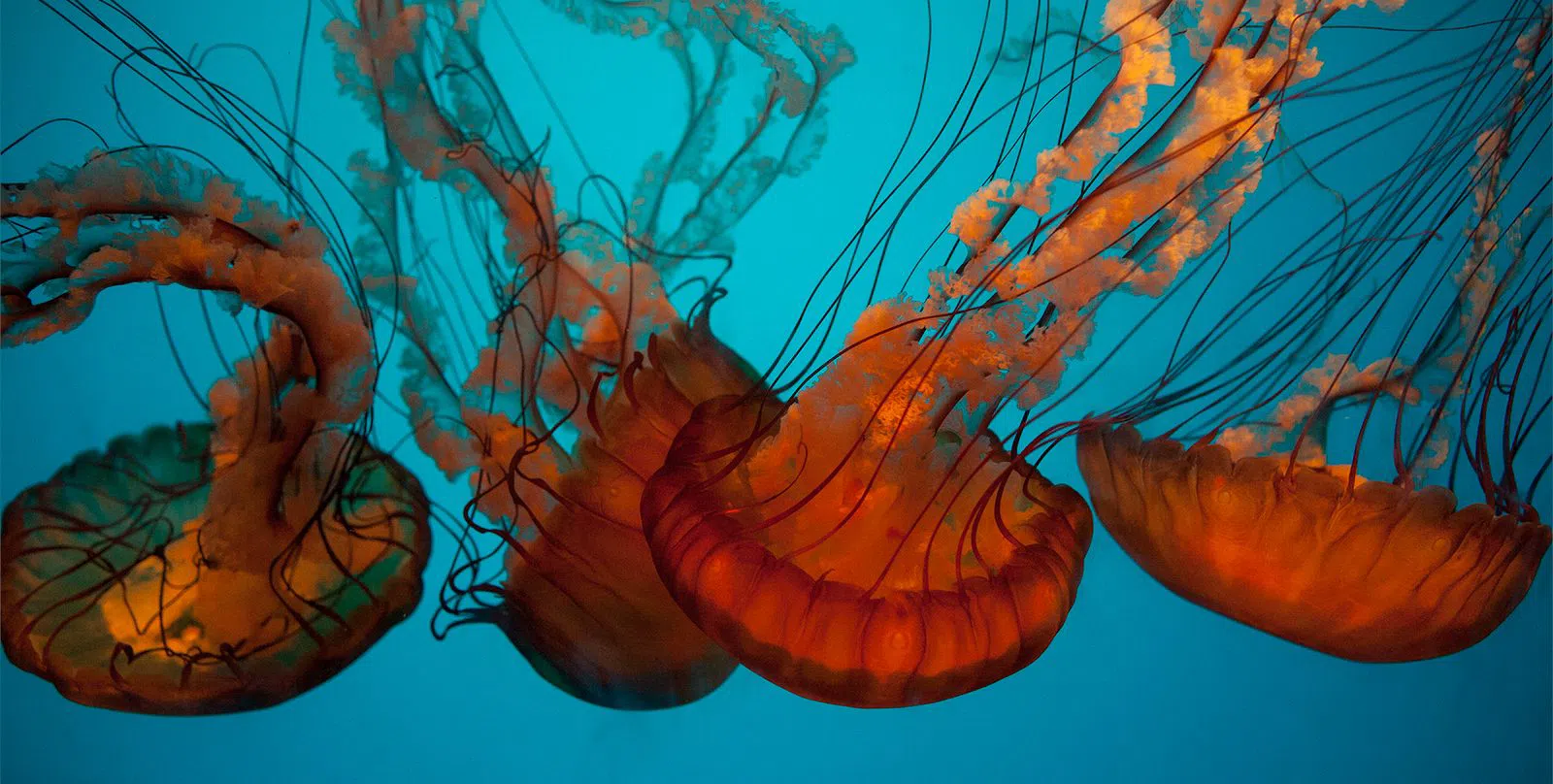
Golden Gate Park runs three miles inland from the Pacific, a long green rectangle stitched out of what were once bare sand dunes. Locals call it the city's lung, but that undersells it: this is a park with a herd of bison, a Victorian glasshouse, two world-class museums facing each other across a sunken concourse, and a windmill that once pumped seawater to keep the whole thing alive. Most first-time visitors see a fifth of it and call it done. This is how to walk the rest — measured, in the right order, with the fog in mind.
Getting your bearings
Think of the park as a line with two very different ends. The eastern end, nearest the Haight-Ashbury neighbourhood, is where the park began in the 1870s and where most of the built landmarks cluster — the museums, the tea garden, the glasshouse. The western end runs down to Ocean Beach and the Great Highway, and it is windier, quieter and often a full jacket cooler than the middle. The fog matters here more than anywhere in the city: the western third can sit under grey cloud until early afternoon while the eastern end is in sun. If you have one clear morning, spend it at the ocean end and save the museums, which are indoor anyway, for the greyer hours.
You do not need a car, and frankly a car is a liability on weekends when JFK Drive's central stretch is closed to traffic. More on getting in and out at the end.
Plan your San Francisco trip
Live prices from our booking partners.
Free cancellation on many rooms. We may earn a commission when you book.
The Music Concourse: two museums and a bandshell
The ceremonial heart of the park is a sunken, plane-tree-lined oval called the Music Concourse, laid out for a world's fair in 1894. Stand in the middle and you have a museum on either side and a bandshell at one end — it is the single densest cluster in the park, and a sensible anchor for any day.
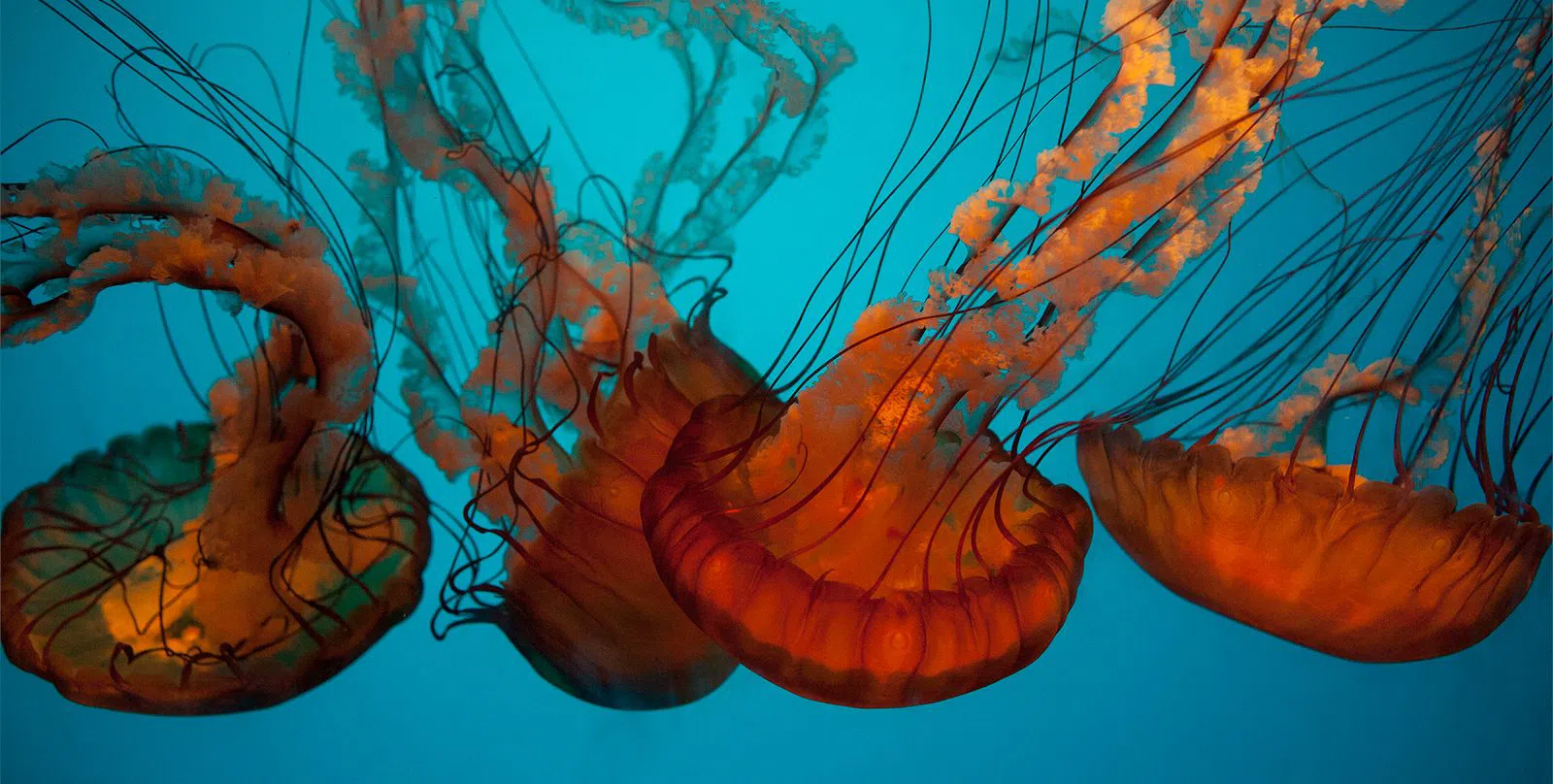
Start with the California Academy of Sciences (Music Concourse, south side), because it is the one place that rewards a booking and the one place that saves a rained-out afternoon. Under a single undulating "living roof" it holds an aquarium, a planetarium, a four-storey rainforest dome and a natural-history museum — genuinely four attractions in one, and the best all-weather bet in the park for an international group. General admission runs around $40 for an adult, which is not cheap, so make it count with a half-day rather than an hour. Groups of 15 or more get discounted rates through advance group booking, and if your party is adults-only, the 21-plus "NightLife" event on Thursday evenings turns the museum into a livelier, bar-in-hand affair. Book timed entry ahead in summer; walk-up queues here are real.
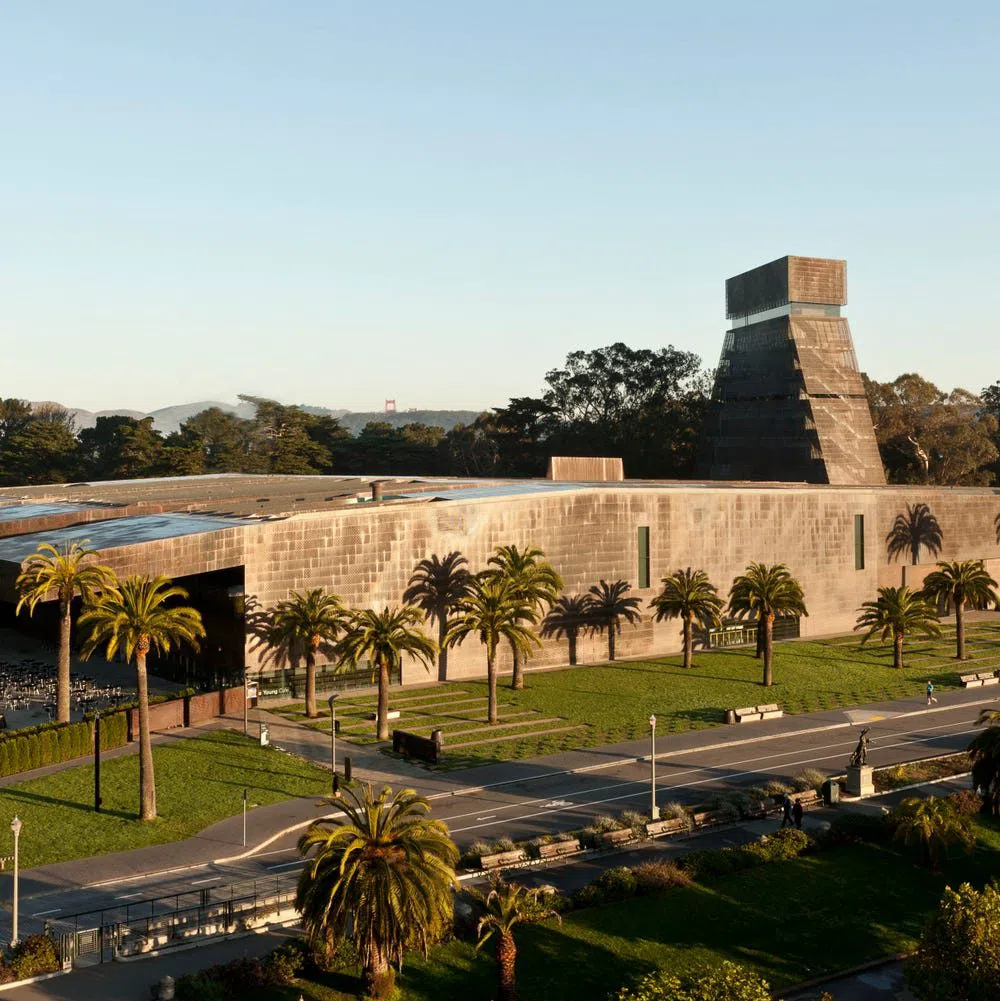
Directly across the concourse is the de Young Museum (Music Concourse, north side), the city's fine-art institution, wrapped in a copper skin that is slowly weathering green. Adult admission is around $20, with tiered group rates and both guided and self-guided group tours bookable in advance. But here is the local's tip that most visitors walk straight past: the ninth-floor Hamon Tower observation deck is free to everyone, ticket or not. Take the lift up for a quiet, 360-degree panorama across the park canopy to the ocean on one side and the downtown skyline on the other. It is the best free view in this half of the city and it takes ten minutes.
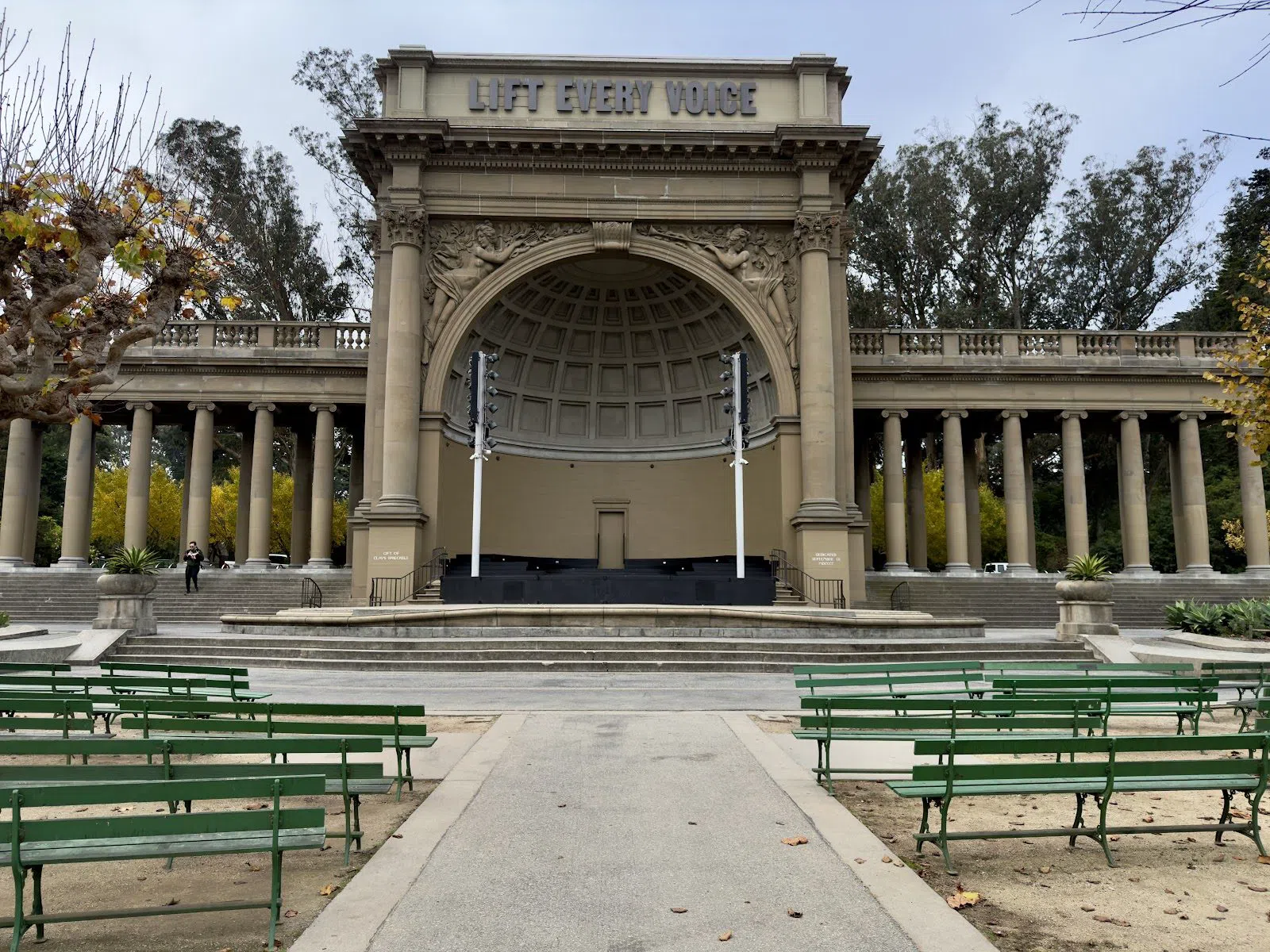
Between the two museums sits the Spreckels Temple of Music (Music Concourse), an ornate stone bandshell locals just call "the bandshell." The lawn in front is free public seating and holds a crowd comfortably — no booking, no door. Time your visit to a free Golden Gate Park Band concert (they run a regular Sunday-afternoon season in the warmer months) and you will see the park's real social life: families, picnics, retirees in deckchairs. It is the most authentic free hour you can spend here.
Gardens within the garden
The park's formal gardens are its quiet triumph, and three of them sit within a short walk of the concourse.
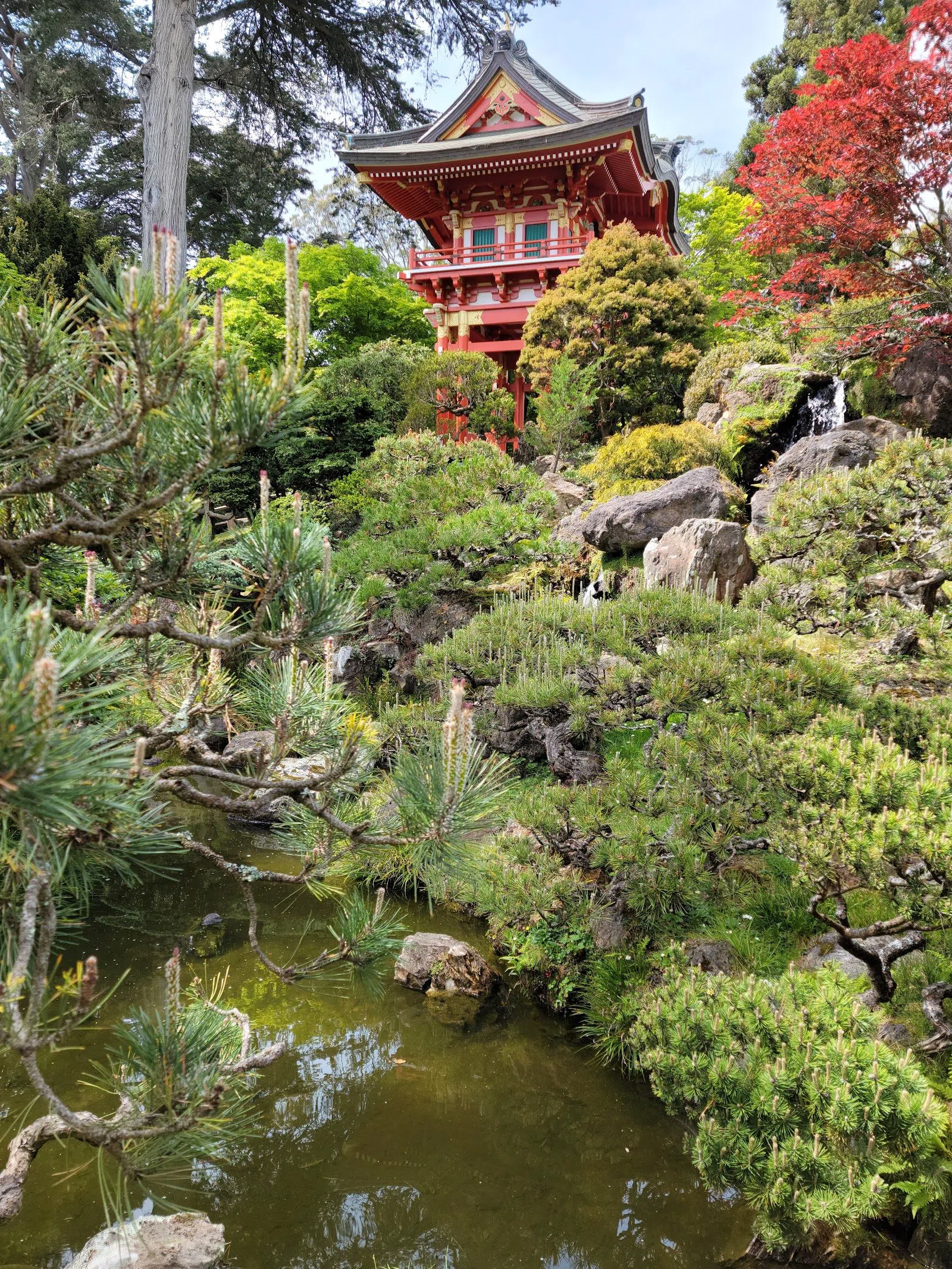
The Japanese Tea Garden (beside the de Young) is the oldest public Japanese garden in the United States, dating to that same 1894 fair. It is small, deliberate and lovely — arched drum bridge, koi, a tea house serving matcha to small parties. Precisely because it is small, it suits couples and pairs far better than big groups; timed-entry tickets are the rule and very large parties should pre-book, as the tea house seats only a handful at a time. Non-resident admission runs roughly $12 to $16, but go before 10am on Monday, Wednesday or Friday and entry is free. One scheduling catch worth noting: the garden keeps reduced hours around Wednesday maintenance, so build your week around that.
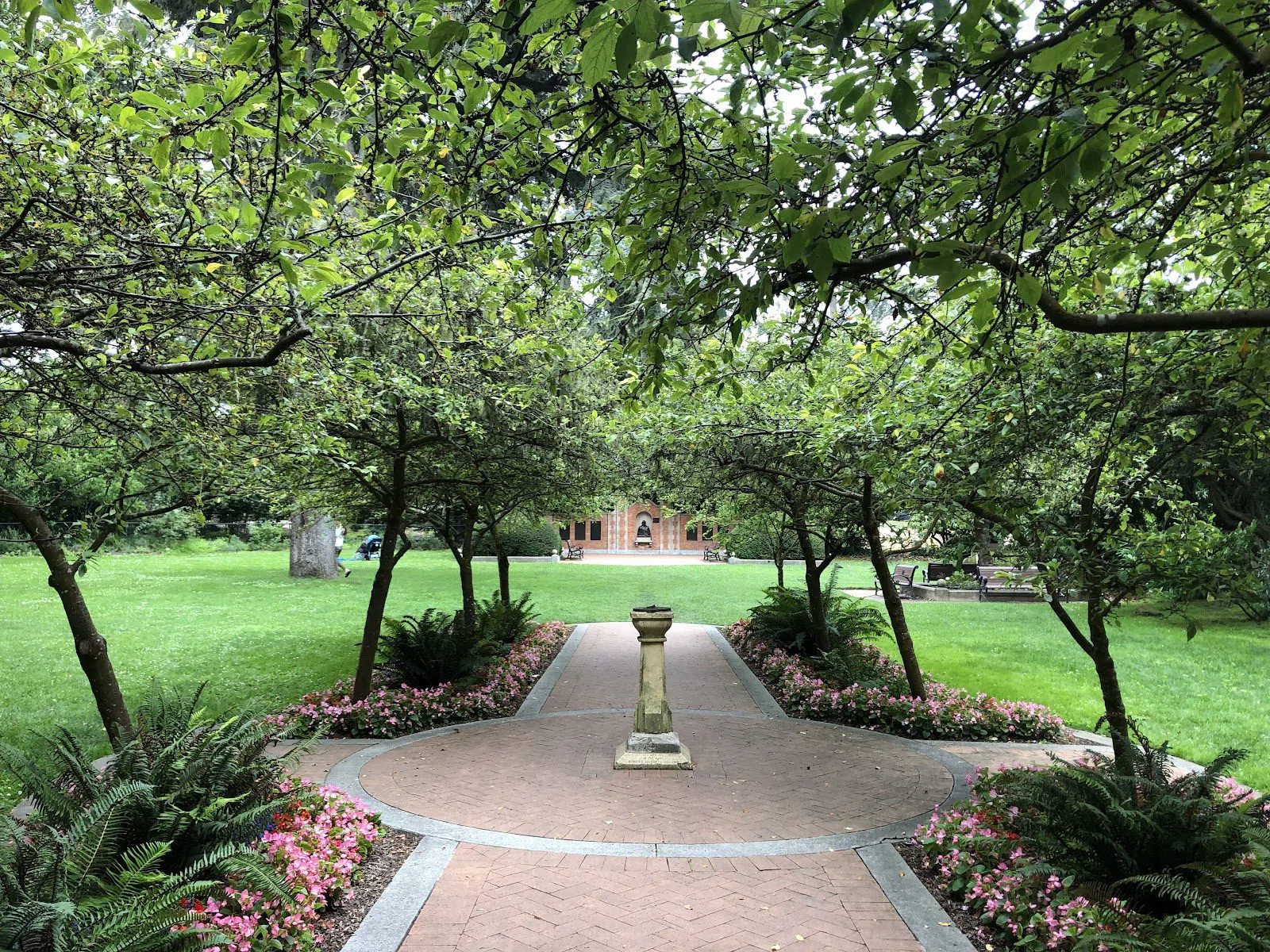
A two-minute stroll away is the Shakespeare Garden (near the museums), a hedged, intimate little plot planted with flowers and herbs mentioned in the plays, with bronze plaques of the relevant quotes on a far wall. It is free, open and quick — a five-minute literary detour rather than a destination, and a favourite backdrop for wedding photographers, so expect a couple in formalwear on any given Saturday. Better for two people than for fifteen.
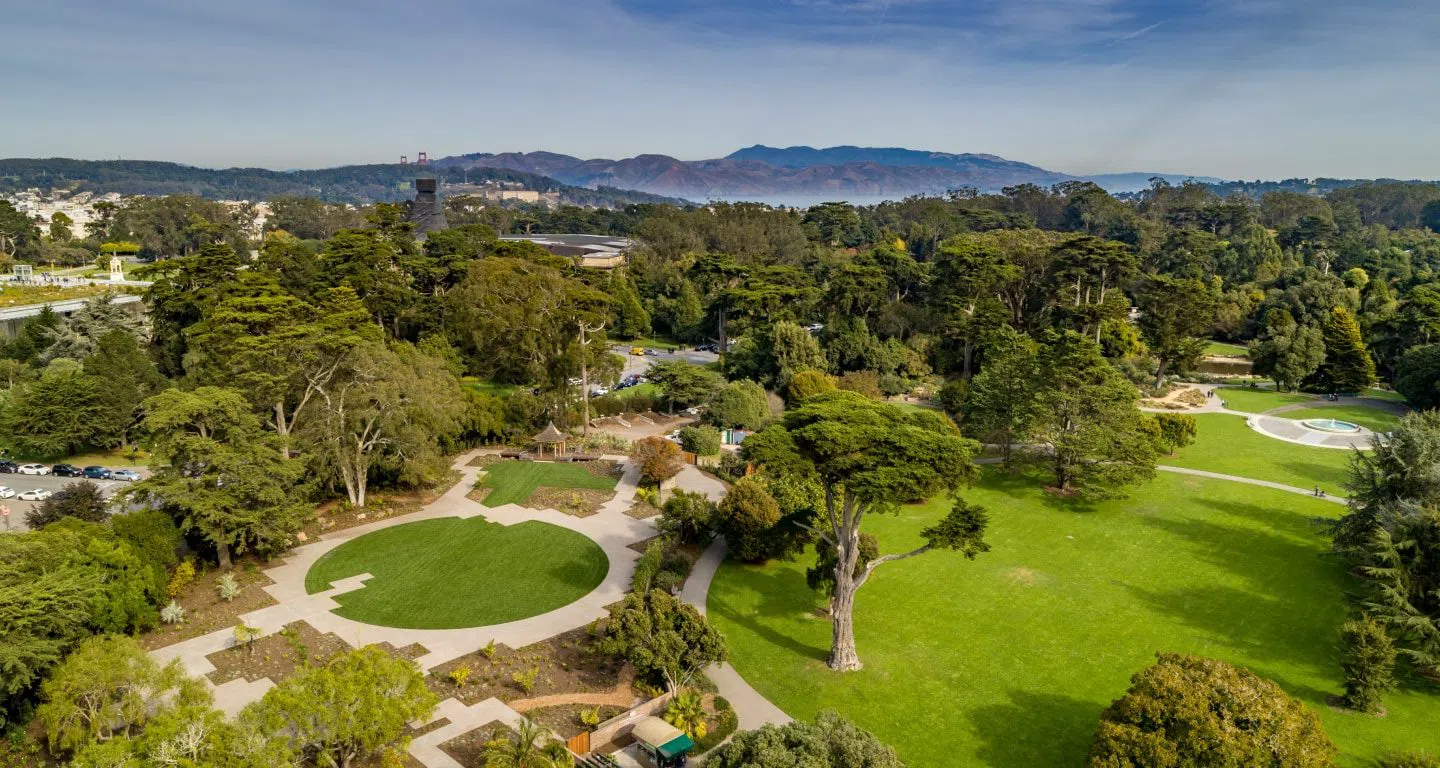
South of the concourse, the San Francisco Botanical Garden (Strybing, off Martin Luther King Jr Drive) is where you go to breathe. Fifty-five acres and one of the most botanically diverse temperate collections on earth, all thanks to San Francisco's peculiar fog-belt microclimate, which lets cloud-forest plants and Mediterranean species grow a few beds apart. Wide, level paths make it genuinely group-friendly, and docent-led group tours can be arranged in advance. Non-residents pay around $15; SF residents get in free with proof of address. This is the park's best unhurried stroll for a mixed-ability group — nobody gets left behind on a hill.
The glasshouse and the eastern lawns
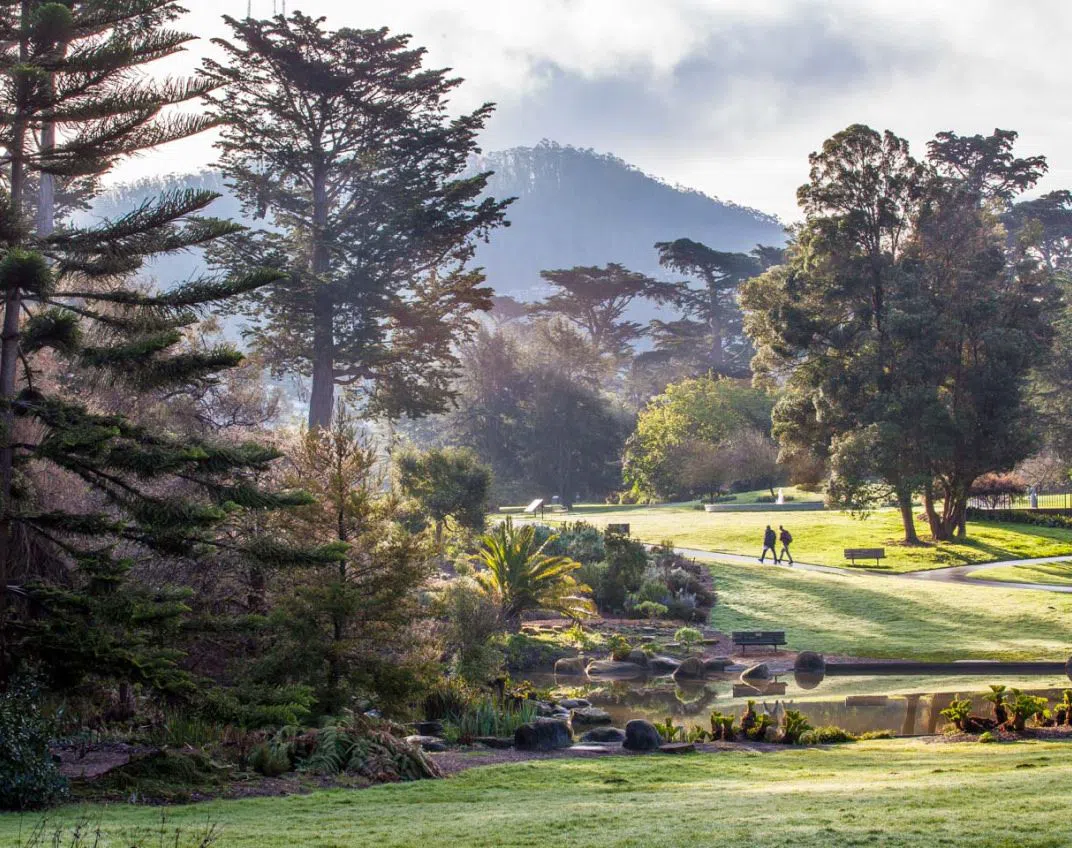
Walk east from the concourse and the park's origins reveal themselves. The Conservatory of Flowers (east end, off John F. Kennedy Drive) is the oldest building in the entire park and the oldest public wood-and-glass conservatory in North America — a white Victorian confection full of orchids, carnivorous plants and a lily pond under glass. It is a compact interior, so large parties should stagger their entry rather than pile in together; guided group visits are available and timed tickets keep the crowding down. Non-resident admission is around $12, and it is free on the first Tuesday of each month. Note it closes on Wednesdays — pair that with the tea garden's Wednesday quirk and you will see why I steer people away from a Wednesday park day if they can help it.
Just east of the conservatory, on the slope down toward the Haight, is Hippie Hill (Robin Williams Meadow), a wide, informal, free meadow that was the countercultural furnace of 1960s San Francisco — drum circles, guitars, the Summer of Love. It is exactly what it sounds like: an open lawn, no gate, any size gathering welcome. Come for the atmosphere and the sense of continuity with the neighbouring Haight-Ashbury district, not for facilities. It is a mood, and a free one.
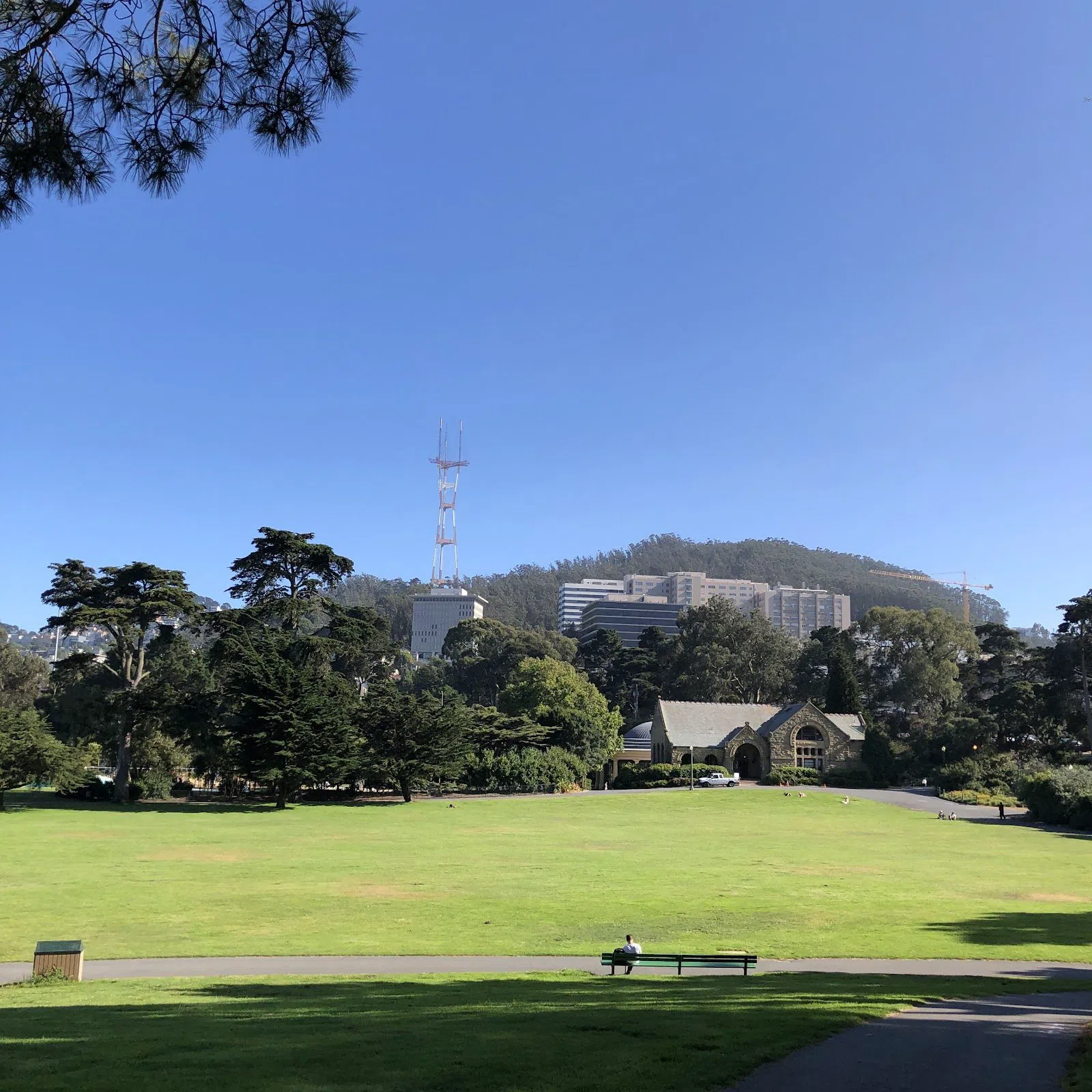
The wilder middle: bison, boats and a carousel
The long central stretch of the park is where it stops behaving like a set of attractions and starts feeling like actual countryside.
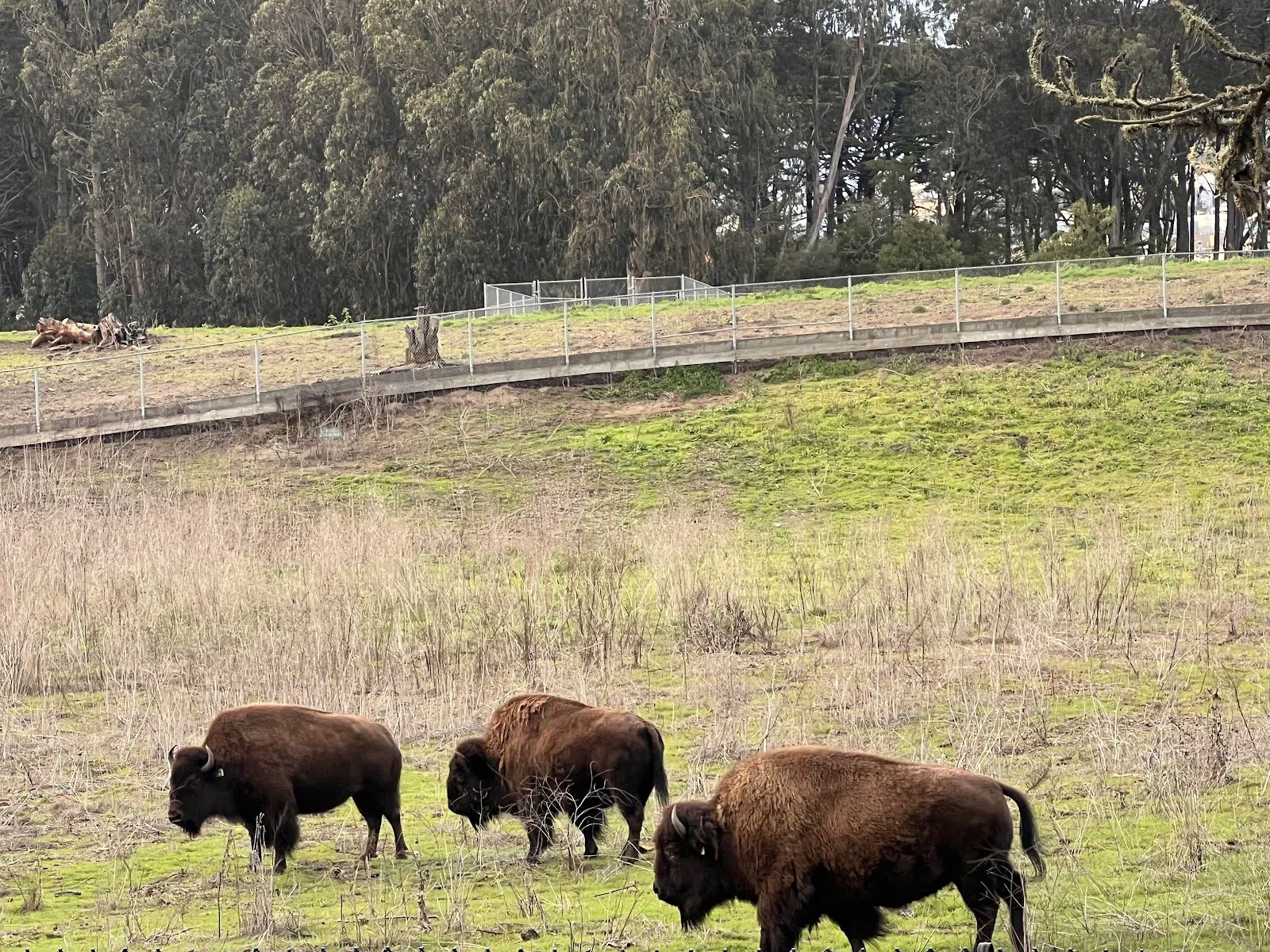
The genuine surprise is the Bison Paddock (western half, along John F. Kennedy Drive), where an American bison herd has grazed since 1892. You view them free, from the fence line, at any hour and in any group size — no ticket, no booking. It is a surreal, quietly moving thing to find a mile from a city beach, and it lands with every first-time visitor. Bring a zoom lens; the animals keep their distance at the back of the enclosure.
Midway along sits Blue Heron Boathouse (Blue Heron Lake, centre of the park), the park's boating concession. A quick history note that trips up a lot of visitors and old guidebooks: the lake was renamed from Stow Lake to Blue Heron Lake in 2024, so if your map still says "Stow Lake," that is the same water. Pedal boats and rowboats seat four, rent by the hour (roughly $26 to $40 per boat, no booking needed), and the walk around the central island — up past a waterfall to a Chinese pavilion — is the prettiest short loop in the whole park. Great for groups: split across a couple of boats and meet on the island.
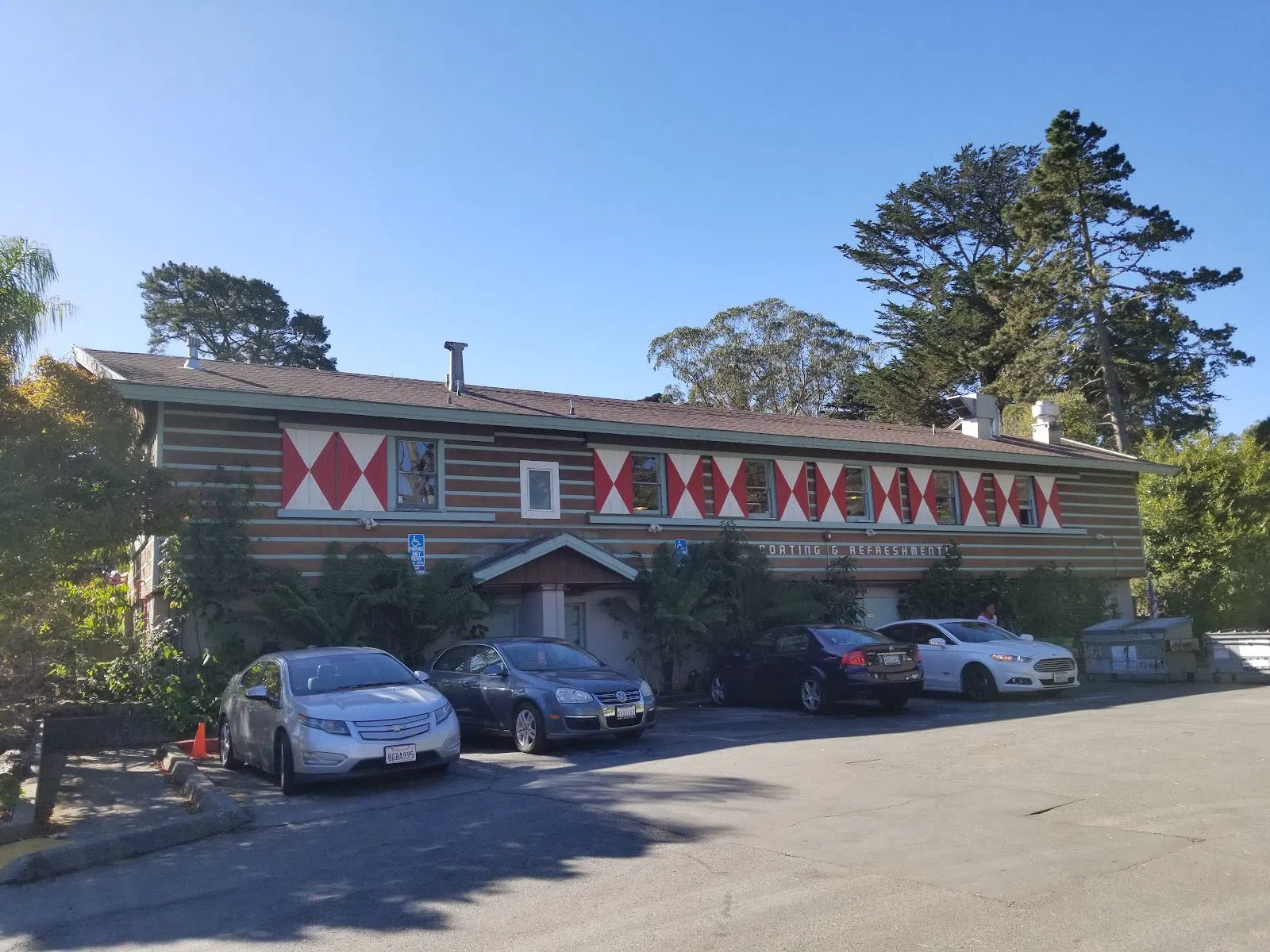
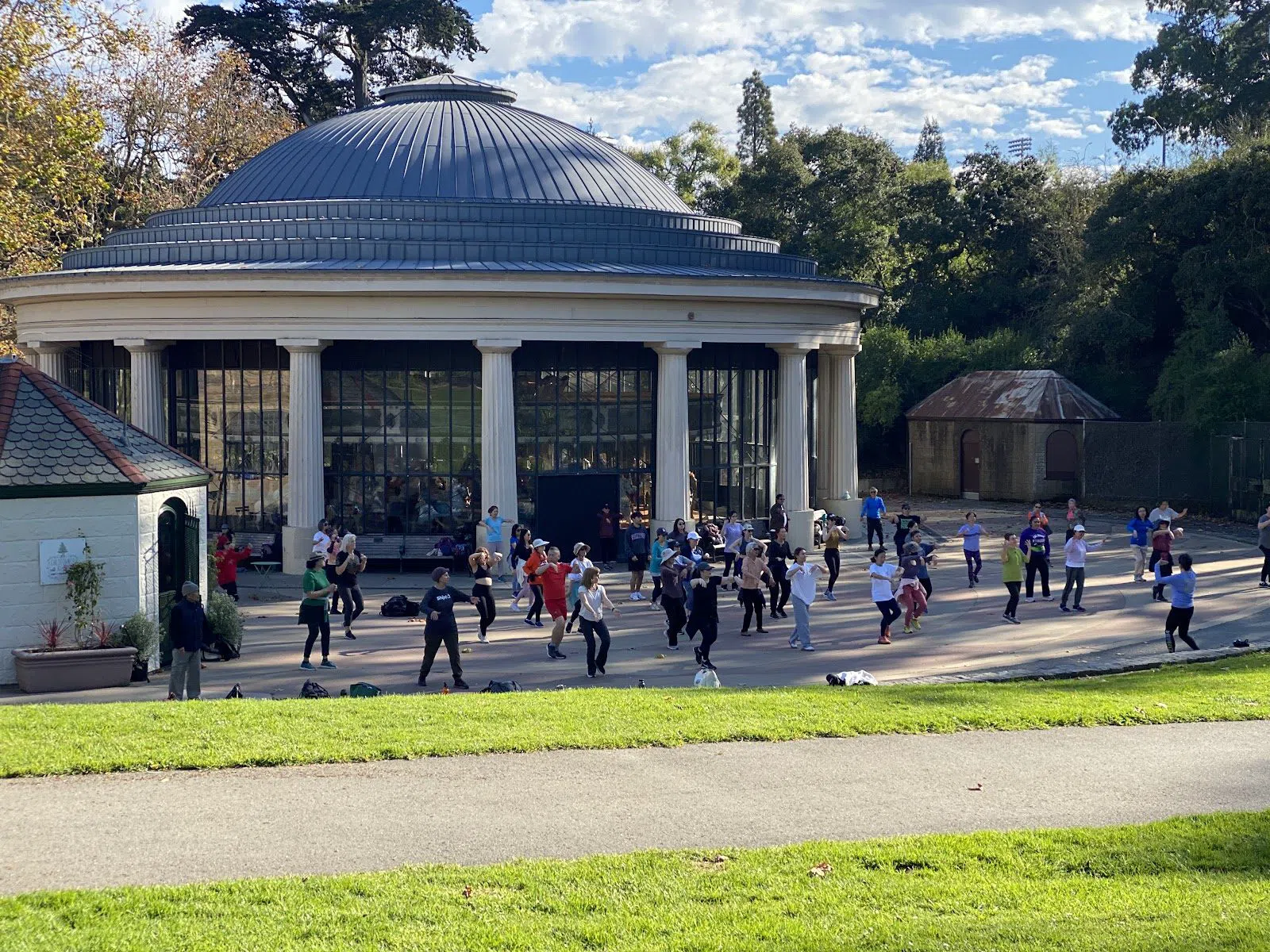
Over at the eastern end, near the children's playground, the Golden Gate Park Carousel (Koret Children's Quarter) is a restored 1914 wooden merry-go-round that costs a few dollars a ride, tokens at the booth, walk-up only. It sits beside one of the oldest public playgrounds in the country. It suits families and small groups; it keeps weekend and holiday hours and is weather-dependent, so call ahead on a grey day rather than trekking over on spec.
A quiet counterpoint
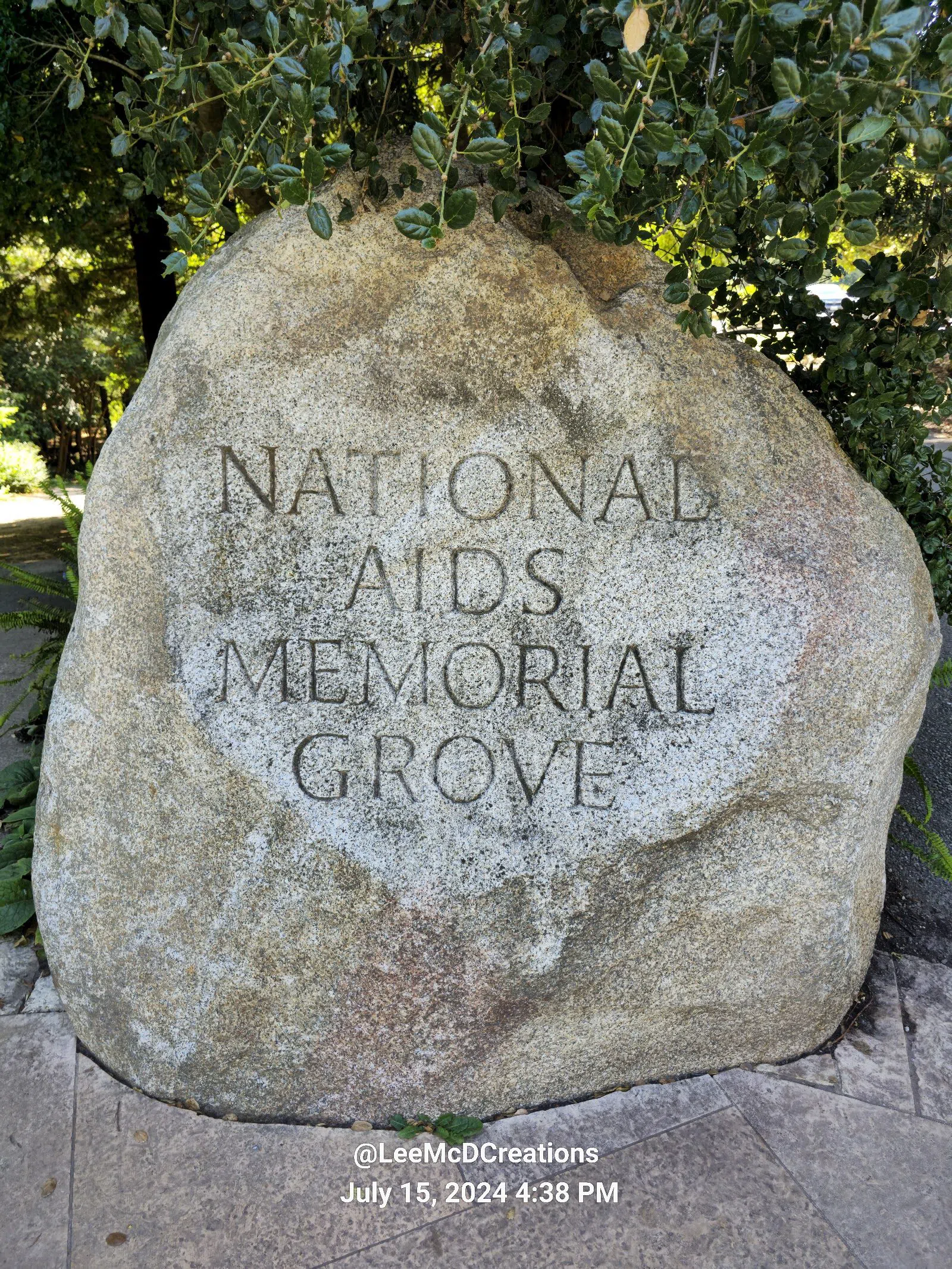
Before the ocean, make time for the National AIDS Memorial Grove (eastern end, in a wooded dell), a nationally designated memorial set in a hushed hollow of ferns and flagstones inscribed with names. It is free and open to walk through at any time; volunteer group workdays and guided visits can be arranged. After a morning of museums and merry-go-rounds it is a deliberate change of register — quiet, dignified, and one of the most affecting corners of the park. Treat it as the reflective space it is.
The ocean end: windmills and a sunset beer
The far western edge is the park's dramatic finale, where the greenery gives out onto the Pacific and the wind picks up. Two things sit side by side here.
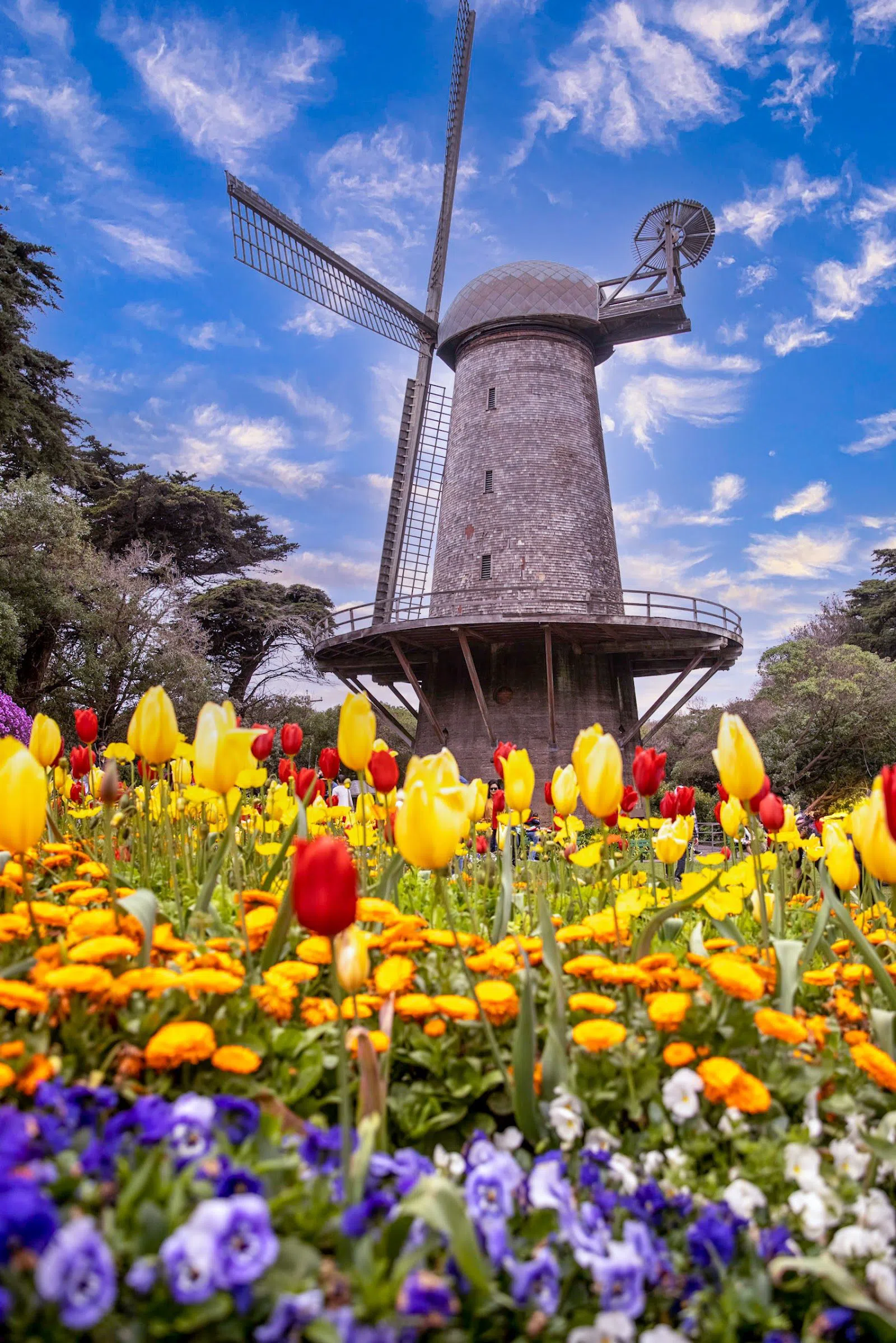
The Dutch Windmill & Queen Wilhelmina Tulip Garden (north-west corner, near Ocean Beach) is a genuine early-1900s windmill — one of a pair built to pump groundwater and green those old dunes — with a formal tulip bed at its foot. It is a free, exterior-only landmark, fine for any group size. Come in March, when the donated Dutch bulbs bloom in earnest and the whole corner turns colour; the rest of the year it is a handsome, photogenic pause on the way to the sand.
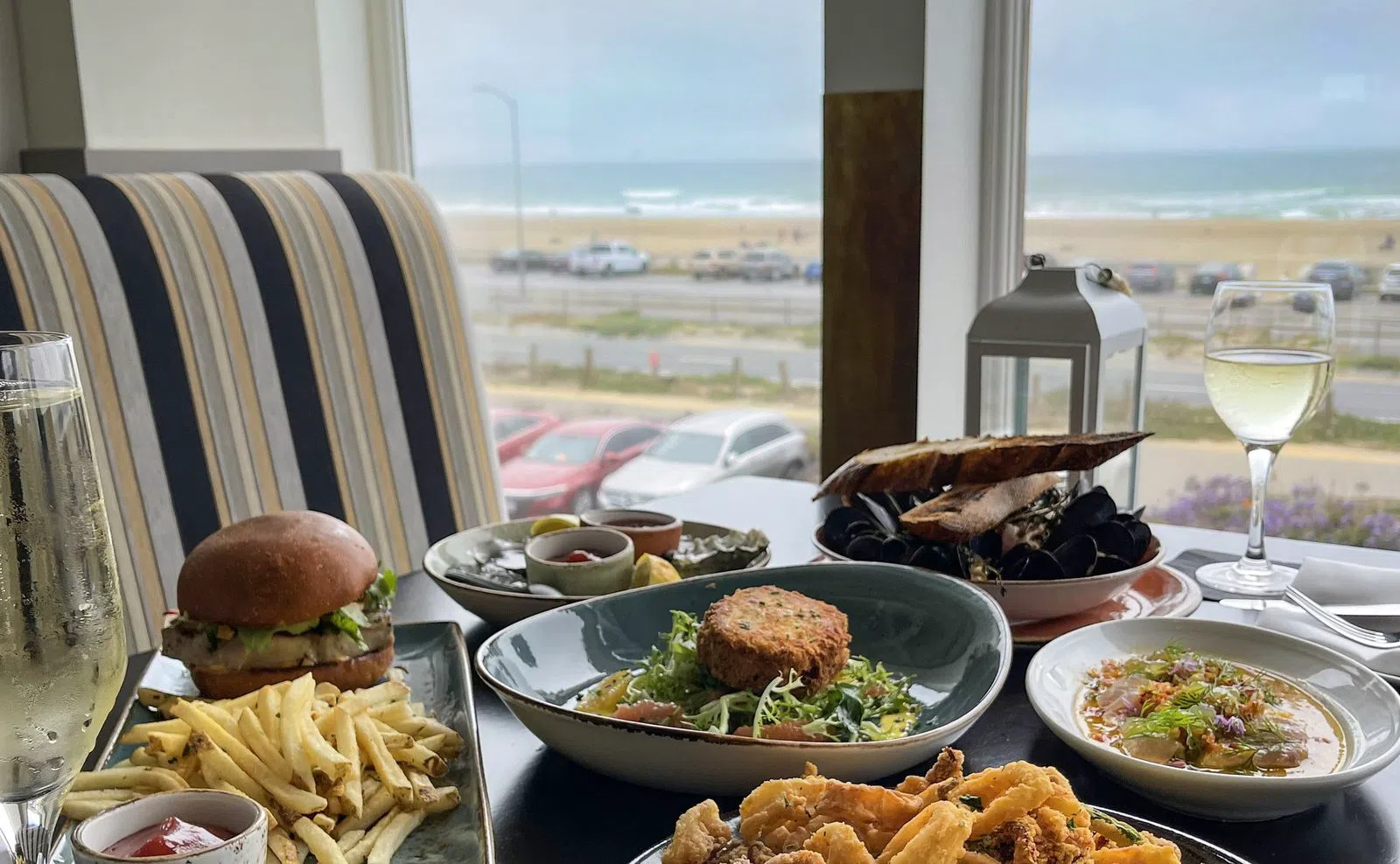
A few steps away, cap the day at Beach Chalet Brewery & Restaurant (Great Highway, facing Ocean Beach). Downstairs is a set of 1930s WPA frescoes worth a look in their own right — historical murals of San Francisco life, free to view. Upstairs, the restaurant has ocean-facing windows, an on-site brewery, private-dining rooms and mains in the $25 to $40 range. It is very group-friendly, and a single visit also gets you its sibling, the Park Chalet, a dog-friendly garden bar tucked behind the building for larger, more casual parties. Sit upstairs with a house beer as the sun goes into the Pacific — it is the correct way to end a park day, and you have earned it.
Planning it well
Transport. You do not need a car. From downtown, the N Judah light-rail line runs along the park's southern edge, and numerous buses (the 5, 7, 44 and others) ring it — aim for a stop near whichever end you are starting from. On weekends the central section of JFK Drive is car-free and given over to walkers, cyclists and skaters, which is a joy on foot and a headache in a car. If you do drive, use the paid underground Music Concourse garage rather than circling for street parking.
Cash and tickets. Most museums and gardens sell timed-entry tickets online — book the Academy of Sciences and, in summer, the de Young and Japanese Tea Garden ahead. Carry a little cash for the carousel tokens and boat rental. Keep proof of a local address handy only if you actually qualify for resident-free entry; visitors won't.
Timing. Chase the fog: ocean end first on a clear morning, indoor museums for grey hours. Avoid a Wednesday if you want the Conservatory of Flowers (closed) and the Japanese Tea Garden at full tilt (reduced). Free windows are real money saved — before 10am on Monday/Wednesday/Friday at the tea garden, the first Tuesday of the month at the conservatory, and a free Sunday band concert at the bandshell.
Budget. A frugal day is close to free: bison, windmill, Shakespeare and AIDS Memorial gardens, Hippie Hill, the bandshell and the de Young's Hamon Tower cost nothing. A fuller day with the Academy of Sciences, a garden or two, a boat and dinner at the Beach Chalet lands somewhere around $90 to $130 a head. Pace it across two visits and it is gentler on both feet and wallet.
Where to stay is its own question — the Inner Sunset and the Haight put you within walking distance of the park's two ends, while a downtown base keeps you on the N Judah line; compare options with a San Francisco hotel search. For everything beyond the park — neighbourhoods, food, the coast and the bridges — see the full San Francisco guide. The park will take a full day and reward two; give it the time, and walk it end to end at least once.
Before you go
How much time do I need for Golden Gate Park?
A full day covers the highlights and two days lets you do it justice. The park runs three miles from the eastern museum concourse to the Pacific, so pick an end to start and walk inward. If you only have a few hours, focus on the Music Concourse — the California Academy of Sciences, the de Young Museum and the Japanese Tea Garden are all within a two-minute walk of each other.
Is Golden Gate Park free to visit?
The park itself is free, and many attractions cost nothing: the Bison Paddock, the Dutch Windmill, Shakespeare Garden, the National AIDS Memorial Grove, Hippie Hill, the Spreckels Temple of Music bandshell and the de Young's Hamon Tower observation deck. Paid sites include the Academy of Sciences (~$40), the de Young (~$20), the botanical garden, conservatory and Japanese Tea Garden (each roughly $12–16 for non-residents), plus boat and carousel fees.
Do I need a car to get around Golden Gate Park?
No — a car is more hindrance than help. The N Judah light-rail line runs along the southern edge and buses including the 5, 7 and 44 ring the park. On weekends the central stretch of John F. Kennedy Drive is closed to cars, so walking and cycling are easiest. If you do drive, use the paid Music Concourse underground garage.
What is the best all-weather attraction if it's foggy or raining?
The California Academy of Sciences is the strongest indoor bet — an aquarium, planetarium, rainforest dome and natural-history museum under one roof, so it easily fills a grey half-day. The de Young Museum is the other reliable indoor option. San Francisco's western neighbourhoods can stay foggy until early afternoon, so save these for the cloudier hours and do the ocean end when it's clear.
Which parts of the park suit big groups versus couples?
Groups do well at the California Academy of Sciences (discounted rates for 15+), the wide-pathed San Francisco Botanical Garden, the Beach Chalet with its private-dining rooms and garden, the Blue Heron Boathouse (split across boats), and the free Bison Paddock and bandshell lawn. Couples and small parties are better suited to the intimate Japanese Tea Garden, the Shakespeare Garden and the quiet AIDS Memorial Grove, where space is tighter.